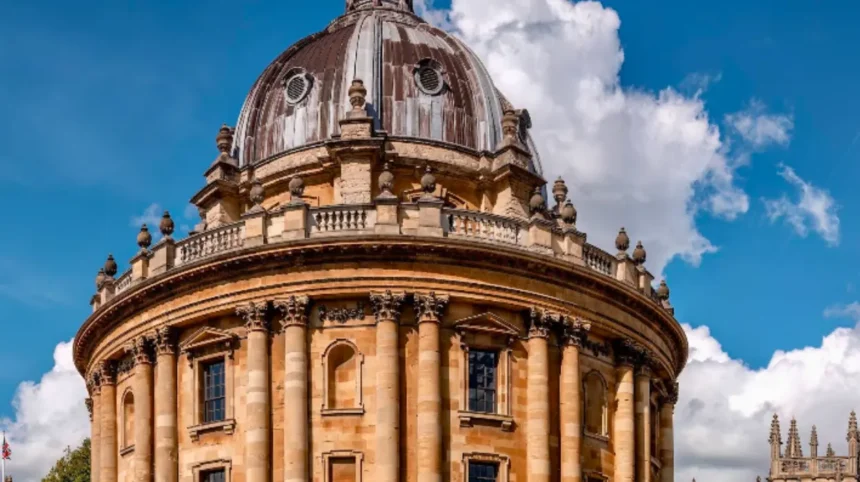
The Radcliffe Camera stands as one of Oxford’s most iconic landmarks, its golden stone dome rising majestically above the city’s historic skyline. This circular library, affectionately known as the “Rad Cam,” draws visitors and scholars alike with its blend of architectural splendor and academic heritage. Commissioned in the 18th century, it embodies the Enlightenment-era pursuit of knowledge that defines Oxford University.
- Origins of the Radcliffe Camera
- Architectural Vision Behind the Dome
- Construction Timeline and Challenges
- The Iconic Dome: Design and Symbolism
- Interior Splendor and Functionality
- Radcliffe Camera’s Role in Oxford Life
- Enduring Legacy and Cultural Impact
- Visitor Insights and Practical Tips
- Architectural Innovations Explored
- The Man Behind the Vision: John Radcliffe
- Modern Relevance and Preservation
Origins of the Radcliffe Camera
The story of the Radcliffe Camera begins with Dr. John Radcliffe, a prominent physician whose legacy transformed Oxford’s scholarly landscape. Born in 1650 in Wakefield, Radcliffe rose to fame as personal doctor to King William III and Queen Anne, amassing a fortune through his medical practice. Upon his death in 1714, he bequeathed £40,000—equivalent to millions today—for the construction of a library to house scientific works, fulfilling his vision of advancing medical and scientific education at Oxford.
Radcliffe’s will specified a library in the university’s heart, connected to the existing Bodleian Library. This endowment reflected the era’s growing emphasis on empirical science amid the Scientific Revolution. Trustees initially struggled with site selection and design, delaying progress until 1737 when construction finally commenced.
The project faced early hurdles, including debates over the architect and materials. Radcliffe’s estate provided the funding, but inflation and design changes stretched costs to over £50,000. By integrating it with the Bodleian, the library became a seamless extension of Oxford’s vast knowledge repository, ensuring its enduring role in academic life.
Architectural Vision Behind the Dome
James Gibbs, the chosen architect, drew inspiration from classical Palladianism, blending Italian Renaissance influences with English Baroque elements. Gibbs, known for London’s St Martin-in-the-Fields church, crafted a design that prioritized harmony and grandeur. The Radcliffe Camera’s defining feature—its dome—marks it as England’s first major domed circular library, a bold innovation for the time.
The dome sits atop a cylindrical drum, creating a visually striking silhouette. Constructed from uk/local/headington/">Headington stone, the structure’s rusticated base conveys solidity, while Corinthian columns in pairs rise rhythmically around the upper level. Buttresses descend emphatically from the dome, anchoring the form and emphasizing vertical thrust. This interplay of form and function not only pleases the eye but also supports the building’s practical needs as a library.
Inside, the dome’s engineering allows natural light to flood the reading room through oculi and lanterns, fostering an inspiring environment for study. Gibbs’s meticulous proportions—rooted in Palladio’s mathematical ideals—ensure symmetry and balance, making the Camera a textbook example of neoclassical architecture.
Construction Timeline and Challenges
Work began in May 1737 after Gibbs finalized plans that incorporated the Bodleian’s upper reading room. The foundation required deep excavation to support the heavy dome, using local Headington limestone for durability. Stonemasons quarried and shaped thousands of blocks on-site, a labor-intensive process involving skilled craftsmen from across England.
By 1742, the exterior shell stood complete, but interior fitting posed new issues. Plasterers and sculptors, including John Michael Rysbrack for Radcliffe’s marble statue, faced delays from material shortages. A temporary halt occurred when lead for the dome proved substandard; timber and superior lead eventually resolved this.
The exterior finished in 1747, with full completion by 1749. Students accessed the library in 1749, stocking it with Radcliffe’s scientific collections. This seven-year build showcased 18th-century engineering prowess, overcoming logistical hurdles without modern machinery.
The Iconic Dome: Design and Symbolism
The dome, crowning the Radcliffe Camera at over 100 feet, represents architectural ambition and Enlightenment symbolism. Its lead-covered surface gleams under Oxford’s skies, supported by a hidden timber framework that distributes weight evenly. Paired columns and pedimented projections below frame the dome, drawing the eye upward in a gesture of aspiration toward knowledge.
Symbolically, the dome evokes Rome’s Pantheon, signaling Oxford’s place among global intellectual centers. As England’s earliest large-scale dome on a non-church building, it broke tradition, prioritizing secular learning. Buttresses and balustrades add rhythmic texture, while the rusticated podium grounds the ethereal form in earthly strength.
Today, the dome’s silhouette defines Oxford postcard views, embodying the university’s prestige. Its design influences modern architecture, proving timeless appeal in an era of functionalist trends.
Interior Splendor and Functionality
Descending into the Radcliffe Camera reveals a circular reading room of breathtaking elegance. Coated in creamy plaster, the walls house tiered bookshelves filled with scientific tomes, illuminated by the dome’s strategic windows. Joseph Artari and John Phillips oversaw interiors, installing ornate stucco work and Radcliffe’s commanding statue.
The space accommodates around 180 readers at oak desks radiating from the center, promoting communal scholarship. Sound acoustics and climate control—advanced for the 1700s—preserve collections spanning medicine, astronomy, and natural history.
Functionally, it serves as the Radcliffe Science Library, part of the Bodleian system. Access requires university credentials, maintaining its sanctity as a working library amid tourist fascination.
Radcliffe Camera’s Role in Oxford Life
At Oxford’s geographic and symbolic center, the Radcliffe Camera anchors university identity. It connects via underground tunnels to the Bodleian, facilitating seamless resource access for scientists and humanities scholars alike. Generations of students have pored over texts here, from 18th-century naturalists to modern researchers tackling climate science.
Its isolation amid lawns enhances mystique, contrasting bustling Radcliffe Square. The Camera hosts exhibitions and lectures, bridging historical collections with contemporary inquiry. As a Grade I listed building, preservation efforts ensure its vitality for future academics.
Beyond academia, it inspires literature and film, appearing in works evoking Oxford’s magic. This duality—working library and cultural icon—cements its indispensable role.
Enduring Legacy and Cultural Impact
The Radcliffe Camera’s legacy extends far beyond its walls, symbolizing Oxford’s commitment to enlightenment values. Funded by a physician’s foresight, it pioneered dedicated science libraries, influencing institutions worldwide. Its Palladian dome set precedents for British architecture, seen in later landmarks like London’s Royal Albert Hall.
Culturally, it represents scholarly pursuit amid Oxford’s spires. Tourists photograph its exterior, while insiders cherish its hushed interiors. Restoration projects, including 21st-century stone cleaning, safeguard it against weathering.
In digital age, virtual tours democratize access, yet physical presence retains allure. The Camera endures as a testament to enduring human quest for knowledge.
Visitor Insights and Practical Tips
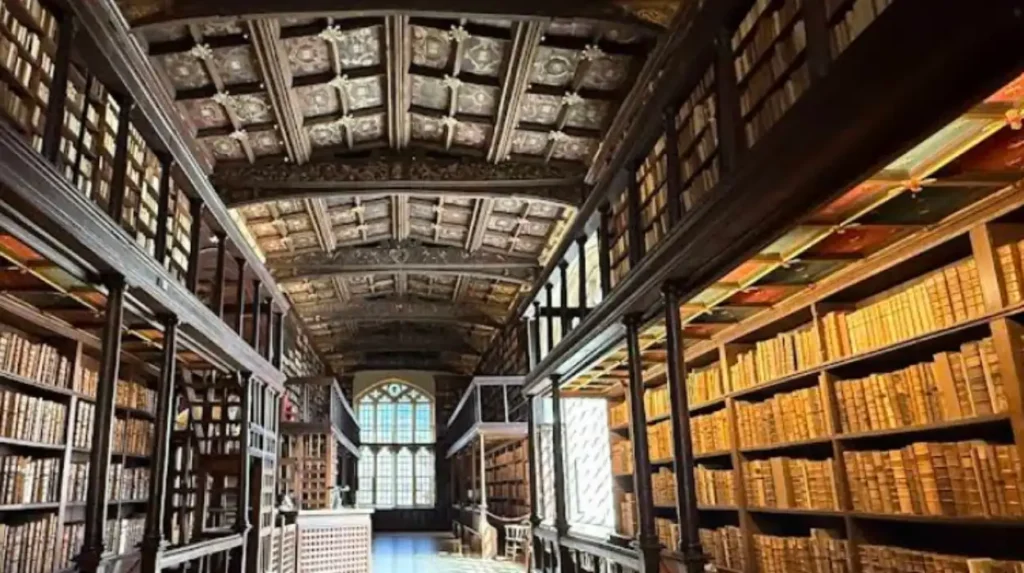
Approaching the Radcliffe Camera, visitors encounter its full splendor from Radcliffe Square. Photography is permitted outside; interior views require Bodleian passes. Nearby Bodleian tours offer context, weaving the Camera into Oxford’s library narrative.
Best visited early morning or late afternoon to avoid crowds, pairing with All Souls College views enhances appreciation. Wheelchair access is limited, but ground-level exteriors accommodate all.
For deeper dives, Bodleian archives detail construction logs. This guide equips exploration, blending history with practical navigation.
Architectural Innovations Explored
James Gibbs’s genius lies in marrying aesthetics with utility. The dome’s oculus diffuses light evenly, reducing glare on manuscripts—a forward-thinking feature. Rusticated stonework withstands centuries, its thermal mass regulating interior temperatures pre-HVAC.
Columns’ unequal spacing creates dynamic rhythm, avoiding monotonous repetition. This subtlety rewards close inspection, revealing Gibbs’s mastery.
Influenced by Venetian models, the design adapted continental grandeur to English restraint, pioneering hybrid styles.
The Man Behind the Vision: John Radcliffe
Dr. Radcliffe’s life mirrors the Camera’s Enlightenment spirit. Rejecting a fellowship for practice, he treated royalty, pioneering diagnostics like pulse analysis. His will funded not just the library but Radcliffe Infirmary and Observatory, a scientific trifecta.
Philanthropy stemmed from childless wealth; trustees executed impeccably. Radcliffe’s statue, gazing sternly, reminds users of his foundational gift.
Modern Relevance and Preservation
Today, the Radcliffe Camera houses 600,000 items, digitized for global reach. Climate systems protect against damp Oxford weather.
UNESCO-recognized Oxford preserves it rigorously. Recent scans map stone decay, guiding restorations. It remains vital for research, hosting breakthroughs.
As Oxford evolves, the Camera anchors tradition, inspiring amid tech shifts.
Was Harry Potter filmed in Radcliffe’s camera?
No, the Radcliffe Camera was not a Harry Potter filming location. It appears in establishing shots inspiring Hogwarts’ grandeur but interiors were studio-built.
What did Emma Watson study at Oxford?
Emma Watson studied English Literature at Worcester College for a year in 2011-2012 as a visiting student from Brown University. She later pursued a Master’s in Creative Writing there part-time.
Which billionaires went to Oxford?
Oxford alumni billionaires include Michael Moritz (Sequoia Capital), Len Blavatnik (Warner Music), and Stephen Schwarzman (Blackstone). Others like Alex Beard (Glencore) add to its 10 billionaire legacy.
Who is the youngest person ever to go to Harvard?
William James Sidis enrolled at Harvard at age 11, lecturing on four-dimensional bodies. He remains the youngest admitted, though denied earlier at age 9 for being too young.
What is the happiest college in Oxford?
Recent student surveys often rank Worcester College highest for happiness and satisfaction. It tops NSS rankings for community and welfare, though rankings vary yearly by metrics .