Key Points
- Police arrested a suspected drug driver after a serious car crash in Oxfordshire.
- A man suffered serious injuries in the collision and was taken to hospital.
- Thames Valley Police closed the area to manage traffic and collect forensic evidence.
- Officers conducted roadside testing as part of regional enforcement against driving under the influence.
- Detectives are appealing for witnesses and dashcam footage as the investigation continues.
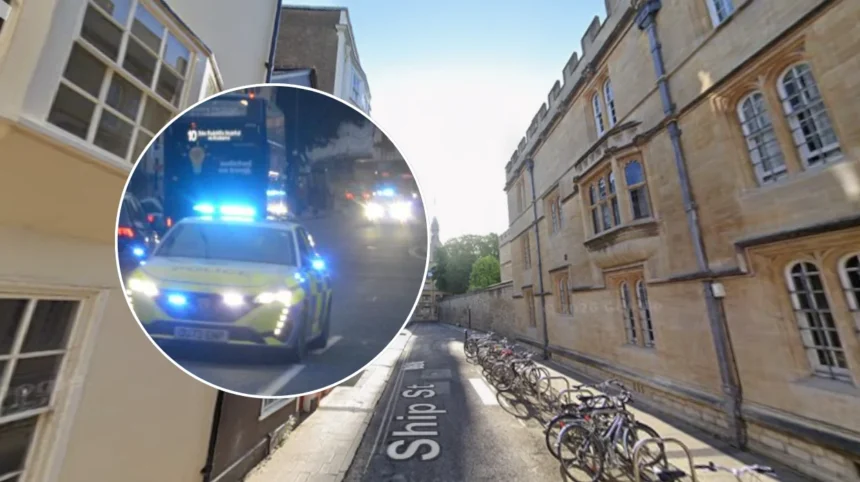
Oxfordshire (Oxford Daily) September 30, 2026 – A suspected drug driver has been formally arrested by police officers following a high-impact road traffic collision in Oxfordshire that left an adult male victim with serious injuries. The alarming incident has intensified local discourse surrounding road safety standards and the prevalence of driving under the influence of illicit substances on British roadways.
Emergency services, including Thames Valley Police and ambulance crews, were dispatched to the scene promptly, where they administered critical pre-hospital care before rushing the injured man to a regional medical facility for specialised trauma treatment.
What are the full details of the Oxfordshire crash?
The collision occurred on a busy regional route within the Oxfordshire jurisdiction, causing immediate disruption to local traffic and prompting a swift multi-agency response. According to preliminary incident logs reviewed by regional journalists, the severe impact necessitated the temporary closure of the affected carriageway to allow emergency personnel to extract victims safely, clear vehicular debris, and preserve forensic evidence.
As reported by staff journalists of This is Oxfordshire, the motorist operating the implicated vehicle was detained at the scene after failing initial roadside impairment assessments. The suspect, whose identity has been withheld pending formal charging decisions by the Crown Prosecution Service, remains in police custody while detectives piece out the precise sequence of events leading up to the collision.
How did Thames Valley Police respond to the incident?
Thames Valley Police deployed specialist roads policing units alongside response officers to manage the aftermath of the collision. Law enforcement personnel immediately established a cordon around the wreckage to facilitate accident investigation work.
As reported by news correspondents at the Oxford Mail, a police spokesperson stated that “officers acted swiftly upon receiving emergency reports of a serious collision, securing the detention of a male driver on suspicion of driving while unfit through drugs.”
The police response highlights an aggressive regional posture toward motorists who jeopardize public safety. Officers conducted thorough sweeps of the immediate vicinity for potential physical evidence, chemical substances, or paraphernalia. Furthermore, collision investigators utilised advanced laser mapping and photogrammetry equipment to document skid marks, point-of-impact vectors, and vehicular damage profiles. This meticulous forensic approach ensures that any future judicial proceedings are supported by robust, scientifically verified data.
What statements have been released regarding the collision?
Official communications from emergency service channels have provided vital transparency while respecting the privacy of the injured party and the legal boundaries of an ongoing criminal inquiry.
As reported by regional news editors covering the Thames Valley district, emergency spokespersons emphasized that “the welfare of the injured individual remains our primary concern, and our thoughts are with his family during this distressing time.”
Public safety advocates and local councillors have also weighed in on the incident. Community leaders have consistently lobbied for enhanced speed deterrence, increased deployment of ANPR (Automatic Number Plate Recognition) cameras, and more frequent roadside drug screening operations across rural and urban Oxfordshire corridors.
The consensus among civic representatives is that drug driving represents an insidious, often under-reported menace that demands unyielding legislative and operational countermeasures.
What is the background of the particular development after the news?
The broader context of drug driving enforcement in the United Kingdom has undergone significant transformation over the past decade. Historically, proving drug driving in a court of law was notoriously difficult for prosecutors, as it required establishing impairment through complex, subjective field sobriety tests or expensive blood assays performed long after an initial stop.
However, legislative milestones—most notably Section 5A of the Road Traffic Act 1988, introduced in March 2015—revolutionised British policing by establishing specific legal limits for driving with eight specified controlled drugs (such as cannabis, cocaine, and ecstasy) and eight prescription drugs in the body, irrespective of whether driving standard was demonstrably impaired.
In regions managed by Thames Valley Police, this legal framework has been paired with cutting-edge technology, specifically roadside drug wiping kits. These handheld devices allow frontline officers to test saliva samples for cannabis and cocaine within minutes at the roadside.
The steady rise in arrests over recent years does not necessarily indicate a sudden surge in offending behaviour alone; rather, it reflects a much higher detection capability and a zero-tolerance operational stance adopted by British police forces. Communities across Oxfordshire have experienced numerous targeted crackdowns—particularly during seasonal campaigns and festival periods—where hundreds of motorists are routinely screened.
Despite these proactive measures, incidents resulting in serious injury continue to underscore the stark human cost of irresponsible driving choices, keeping public awareness high and legislative pressure focused on deterrence, education, and harsher custodial sentencing guidelines for repeat offenders.
What predictions can be made about the impact of this development on local audience?
Looking ahead, this high-profile arrest and the ensuing judicial proceedings are projected to exert a profound psychological and behavioural influence on the local Oxfordshire community and its driving populace.
First, local motorists can anticipate an immediate intensification of visible roads policing patrols across secondary and primary routes throughout the county. Thames Valley Police routinely leverage high-impact incidents to justify targeted enforcement blitzes, meaning local drivers are likely to encounter an increased frequency of random roadside stops, mobile breathalysing units, and drug-wiping checkpoints in the coming weeks.
This heightened police visibility serves a dual purpose: deterring potential offenders from getting behind the wheel while intoxicated and reassuring law-abiding residents that local authorities are actively safeguarding public thoroughfares.
Second, the incident will likely reignite grassroots road safety campaigns spearheaded by parish councils and community action groups across Oxfordshire. Local residents living along rural B-roads and commuter arteries frequently voice anxieties regarding speeding and reckless driving.
This crash provides a stark, sobering catalyst for communities to demand additional traffic-calming infrastructure, such as average speed cameras, active warning signage, and community speed watch initiatives.
Finally, for the immediate network users, commercial drivers, and daily commuters who rely on these vital transport arteries, the disruption serves as a sharp reminder of the cascading economic and personal tolls exacted by traffic collisions.
Insurance premiums, emergency service deployment costs, and chronic traffic delays all ripple outward from such events. Ultimately, the development is expected to foster a stricter cultural intolerance toward driving impairment, compelling social circles and workplaces to reinforce anti-drink-and-drug-driving messaging among all age demographics.