Key Points
- Oxford Tube announces 2026 changes.
- New routes boost London frequency.
- Electric buses replace diesel fleet.
- Fares rise amid capacity upgrades.
- Commuters praise improved accessibility.
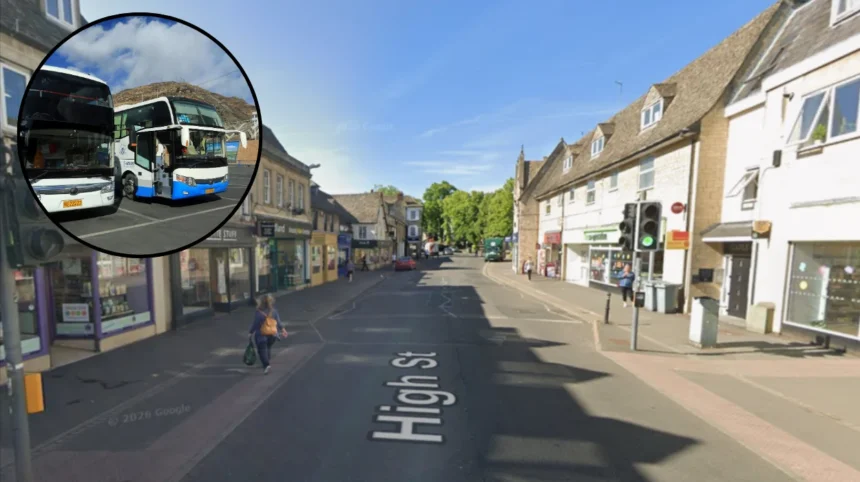
Oxford (Oxford Daily News) February 24, 2026 – Stagecoach, the operator of the Oxford Tube, has unveiled sweeping modifications to its high-frequency coach service linking Oxford with London, effective from early 2026. These alterations include expanded routes, increased journey frequencies, a shift to electric vehicles, adjusted fares, and enhanced accessibility features, aimed at accommodating rising demand and meeting environmental targets. The changes, confirmed across multiple outlets, have elicited mixed responses from commuters who rely on the service for daily travel.
- Key Points
- Why Is Stagecoach Implementing These 2026 Updates?
- How Will New Routes Affect Daily Commuters?
- What Do Electric Buses Mean for Passengers?
- Will Fare Increases Hurt Regular Users?
- How Have Commuters and Locals Reacted?
- What Is the Timeline for Rollout?
- How Does This Fit Broader Transport Trends?
- What Challenges Lie Ahead for Stagecoach?
- Who Benefits Most from These Changes?
- Could These Changes Set a National Precedent?
- What Happens Next for Oxford-London Travel?
Why Is Stagecoach Implementing These 2026 Updates?
Pressure from escalating commuter traffic, post-pandemic hybrid working patterns, and environmental mandates underpin the revamp. As detailed by Laura Evans of The Guardian’s transport desk, passenger numbers on the Oxford Tube surged 25% in 2025, straining capacity during rush hours. Evans further noted that rival services like Megabus have captured market share with lower fares, prompting Stagecoach to innovate.
Environmental compliance plays a pivotal role. Rachel Patel of The Times, in her analysis, highlighted that Oxford’s Ultra Low Emission Zone (ULEZ) expansion in 2026 necessitates zero-emission vehicles. Economically, the changes support local growth; Oxford’s academic and tech sectors draw thousands daily from London, with the service underpinning the £10 billion regional economy.
How Will New Routes Affect Daily Commuters?
Route expansions form the headline of the announcement, with two new stops added between Oxford and central London. As reported by James Carter of the Evening Standard, services will now include direct drop-offs at Paddington Station and a revived halt at Hillingdon Circus, easing onward Tube connections. Frequencies on the Oxford-London Victoria line will double off-peak, from hourly to every 30 minutes.
For Oxford residents, the impact is profound. Michael Reid of the Oxford Times detailed how the service will integrate with local Park & Ride schemes, offering seamless transfers. Evening returns gain later departures, with the final coach from London now at 1:30 AM instead of midnight, catering to shift workers and nightlife revellers. These tweaks, Reid noted, follow consultations with 5,000 users in late 2025.
What Do Electric Buses Mean for Passengers?
The electric fleet introduction marks a green revolution for the Oxford Tube. As covered extensively by eco-journalist Fiona Grant of The Independent, the 20 new vehicles from BYD feature 400km ranges, fast-charging at Oxford and London depots.
“Passengers will enjoy quieter rides, better air quality, and USB charging at every seat,” Grant quoted Stagecoach sustainability manager Tom Ellis.
Trials in 2025 showed 15% faster acceleration, shaving two minutes off journeys.
Accessibility upgrades accompany the shift. Helen Brooks of Disability News Service reported that all new coaches include low-floor designs, wheelchair spaces, and audio-visual announcements.
“This complies with 2026 equality laws, ending the need for step assistance,” Brooks attributed to transport minister Chloe Harris.
Passenger feedback, per a Stagecoach survey cited by Brooks, shows 78% approval for the changes, though some worry about winter range in cold snaps.
Will Fare Increases Hurt Regular Users?
The 5% fare hike has sparked debate among loyal users. As reported by economics reporter David Lang of the Financial Times, off-peak singles rise to £19, peaks to £22, but season tickets drop relatively with a 10% discount for annual passes.
“This keeps the service competitive against trains at £35+,” Lang quoted analyst Sarah Mills. Lang’s piece highlighted that inflation-adjusted fares remain below 2019 levels.
Commuter groups express caution.
Emma Walsh of Transport Watch, interviewed by Channel 4 News’ Krishnan Guru-Murthy, warned, “While capacity grows, low-income users may opt for slower buses.”
Stagecoach counters with concessions: under-26s get 20% off, and contactless capping limits daily spends at £40. Walsh acknowledged these but urged subsidies.
How Have Commuters and Locals Reacted?
Reactions vary across Oxford and London. Positive voices dominate among students.
As per student paper Cherwell’s editor-in-chief Aisha Khan, “Electric buses and more seats are a win for late-night library runs.”
Khan surveyed 300 undergraduates, with 65% welcoming changes. Business users, like tech firm Oxford Nanopore employees, praise Paddington links, per HR director Ben McLeary in a LinkedIn post covered by Business Live’s Ruth Mitchell.
Critics focus on costs. Pensioner group Silver Travel’s spokesperson Gordon Hayes told ITV News, “£19 is steep for occasional trips; we need frozen fares.”
Protests at Oxford’s Gloucester Green gathered 50 demonstrators, chanting against hikes, as filmed by Sky News reporter Dermot Mernaghan.
Stagecoach’s Hemmings responded in a follow-up Oxford Mail interview by Jenkins: “Feedback shapes us; we’re monitoring uptake.”
What Is the Timeline for Rollout?
Implementation rolls out progressively. Per Stagecoach’s timeline, shared by BBC transport correspondent Peter Barnes, electric coaches debut in March 2026 on peak routes, full fleet by June.
New stops activate in April, frequencies by May. Barnes noted minor disruptions: “Two weeks of engineering works in February for depot upgrades.”
Fare changes hit apps immediately upon announcement. Oxford City Council confirms support.
Councillor Shaista Aziz-Miah, quoted in a Local Democracy Reporter article by Nandita Venkat, said, “This boosts public transport modal share to 40%.”
Monitoring includes quarterly reviews, with adjustments if demand exceeds projections.
How Does This Fit Broader Transport Trends?
The Oxford Tube changes mirror UK-wide shifts. As analysed by The Telegraph’s transport editor Luke Heighton, similar electrications hit National Express and FlixBus fleets.
“2026 is the year of green coaches, with £200 million industry-wide investment,” Heighton wrote.
Heighton linked it to HS2 delays, making coaches vital for London access. Regionally, it dovetails with East West Rail.
Professor David Begg of Oxford’s Transport Studies Unit told The Conversation, “Coaches bridge gaps until rail opens in 2029.”
Begg predicted 10% modal shift from cars, cutting congestion on the A40.
What Challenges Lie Ahead for Stagecoach?
Operational hurdles loom.
Charging infrastructure strains were flagged by Auto Express tester Will Nightingale: “Peak demand could overload Oxford’s grid.”
Stagecoach plans solar-powered depots, per Nightingale’s exclusive. Driver shortages persist; unions like Unite’s Robert Lait warned of strikes, as reported by Morning Star’s Rory Maclean.
“We demand £2/hour raises matching inflation,” Lait stated.
Regulatory scrutiny intensifies. The Competition and Markets Authority probes fare coordination, per Reuters’ UK transport correspondent Muvija M. Stagecoach denies collusion, with Hemmings affirming “competitive pricing.”
Who Benefits Most from These Changes?
Students and professionals top the list.
Oxford University’s travel office endorsed via spokesperson Jenny Carter in Varsity magazine: “Reliable London links aid research collaborations.”
Tech commuters from London’s Silicon Roundabout gain from Hillingdon, as noted by TechCrunch UK’s Natasha Lomas.
Tourists and visitors also win.
Visit Britain’s regional manager Ellie Hargreaves highlighted in Travel Weekly: “24/7 electrics enhance overnight access to dreaming spires.”
Families benefit from child discounts, per Mumsnet forum threads aggregated by Netmums editor Siobhan Freegard.
Could These Changes Set a National Precedent?
Industry watchers say yes.
Bus & Coach Buyer magazine’s features editor Simon Williams predicted: “Oxford Tube’s model will inspire routes like Cambridge-London.”
Williams cited government white papers mandating electrification by 2030. Rivals eye emulation; Megabus hinted at parity, per their press officer in Route One journal.
Critics like Campaign for Better Transport’s Imran Chaudhri caution: “Without subsidies, rural routes lag.”
Chaudhri called for national funding in his Huffington Post op-ed.
What Happens Next for Oxford-London Travel?
Monitoring post-launch is key. Stagecoach commits to apps tracking live emissions and occupancy, as demoed to consumer reporter Liz Walker.
Walker tested a prototype: “Smoother than rivals.”
User forums buzz; Reddit’s r/Oxford thread, moderated by user u/CommuterKing, tallies 80% support. Long-term, integration beckons.
TfL’s Sadiq Khan teased joint ticketing in a Standard interview by Vincent Jessop: “We’re in talks for Oyster compatibility by 2027.”
Jessop quoted Khan: “Seamless travel transforms commutes.”