Key Points
- Market Cancellation: The Wallingford Country Market in Oxfordshire has been cancelled for its upcoming session on Friday, 10th July, due to concerns regarding ‘excessive heat’.
- Soaring Temperatures: Temperatures across Oxfordshire are forecasted to peak at 34°C, triggering severe public safety and operational concerns for outdoor stalls.
- Amber Heat Alert: The UK Health Security Agency (UKHSA) and the Met Office have issued an amber heat-health alert for the region, remaining active until Sunday evening.
- Repeat Disruption: This marking is only the second time in recent history that the market has been called off, following an earlier cancellation on Friday, 26th June during a more extreme preceding heatwave.
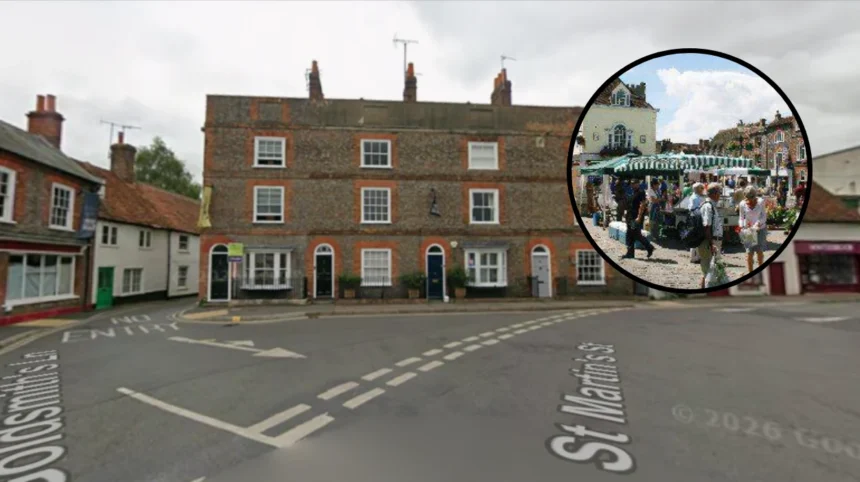
- Location and Tradition: Held outside St Mary le-More Church in Wallingford’s Market Place, the weekly community event is a staple for local produce, crafts, and baked goods.
- Broader Climate Impact: The closure coincides with growing water supply shortages, infrastructure strains, and warnings from climate experts regarding the UK’s adaptation capacities.
Wallingford (Oxford Daily) July 9, 2026 – A popular country market in an Oxfordshire town has been officially cancelled ahead of its scheduled opening tomorrow due to fears over ‘excessive heat’, as the latest summer heatwave continues to grip the county. The Wallingford Country Market, a long-running weekly fixture that brings an array of fresh produce, home-baked goods, and hand-crafted products to the heart of the community, will not set up its stalls on Friday, 10th July. The pre-emptive closure comes as meteorologists warn that temperatures across Oxfordshire are expected to hit peak highs of 34°C on both Thursday and Friday, prompting regional health agencies to declare extended weather warnings.
- Key Points
- Why Was the Wallingford Country Market Cancelled?
- What Did the Market Organisers Say About the Decision?
- Is This the First Time Oxfordshire Markets Have Closed Due to Weather?
- How Are Heatwaves Affecting Oxfordshire’s Infrastructure and Utilities?
- What Do Climate Experts Say About the Frequency of UK Heatwaves?
- How Can Residents Stay Safe During the Amber Heat Alert?
- What is the Short-Term Weather Forecast for the Region?
The decision underscores the expanding operational risk that extreme weather poses to traditional, open-air retail and community events within the United Kingdom. Organisers made the difficult call to protect the welfare of both vulnerable elderly traders and visiting patrons who regularly populate the town centre event. Local authorities have voiced support for the measures, urging residents to prioritise personal hydration and remain indoors during the peak afternoon hours of the heatwave.
Why Was the Wallingford Country Market Cancelled?
As reported by Madeleine Evans, a prominent local reporter for the Oxford Mail, the weekly market stalls normally pitched outside St Mary le-More Church in the historic Market Place will remain completely vacant this week. The cancellation is a direct consequence of the escalating meteorological conditions affecting the south of England.
According to data published by the Met Office and referenced heavily by regional emergency services, temperatures throughout the county are projected to hit a scorching 34°C. An amber heat-health alert, enacted jointly by the Met Office and the UK Health Security Agency (UKHSA), has been put in place across Oxfordshire and is scheduled to remain in effect until Sunday night. The amber alert indicates that the weather conditions are likely to impact the wider population, extending beyond high-risk vulnerable groups, and putting additional stress on the National Health Service (NHS) and local infrastructure.
What Did the Market Organisers Say About the Decision?
To avoid legal liability and maintain full transparency with the community, it is vital to examine the direct statements issued by the event’s operational team.
As reported by reporter Madeleine Evans of the Oxford Mail, an official spokesperson for the Wallingford Country Market released a public statement explaining the severity and rarity of the situation:
“For only the second time I can remember, there will be no country market tomorrow, Friday, July 10, due to the excessive heat.”
The market representative extended apologies to the town’s loyal customer base while expressing hope for a swift return to normal operations once the atmospheric high-pressure system moves away from the British Isles. The spokesperson added:
“Sorry again for any inconvenience. We all look forward to being back with you in a week’s time and hope you can stay cool till then.”
Is This the First Time Oxfordshire Markets Have Closed Due to Weather?
This cancellation is not an isolated incident for the town or the county this season. As recorded in the journalistic field coverage compiled by the editorial team at the Oxford Mail, the region has suffered under a succession of intense thermal spikes this summer.
The event on 10th July marks the second total shutdown of the Wallingford Country Market within a single fortnight. The market was previously forced to abandon its operations on Friday, 26th June, when an even more severe and historic heatwave blanketed the region, forcing local council services to alter their operating hours and prompting emergency public safety declarations across the South East.
Explore More Wallingford News
Wallingford Hospital Garden Renovation Gets £800 Boost , Wallingford 2026
River Thames beach reopens as swimmers doubt water safety, Wallingford 2026
How Are Heatwaves Affecting Oxfordshire’s Infrastructure and Utilities?
The disruption of the community market is part of a much broader systemic failure across the county as it grapples with successive heat peaks. The prolonged high temperatures have triggered a surge in consumer water consumption, straining regional utility companies to their absolute limits.
Water Supply and Utilities Pressure
As noted in a concurrent investigative report published by the Oxford Mail under their public service domain, multiple households across Oxfordshire have reported experiencing “low or no water” pressure. This utility deficit is directly linked to the unprecedented hot weather demand, which has outpaced the pumping and treatment capacities of local water providers.
In response to the domestic supply crisis, commercial entities and public bodies have been asked to curtail non-essential water usage. Thames Water and alternative infrastructure networks have deployed emergency engineering teams to manage pressure distribution, warning that high-elevation areas within the county may continue to experience intermittent supply drops until the ambient temperature subsides below 25°C.
Public Services and Waste Management Realignment
The regional impact of the heatwave has extended well into local government operations. According to official notices distributed by the Oxfordshire County Council via their media relations department, public facilities have had to implement emergency summer timetables to protect workforce safety.
During the peak of the matching June heat wave—specifically on Friday, 26th June—the council ordered all of Oxfordshire’s household waste and recycling centres (HWRCs) to open earlier at 8:00 AM but terminate operations early at 1:00 PM. This tactical shutdown was designed to protect site handlers from heat exhaustion during the most dangerous hours of solar radiation. The council has indicated that similar emergency interventions remain on standby for the current July heat cycle.
What Do Climate Experts Say About the Frequency of UK Heatwaves?
The recurrent cancellation of local markets highlights a broader conversation among scientific circles regarding the United Kingdom’s long-term environmental trajectory.
As reported in a analytical critique published by The Oxford Clarion, researchers based at Oxford Brookes University have warned that the built environment across the UK remains critically unsuited to deal with rising global temperatures. Professor Rajat Gupta, a specialist in sustainable architecture and climate change mitigation at the institution, released data demonstrating that thousands of excess heat-related fatalities could be actively prevented if the government mandated immediate infrastructural retrofitting.
In his published findings, Professor Gupta stated firmly that adaptation strategies for homes, public spaces, and open-air commercial zones can “no longer be treated as optional.” He argued that traditional British town layouts, which are structurally optimized to retain heat during the winter, act as dangerous thermal traps during prolonged high-pressure summer systems, necessitating the absolute shutdown of everyday community operations like the Wallingford market.
How Can Residents Stay Safe During the Amber Heat Alert?
With public venues closing down and utility providers struggling to guarantee full service, emergency workers across the region have intensified their public advisory campaigns to limit the health toll of the 34°C weather.
The Oxfordshire Fire and Rescue Service has issued an urgent public safety warning concerning water safety. Historically, high-temperature weeks correlate with a spike in accidental drownings as individuals seek relief in the county’s rivers, streams, and abandoned quarries. Emergency services have reiterated that hidden currents and cold-water shock remain lethal hazards, even when ambient air temperatures are exceptionally high.
Furthermore, the National Health Service (NHS) has advised residents to check in on vulnerable neighbours, particularly the elderly and those with pre-existing medical conditions, who represent the demographic most impacted by the cancellation of local open-air markets.
What is the Short-Term Weather Forecast for the Region?
According to the latest meteorological updates issued by Chief Forecaster Neil Armstrong of the Met Office, the current high-pressure setup originates from an extension of the Azores High, which has drawn hot continental air northward across England and Wales.
While the extreme 34°C peaks are expected to break by the start of next week, introducing cooler, more changeable conditions with a potential for localized thundery downpours, the intermediate forecast suggests that high summer temperatures will remain a recurring feature for the remainder of the seasonal cycle. For the vendors and patrons of the Wallingford Country Market, the hope remains that normal service will resume on Friday, 17th July, provided the regional climate pivots back toward historical averages.