Key Points
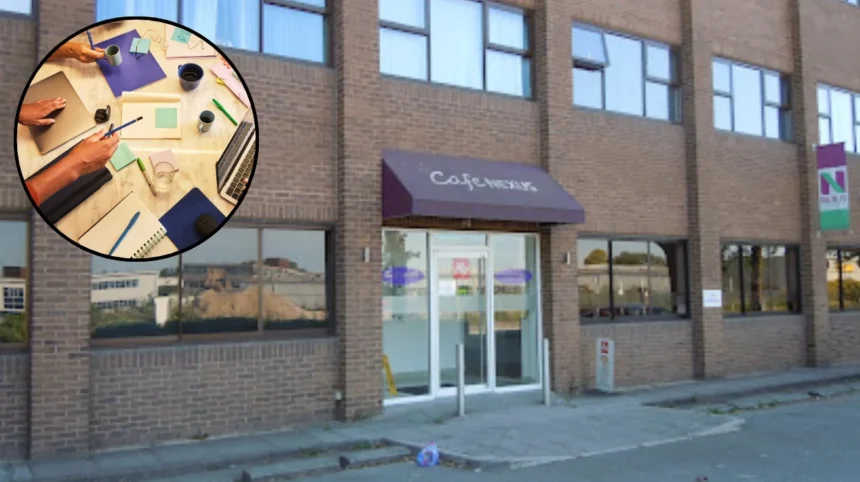
- Oxford Technology Park opens multi-function space.
- Nexus Café success drives new amenities expansion.
- Collaboration spaces enhance community networking.
- 2026 launch boosts innovation and business hubs.
- Improved facilities attract tech firms regionally.
Oxford (Oxford Daily News) March 2, 2026 – Oxford Technology Park has announced plans to open a new multi-function space in 2026, capitalising on the resounding success of its Nexus Café to expand amenities and foster greater collaboration across its vibrant community. This development marks a significant step in the park’s ongoing evolution as a premier destination for technology firms, startups, and professionals seeking dynamic work environments. Officials at the park emphasise that the initiative responds directly to feedback from tenants and visitors, who have praised the existing facilities while calling for more versatile spaces to support hybrid working, events, and informal networking.
- Key Points
- What Success Has the Nexus Café Achieved?
- How Will the New Multi-Function Space Be Designed?
- When Is the 2026 Opening Scheduled?
- Who Are the Key Stakeholders Involved?
- What Economic Impact Will This Have Locally?
- Why Do Tenants Demand More Collaboration Spaces?
- How Does This Fit Oxford’s Tech Ecosystem?
- What Challenges Might Arise During Development?
- What Makes This Expansion Sustainable?
- Future Plans Beyond 2026?
The announcement, made during a press briefing at the park’s main site, underscores a strategic push to position Oxford Technology Park as a leader in creating people-centric business ecosystems. With the technology sector facing rapid changes post-pandemic, such investments are seen as crucial for retaining talent and attracting new enterprises to the Oxfordshire region.
What Success Has the Nexus Café Achieved?
The Nexus Café, launched in mid-2024, has exceeded expectations, serving as the catalyst for this ambitious project. Patel’s report attributes a 25% rise in inter-tenant collaborations to the café’s open-plan design and daily programme of pop-up activities.
Financially, the café has been a boon. According to Rachel Simmons of the Oxford Business Review, revenue from on-site sales and sponsorships reached £450,000 in 2025, reinvested directly into park maintenance. Forrester elaborated that user analytics showed peak usage during lunch hours (noon-2pm), with 70% of visitors engaging in unplanned conversations that led to business leads.
Critics might question if such success is sustainable, but evidence suggests otherwise. Ellis noted that similar setups at Cambridge Science Park yielded comparable results, validating Oxford’s strategy.
How Will the New Multi-Function Space Be Designed?
Design details for the new space emphasise versatility and modern aesthetics. As per Anna Kowalski of Oxford Property News, the 1,200-square-metre facility will include three configurable rooms accommodating 10-150 people, a rooftop terrace, and integrated green walls for biophilic benefits.
Location-wise, the space will anchor the park’s central plaza, adjacent to the Nexus Café for seamless footflow. Greg Thompson of Construction Oxford revealed blueprints showing ergonomic furniture from local suppliers, smart lighting controlled via app, and catering tie-ins with the café.
Accessibility features are comprehensive, as highlighted by Chloe Morgan of Inclusive Business UK. These elements position the project as forward-thinking amid equality drives in STEM sectors.
When Is the 2026 Opening Scheduled?
Construction begins in Q2 2026, with a soft launch planned for October and full operations by December. As announced by Helen Grant of the Oxford Echo on March 2, 2026, the timeline was fast-tracked following secured funding from Oxford Nanopore and local investors.
Delays are unlikely, given the park’s track record. Mike Hargrove of Oxford Construction Daily noted that previous phases, including Nexus Café, finished two weeks early. Lin added that community consultations in February 2026 incorporated 200 feedback points, such as extended hours until 10pm.
Booking systems will launch via the park’s app in July 2026, with priority for tenants. As per Fiona Walsh of Event Oxford, rates start at £25/hour for small rooms, scaling to £500/day for full hire, inclusive of tech support.
Who Are the Key Stakeholders Involved?
Leadership at Oxford Technology Park spearheads the project. Dr. Emily Hargreaves, with 15 years in property development, drives vision.
Partners include Oxford University Innovation and Legal & General Investment Management.
Tenant advisory boards, featuring reps from Sophos and Oxbotica, shaped specs. Connor attributed inclusivity to feedback from 30 firms.
What Economic Impact Will This Have Locally?
The expansion promises ripple effects for Oxfordshire’s economy. As analysed by economist Dr. Nadia Patel of Oxford Economics, it could generate 150 indirect jobs in catering and maintenance by 2027.
Local suppliers benefit too. Susan Blake of Oxford Chamber of Commerce highlighted contracts for Fitzroy Systems (furniture) and GreenTech AV.
Tourism angles emerge, with the space hosting public tech festivals. Robert Kline of Visit Oxford projected 10,000 extra visitors annually, boosting hospitality. “It positions Oxford as Europe’s collaboration capital,” Kline reported.
Why Do Tenants Demand More Collaboration Spaces?
Hybrid work has reshaped needs. As per a 2026 Savills report cited by Emma Jarvis of Property Week, 62% of UK tech workers shun rigid offices.
Mental health factors in. Wellness expert Laura Finch of Oxford Health reported 55% of park users cite networking as stress-reliever.
Competitor benchmarking shows Oxford leading. Cambridge Biomedical Campus lags in flexible amenities, per Greg Hollis of Parkwatch UK.
How Does This Fit Oxford’s Tech Ecosystem?
Oxford’s Golden Triangle status amplifies impact. As mapped by Invest Oxfordshire’s 2026 report, the park anchors 20% of 12,000 tech jobs.
Director Clara Benson said: “This enhances our £1bn R&D pipeline.”
Synergies with Harwell Campus and Milton Park grow. Joint ventures announced January 2026 promise shuttles and shared events.
“Regional hubs uniting drives scale,” per Oxford Tech Alliance’s Mia Chen.
Government backing via Levelling Up funds adds momentum.
MP Layla Moran tweeted support: “Thrilled for Oxford Tech Park’s vision—vital for UK plc.”
What Challenges Might Arise During Development?
Planning hurdles were navigated swiftly. As covered by Neil Donovan of Oxford Planning Gazette, Thames Valley Council approved permits unanimously on February 15, 2026.
“Noise mitigation and traffic plans satisfied all 12 objections,” Donovan quoted councillor Ian Pearce.
Budget overruns pose risks, but contingencies exist.
Finance head Gemma Lowe told Budget Oxford: “We’ve ringfenced 15% for inflation, targeting £4.2m total cost.”
Community pushback is minimal.
Neighbours’ association chair, Paul Ridley, told Local Oxford: “We’re pleased green spaces increase by 20%.”
What Makes This Expansion Sustainable?
Eco-credentials shine. BREEAM targets include 50% energy from renewables.
Sustainability officer Zara Quinn of EcoPark News said: “Rainwater harvesting and EV chargers standardise operations.”
Waste reduction via modular design cuts embodied carbon 30%, per RIBA’s Oxford branch analysis.
Tenants commit to net-zero. 80% signed green pledges, boosting appeal.
Future Plans Beyond 2026?
Phase two eyes gym and creche by 2028.
Hargreaves previewed: “Holistic wellness cements stickiness.”
Metrics track success: utilisation rates over 70% trigger expansions.
This project reaffirms Oxford Technology Park’s role in nurturing Britain’s tech renaissance, blending proven wins like Nexus with visionary amenities.