Key Points
- The Stephen A. Schwarzman Centre for the Humanities at the University of Oxford opened its public cultural programme with a free launch weekend on 25–26 April 2026.
- The Centre’s inaugural season is divided into two themed programmes: Unfinished Revolutions (May–June 2026) and Utopia Now! (October–November 2026).
- Unfinished Revolutions examines the living legacy of the 1776 US Declaration of Independence and features artists including Cécile McLorin Salvant, Taylor Mac, Anna Clyne and Lil Buck.
- The cultural programme is directed by John Fulljames and built around Schwarzman Centre Cultural Fellows collaborating with Oxford academics; named Fellows include Refik Anadol, Lil Buck, Anna Clyne, Bryce Dessner, Rhiannon Giddens, Sarah Jones, Taylor Mac and others.
- The Centre includes new performance and research spaces such as a 500‑seat Sohmen Concert Hall and a Great Hall with a glass dome that hosted a world premiere during the opening weekend.
- The launch weekend offered free performances from groups including the Scottish Ensemble, ZooNation and a world premiere, 360 Vessels, by Es Devlin and Nico Muhly performed by Schola Cantorum.
- The Centre has partnered with Bloomberg Connects to share programme content via the app.
- Unfinished Revolutions runs across May and June with theatre, concerts and dance, including scheduled dates for Sarah Jones (22–23 May) and further concerts in late May and June.
Oxford(Oxford Daily) May 16, 2026 — The Stephen A. Schwarzman Centre for the Humanities at the University of Oxford has opened its public cultural programme with a free launch weekend and announced its inaugural seasons, including Unfinished Revolutions, a themed cultural season that traces the living legacy of the 1776 US Declaration of Independence.
- Key Points
- Why is the Schwarzman Centre opening with a public celebration and two themed seasons?
- Who are the artists and collaborators leading the Unfinished Revolutions season?
- What did the opening weekend feature and how does it illustrate the Centre’s ambitions?
- Where are the new performance and research spaces located and what facilities are available?
- Which events are announced for Unfinished Revolutions and when will they take place?
- How are the Centre’s Cultural Fellows described and what role will they play?
- What partnerships and digital access strategies support the Centre’s public engagement?
- Why does Unfinished Revolutions focus on the 1776 Declaration of Independence and how will that be presented?
- How will audiences experience the Centre’s blend of scholarship and performance?
- What future programming is signposted beyond Unfinished Revolutions?
- Who spoke on behalf of the Schwarzman Centre at the launch and what did they say?
- What are the practical arrangements for audiences who wish to attend Unfinished Revolutions events?
- Background of this development
- Prediction: How this development can affect audiences and academic communities
Why is the Schwarzman Centre opening with a public celebration and two themed seasons?
As reported by John Fulljames, Director of the Cultural Programme at the Schwarzman Centre, the Centre’s cultural programme aims to “offer fresh new experiences for audiences drawing on the research and teaching excellence of the University of Oxford” and to place experimentation and co‑creation at its heart. The decision to open with a free weekend of performances and to orient the year around two major themes Unfinished Revolutions and Utopia Now! reflects the Centre’s ambition to connect academic research and public audiences through collaborative artistic projects.
Who are the artists and collaborators leading the Unfinished Revolutions season?
The Schwarzman Centre’s inaugural cultural programme is framed around a cohort of Cultural Fellows outstanding artists invited to collaborate with Oxford academics and the Unfinished Revolutions season specifically lists performers and creators such as Cécile McLorin Salvant, Taylor Mac, Anna Clyne and the American street‑dance artist Lil Buck. The wider roster of Cultural Fellows named for the Centre includes Refik Anadol, Bryce Dessner, Rhiannon Giddens, Sarah Jones, Sir Wayne McGregor, Suzan‑Lori Parks, Anoushka Shankar and Nitin Sawhney, among others.
What did the opening weekend feature and how does it illustrate the Centre’s ambitions?
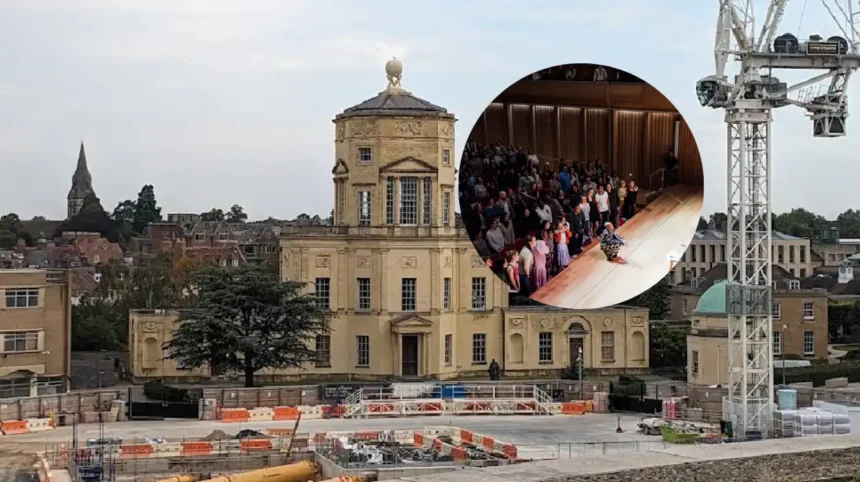
Oxford’s free opening weekend on 25–26 April 2026 featured a programme designed to show the variety of the new venue’s capacities: performances by the Scottish Ensemble, ZooNation’s The Mad Hatter’s Tea Party in the new theatre, and the world premiere of 360 Vessels an Es Devlin visual commission with music by Nico Muhly performed by Schola Cantorum under the glass dome of the Great Hall. Digital artists Anna Ridler and Refik Anadol presented AI‑created digital works, demonstrating the Centre’s interest in the intersection of technology, art and humanities research.
Where are the new performance and research spaces located and what facilities are available?
The Stephen A. Schwarzman Centre houses new performance and teaching spaces for arts and humanities activity within the University of Oxford, including the 500‑seat Sohmen Concert Hall and a domed Great Hall suitable for immersive performances and installations; both formed central parts of the launch activities. The Centre’s facilities are described as combining exceptional performance spaces with academic teaching and research rooms to support interdisciplinary collaboration.
Which events are announced for Unfinished Revolutions and when will they take place?
The Schwarzman Centre’s programme page lists the Unfinished Revolutions season as running throughout May and June 2026, with a schedule that already included theatre performances by Sarah Jones (22–23 May) and several concert dates in late May and mid‑June; additional events were listed as “coming soon” while ticketing and further details are to be released progressively. The Centre has invited audiences to sign up for First Look updates to receive details as they are announced.
How are the Centre’s Cultural Fellows described and what role will they play?
The Cultural Fellows are described as leading artists who will work with Oxford academics to co‑create new projects for the Centre’s programme. The initial cohort includes internationally recognised practitioners across disciplines writers, composers, choreographers and visual artists chosen to generate interdisciplinary work that engages both research and public audiences.
What partnerships and digital access strategies support the Centre’s public engagement?
The Schwarzman Centre has partnered with Bloomberg Connects to provide audiences access to exclusive content from the cultural programme via the Connects app, broadening the reach of performances and providing contextual material to enrich visits. The Centre’s communications have also emphasised local collaborations such as links with Oxford festivals and music organisations alongside international artists.
Why does Unfinished Revolutions focus on the 1776 Declaration of Independence and how will that be presented?
Programme materials describe Unfinished Revolutions as a season “tracing the living legacy of 1776,” aiming to examine the continued influence and unresolved questions that surround the ideas and consequences of the Declaration of Independence. The season intends to explore that legacy through a combination of theatre, music, dance and multidisciplinary work, commissioning new pieces and staging performances that engage historical, cultural and contemporary perspectives.
How will audiences experience the Centre’s blend of scholarship and performance?
The Schwarzman Centre has explicitly framed the cultural programme around collaboration between artists and Oxford researchers, with the Cultural Fellows working with academics to produce projects that reflect current scholarship and public questions. Examples at launch—such as an immersive commission staged beneath the Great Hall’s dome and AI‑driven digital commissions—indicate that the Centre plans a mix of conventional concerts and experimental, research‑informed events.
What future programming is signposted beyond Unfinished Revolutions?
The Centre’s 2026 calendar also highlights Utopia Now!, a themed season scheduled for October–November 2026 that will “invite audiences to be inspired by Utopian thinking and imagine bold futures,” with a headline commission by Nitin Sawhney and a series titled A History of Utopia led by Brian Eno and Kim Stanley Robinson among the announced highlights.
Who spoke on behalf of the Schwarzman Centre at the launch and what did they say?
John Fulljames, Director of the Cultural Programme, said the Centre was “a place where people from across the region and beyond can come together to make sense of what it means to be human in today’s world,” emphasising the role of arts and humanities in public life. Alexandra Vincent MBE, Managing Director of the Schwarzman Centre, stated the team was “thrilled to unveil this unique and exciting programme” and expressed a welcome to audiences of all ages.
What are the practical arrangements for audiences who wish to attend Unfinished Revolutions events?
The Schwarzman Centre’s website lists dates and ticketing information for individual events, encourages prospective attendees to sign up for First Look updates for programme announcements, and advises visitors to check the Centre’s events pages for booking details as more performances and commissions are confirmed.
Background of this development
The Stephen A. Schwarzman Centre for the Humanities was established to provide a dedicated hub for arts and humanities research, teaching and public engagement at the University of Oxford; the Centre follows a wider trend of universities creating cultural venues that combine academic exploration with public programming. The Centre’s model pairing Cultural Fellows with academic partners and commissioning new works mirrors international examples where higher education institutions use arts programming to amplify research and community engagement.
Prediction: How this development can affect audiences and academic communities
For local and visiting arts audiences, the Unfinished Revolutions season is likely to offer a mix of high‑profile performances and experimental work that broadens access to contemporary and historically informed programming, potentially increasing cultural attendance in Oxford and attracting national and international visitors. For academics and artists, the Centre’s model of fellowship‑based collaboration is likely to create new research‑led creative outputs and interdisciplinary projects, strengthening ties between scholarship and public‑facing art while generating materials—recordings, commissions and public discourse—that may persist beyond the season itself.