Key Points
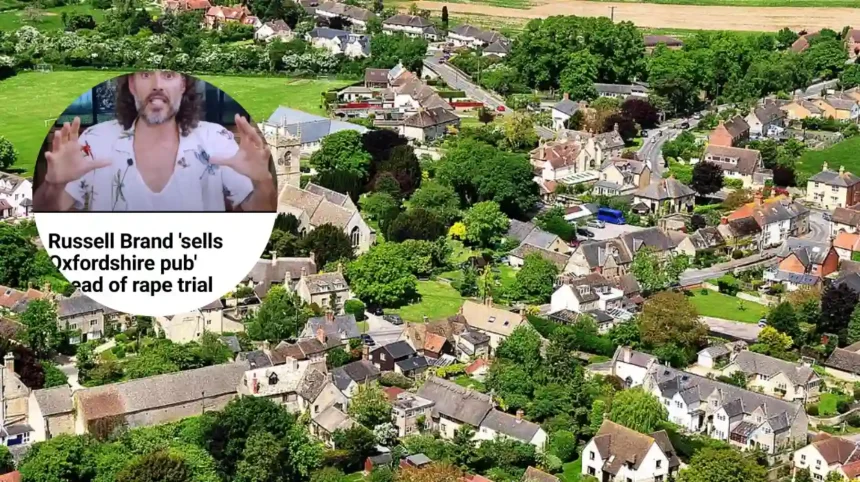
- Russell Brand has sold The Crown Inn, a historic pub in Pishill, Oxfordshire, for £975,000.
- The sale follows years of controversy over Brand’s plans to convert part of the building into a recording studio for his online videos and podcasts.
- Local residents had repeatedly objected to the proposed studio, arguing the building should remain or reopen as a functioning pub and community asset.
- Planning applications for the studio were rejected or withdrawn amid strong community opposition and council scrutiny.
- The new owner, John Bloomer, a senior figure in the National Farmers’ Union, is reported to have paid around £125,000 more than Brand’s original purchase price.
- Brand is currently facing multiple serious criminal charges, due to be heard from October 2026, and has not publicly linked the sale to the legal proceedings.
Oxford(Oxford Daily) April 24, 2026 – Russell Brand has sold the historic Crown Inn in the Oxfordshire village of Pishill for £975,000, ending a years‑long dispute over the future of the 15th‑century pub. The transaction has drawn attention not only because of the figure close to £1 million, but also because of the local anger over Brand’s failed attempts to turn the building into a video‑recording studio rather than a public house.
- Key Points
- Why did the sale spark controversy in Pishill?
- How did the community react to the sale?
- What do we know about the sale price and the new owner?
- What is the legal context around Russell Brand?
- Background: How did The Crown Inn become a flashpoint?
- Prediction: how might this development affect local residents and campaigners?
According to Mark Isaacs of The Tab, the property was sold to John Bloomer, group secretary of the National Farmers’ Union, in a deal that represents a profit of around £100,000 on Brand’s original purchase price of £870,000 in 2020. The description of the sale as “contentious” has been repeated across several outlets, including the Daily Mail, The Express, and Punching Up 2026, all of which note that Brand never reopened the inn as a functioning pub after taking ownership.
Why did the sale spark controversy in Pishill?
As reported by Benedict Smith of The Henley Standard, residents of Pishill were frustrated that the pub, which many regarded as a valued community asset had stood largely closed and unused for years while Brand pursued plans that would have allowed him to film online content on site. Smith wrote that villagers had campaigned for the building to either reopen as a pub or be sold to an operator who would do so, rather than being repurposed for media production.
The controversy escalated when Brand’s representatives submitted proposals to convert part of The Crown Inn into a recording studio and podcast space. As detailed by staff at The Express, the first application attracted dozens of objections and was ultimately rejected, while a second attempt was later withdrawn after further local complaints. Council officials told the paper that the owners had not sufficiently shown the pub to be unviable as a business, compounding residents’ arguments that the site should remain aligned with its traditional role.
How did the community react to the sale?
Freddie van Mierlo, MP for Henley and Thame, was quoted by The Henley Standard saying he was “delighted for residents who had their local pub closed for years by a ‘celebrity’ for the purpose of recording self‑promotion and conspiratorial YouTube content.” Van Mierlo’s remarks reflect the broader sentiment among villagers who felt that the building’s potential as a community hub had been sidelined by Brand’s ambitions.
Writing in Punching Up 2026, a correspondent noted that the pub had stood “overgrown and abandoned” for extended periods, feeding local complaints that the once‑historic building had become an eyesore. Some residents were cautiously optimistic that the sale to John Bloomer, a local businessman with strong ties to rural Oxfordshire through the National Farmers’ Union, might increase the chances of the premises being restored to active use.
What do we know about the sale price and the new owner?
The Henley Standard reported that Brand sold The Crown Inn to John Bloomer for about £125,000 more than the £870,000 he is believed to have paid in 2020. The Express, citing Daily Mail coverage, put the figure at £975,000 and described the transaction as occurring at a premium to the original purchase price, even though the pub had not operated commercially under Brand’s ownership.
The Express also noted that Bloomer is secretary of the National Farmers’ Union group, a position that situates him within established rural networks in Oxfordshire. The publication suggested that this background could influence how the property is managed going forward, although Bloomer has not publicly outlined detailed plans for the site.
What is the legal context around Russell Brand?
At the same time as the sale, Brand faces serious criminal charges that are scheduled to be heard in October 2026, including multiple counts of rape and indecent assault, which he denies. How the sale of The Crown Inn relates, if at all, to these proceedings has not been formally stated by Brand or his representatives.
In coverage of the sale, The Tab and Punching Up 2026 both highlighted that the property transfer takes place in the shadow of the upcoming trial, but neither outlet has presented evidence that the sale was compelled by the legal case.
Background: How did The Crown Inn become a flashpoint?
The Crown Inn in Pishill dates back to the 15th century and has long served as a focal point in the village. When Russell Brand bought the premises in 2020, he publicly stated his intention to keep it open, but the pub remained closed for several years.
Over time, Brand’s focus shifted toward using the building as a base for his digital content, prompting residents to petition against the proposed studio conversions. The Oxfordshire planning authority’s handling of the applications, first ruling that the pub was not shown to be unviable, then seeing the second application withdrawn, became central to the dispute.
In Village Green, a separate but thematically linked article, journalists noted that the prolonged closure and the perception that the site was being treated as a private media studio rather than a local amenity deepened friction between the celebrity owner and the community.
Prediction: how might this development affect local residents and campaigners?
For villagers in Pishill, the sale removes one of the most visible sources of irritation: the long‑standing closure and underuse of a historic pub by an absentee owner. With the building now in the hands of a local businessman who operates within existing rural institutions, some residents may feel that the chances of the pub reopening or being sensitively repurposed have improved, though that remains speculative until firm plans are announced.
For campaigners in other Oxfordshire communities who have fought to protect local pubs from commercial or celebrity‑driven conversions, the outcome at The Crown Inn may be seen as a precedent of community pressure influencing the fate of a high‑profile property. The fact that formal objections and planning authority scrutiny helped block the studio plans could embolden similar groups in other villages, while also highlighting the limits of intervention when a private owner ultimately chooses to sell rather than reopen.