


Key Points
- Science Minister hails Oxford as innovation hotbed.
- New Oxford North district to host tech firms.
- £1.2bn backing for 64‑acre innovation zone.
- Almost one million sq ft of labs and offices.
- Ox‑Cam corridor seen as UK growth engine.
Oxford (Oxford Daily News) 9 February 2026 – Science Minister Lord Vallance has described the Oxford region as a “hotbed of innovation” during a visit to the new Oxford North research and development hub, using the trip to push the government’s wider Ox‑Cam tech mission in the Oxford–Cambridge corridor. Speaking at the 64‑acre innovation district, Vallance framed Oxford North as a cornerstone of Labour’s ambition to turn the Oxford–Cambridge corridor into a global science and technology supercluster and a national “economic engine”.
The minister’s visit comes as construction ramps up on almost one million square feet of office and advanced laboratory space, funded by a £1.2bn investment from Thomas White Oxford, the Ontario Teachers’ Pension Plan and Stanhope. Vallance toured the site alongside local stakeholders and developers, underscoring how Oxford North is designed to accommodate startups, university spinouts and multinational technology firms under one connected innovation ecosystem.
What did Lord Vallance say about Oxford North?
As reported by UKTN, Lord Vallance said: “Oxford North is a hotbed for innovation which will help us secure the UK’s status as a global powerhouse in industries like quantum computing and life sciences.”
He added: “All the right ingredients are here – from infrastructure and talent to opportunity and innovation – and this new site will empower talented teams to realise their potential and drive British‑made breakthroughs.”
In those remarks, Vallance positioned the district as a physical manifestation of the government’s Oxford–Cambridge Growth Corridor strategy, which aims to cluster world‑class research, industry and venture capital along the route between Oxford and Cambridge. He has previously described the corridor as “central” to Labour’s growth plans and an “economic engine for the entire country”, language he reiterated in the run‑up to and during the Oxford North visit.
What is Oxford North and who is behind it?
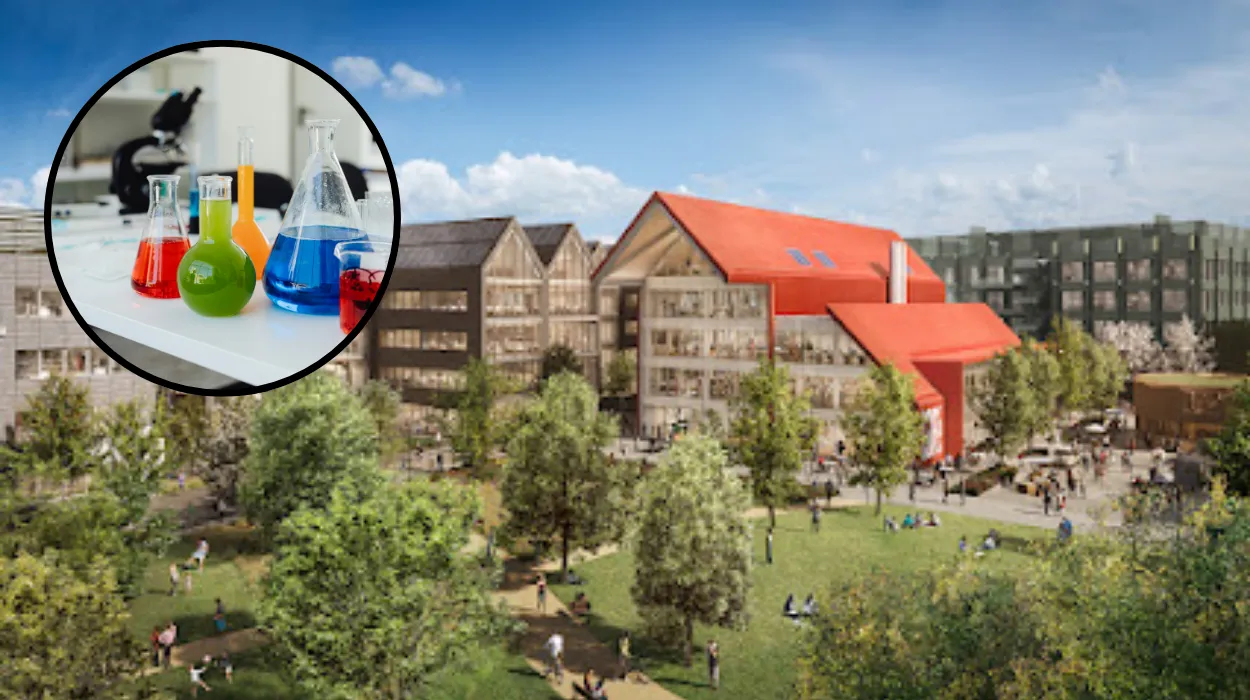
Oxford North is a purpose‑built innovation district on the outskirts of Oxford, designed to move beyond the traditional “science park” model by integrating labs, workspace, housing, amenities and public green space. According to the site’s own communications, the masterplan will deliver around one million square feet of new laboratories and workspace, making it one of the largest innovation zones in the UK’s south‑east.
The project is being developed by Thomas White Oxford in partnership with the Ontario Teachers’ Pension Plan and Stanhope, with a combined £1.2bn commitment to fund the construction and infrastructure. Thousands of construction workers are already on site, with Phase 1 buildings already welcoming first occupiers and further phases scheduled to roll out over the coming years.
How does Oxford North fit into the Ox‑Cam corridor?
The Oxford–Cambridge Growth Corridor is officially framed by government documents as a “gateway to a supercluster of science, technology and commercial excellence” that links world‑class universities, research institutes and private‑sector innovators. Oxford North is one of several anchor sites intended to act as a magnet for high‑growth firms in sectors such as life sciences, artificial intelligence, quantum technologies and clean energy.
As reported by the Supercluster Board, the Ox‑Cam region already hosts a dense network of innovation assets, including university spinouts, incubators and venture‑capital‑backed startups, and the corridor is projected to generate tens of thousands of new jobs if fully leveraged. Vallance’s visit to Oxford North was explicitly timed to reinforce the government’s narrative that the corridor is not just a regional project but a national priority for productivity and export‑led growth.
What role does Lord Vallance play in Ox‑Cam?
Lord Vallance, the Minister for Science, Research and Innovation, also serves as the government’s Oxford–Cambridge Growth Corridor Champion, a role created to coordinate policy, funding and private‑sector engagement across the region. In that capacity, he has met repeatedly with university leaders, business groups and investors to encourage further capital deployment into the corridor.
As reported by Oxfordshire‑based outlets, Vallance has visited multiple innovation sites in Oxford, including the Said Business School and university spinouts such as OMass (a drug‑discovery firm) and Oxford Ionics (a quantum‑computing company), to showcase how academic research can translate into commercial ventures. Those visits feed into the same policy thread he emphasised at Oxford North: that the UK must systematically back clusters where “talent, capital and infrastructure” already converge.
How are developers framing the Oxford North visit?
In a separate statement issued by Oxford North, the development team noted that Andrew Griffith MP, Minister of State for the Department for Science, Innovation and Technology, had also visited the site to review the masterplan and ongoing construction.
The statement said: “We warmly welcomed Andrew Griffith MP, Minister of State for the Department for Science, Innovation and Technology to our site.”
The team added that Griffith was “thoroughly engaged” as they walked him through how the district supports the government’s innovation agenda, and that he had the chance to see how the site is “specifically designed to foster creativity and collaboration amongst science and technology businesses at all stages of their growth”. The developers highlighted the inclusion of inspiring labs, homes, amenities and public spaces as part of a broader effort to attract and retain high‑skilled workers in the region.
What are the economic and spatial ambitions?
Government‑backed analyses of the Oxford–Cambridge corridor estimate that fully unlocking the region’s potential could add billions of pounds to UK GDP and create tens of thousands of high‑value jobs over the next decade. Oxford North is positioned as a key node in that projection, with its mix of lab space, flexible offices and residential components intended to reduce the need for long commutes and support a live‑work‑innovate environment.
As outlined in the Oxford North materials, the first phase includes buildings such as 3 Fallaize Street and 1 and 2 Thomas White Street, which together provide roughly 374,400 sq ft of net internal area for everything from incubator units to potential global headquarters. The wider masterplan envisages public parks, community facilities and improved transport links, aiming to make the district not just an economic asset but a sustainable urban quarter.
How do industry and academic partners view Ox‑Cam?
Business and research leaders in the corridor have broadly welcomed the government’s focus on the Ox‑Cam supercluster, while also urging more consistent long‑term funding and planning certainty. As reported by the BioIndustry Association, Vallance has argued that the corridor’s ambitions can “boost the whole UK” by diffusing innovation and high‑value jobs beyond London and the south‑east.
University‑linked innovation networks, such as Oxford Sciences Innovation and Cambridge Enterprise, have pointed to Oxford North as a tangible example of how private capital can align with public strategy to scale research‑intensive ventures. At the same time, some local stakeholders have cautioned that growth must be accompanied by measures to manage housing costs, congestion and environmental impact, particularly around transport‑rich nodes like Oxford North.
What does this mean for the wider UK tech landscape?
By spotlighting Oxford North, Vallance is effectively using the site as a showcase for the government’s broader “clusters” approach to science and technology policy. The logic is that concentrated ecosystems where researchers, startups, corporates and investors co‑locate are more likely to generate breakthroughs and scale‑up stories than dispersed, ad‑hoc arrangements.
The minister’s remarks at Oxford North echo earlier government rhetoric that the UK should aim to be a “science and technology superpower”, with corridors such as Ox‑Cam at the core of that ambition. If the corridor succeeds in attracting sustained private investment and retaining talent, it could reshape the geography of UK innovation, shifting some of the gravity away from London and towards the Oxford–Cambridge axis.
What happens next at Oxford North?
Developers say that, with Phase 1 now open and first tenants moving in, the focus will shift to completing additional lab and office blocks while refining community and transport infrastructure around the site. The Oxford North team has also begun engaging with local schools and community groups, including volunteering initiatives such as the creation of a sensory garden at Wolvercote Primary School, to embed the district within the wider Oxford community.
For the government, the Oxford North visit forms part of an ongoing effort to signal that the Ox‑Cam corridor is not just a planning concept but a set of physical, investor‑backed projects already under way. As Vallance put it during his remarks at the site, the aim is to ensure that the UK “captures the opportunities” presented by converging advances in fields such as quantum computing, life sciences and AI, with Oxford North positioned as one of the places where those breakthroughs might be born.
