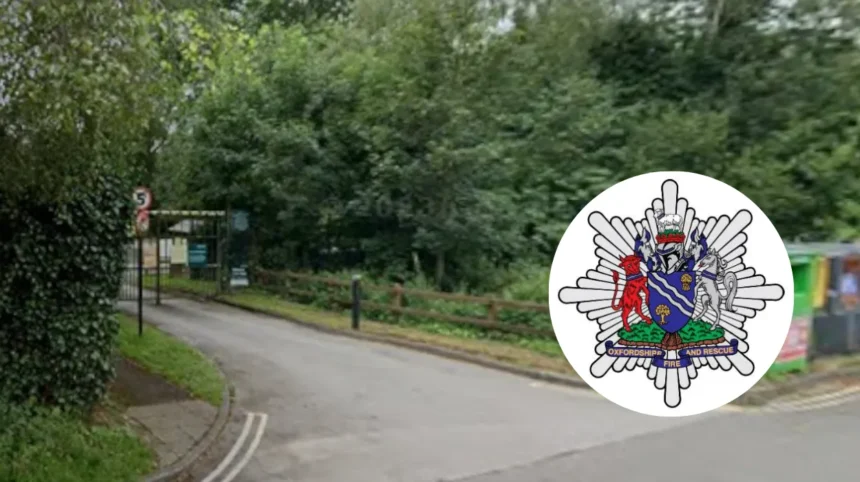
Key Points
- Police and fire crews responded to a blaze involving a 5G telecoms mast beside the A40 in Oxford.
- Thames Valley Police said the fire is being treated as “deliberate” and launched a joint investigation with Oxfordshire Fire and Rescue Service.
- The incident occurred beside the A40 near Oxford, reportedly close to Elsfield, affecting a mast believed to serve the surrounding area.
- As reported by the Oxford Mail, smoke and flames were seen coming from the structure, with emergency services called to the scene.
- One lane of the A40 was partially affected while crews tackled the fire, though major, long-lasting traffic disruption was not reported.
- According to coverage in the Oxford Mail, no injuries have been reported so far.
- Thames Valley Police appealed for witnesses and dashcam footage from drivers using the A40 at the time of the incident.
- Investigators are examining whether the fire is linked to previous attacks on telecoms masts amid ongoing conspiracy theories around 5G technology.
- As highlighted by Oxford Mail reporting, local residents expressed concern about safety and potential disruption to mobile and broadband services.
- Engineers from the mast operator were expected to assess structural damage and service impact once the site was declared safe.
- Police said it was too early to confirm whether any specific group or motive is behind the suspected arson.
- The incident follows several years of sporadic vandalism and arson attacks on 5G and other telecoms infrastructure across the UK.
- The mast sits near a major route into Oxford, raising questions about the risk to road users had the fire spread or the structure become unstable.
- According to Oxford Mail updates, officers have not yet announced any arrests and enquiries remain ongoing.
- The force urged people not to spread misinformation or speculation about the incident on social media.
- Local representatives have condemned any deliberate damage to communications infrastructure as “dangerous and irresponsible”.
- Investigators are considering CCTV from the A40 corridor and surrounding approach roads as part of the inquiry.
- Fire investigation specialists are working to determine the point of ignition and whether accelerants were used.
- Telecoms industry figures say deliberate attacks on masts can endanger emergency communications used by police, ambulance and fire services.
- The Oxford A40 mast fire has renewed debate about how best to protect key infrastructure in semi-rural roadside locations.
Initial incident and emergency response
Oxford (Oxford Daily) March 26, 2026 -Update on ‘deliberate’ 5G mast fire on A40 in Oxford”, emergency services were called to a telecoms mast fire beside the A40 near Oxford after flames and smoke were seen coming from the structure. According to her reporting in the Oxford Mail, crews from Oxfordshire Fire and Rescue Service attended the scene and worked to bring the fire under control while police managed traffic along the busy route.
- Key Points
- Initial incident and emergency response
- What have police said about the ‘deliberate’ 5G mast fire?
- Where on the A40 did the Oxford 5G mast fire happen?
- Did the A40 mast fire cause traffic disruption or injuries?
- How badly was the Oxford 5G mast damaged and what about service impact?
- Is the Oxford A40 mast fire linked to wider 5G conspiracy incidents?
- What have local residents and representatives said?
- How are fire investigators examining the scene in Oxford?
- Are CCTV and dashcams central to the A40 5G fire investigation?
- What are the wider implications for telecoms infrastructure security?
- Have any arrests been made or suspects named?
- What have police asked the public to do – and not to do?
Citing information provided to the Oxford Mail by Thames Valley Police, Norris reported that the blaze is being treated as deliberate, prompting a criminal investigation into suspected arson. The mast, located by the A40 close to Oxford, is understood to form part of the local 5G and mobile network serving the area. As set out in the Oxford Mail coverage, no injuries were reported at the time of publication, and the fire was contained to the mast and its immediate surroundings.
What have police said about the ‘deliberate’ 5G mast fire?
As reported by Miranda Norris of the Oxford Mail, a Thames Valley Police spokesperson confirmed that officers believe the fire was started intentionally, and that the force is treating the incident as suspected arson. According to the police statement quoted in the Oxford Mail update, officers have launched a joint investigation with Oxfordshire Fire and Rescue Service’s specialist fire investigators.
In the Oxford Mail article, Norris noted that Thames Valley Police appealed publicly for witnesses who were travelling on the A40 around the time of the incident and for any drivers who may have dashcam footage showing the mast or surrounding roadside area. The force, as reported by the Oxford Mail, emphasised that enquiries are at an early stage and that no arrests had been announced when the update was published.
Where on the A40 did the Oxford 5G mast fire happen?
The Oxford Mail story by Miranda Norris locates the incident beside the A40 near Oxford, describing a telecoms mast positioned off the carriageway. While the article does not provide an exact grid reference, it makes clear that the mast stands close to a well‑used stretch of the route that carries traffic into and out of Oxford.
According to the details relayed in the Oxford Mail, the fire did not cause a full closure of the A40, but police and fire crews were at the roadside while the blaze was tackled. The mast’s location beside a main road has raised questions about potential risks to drivers had the structure been weakened to the point of collapse or had debris fallen towards the carriageway.
Did the A40 mast fire cause traffic disruption or injuries?
In her update for the Oxford Mail, Miranda Norris reported that there were no injuries linked to the A40 5G mast fire at the time of writing. Emergency services focused on extinguishing the blaze and keeping road users away from any immediate danger.
As indicated in the Oxford Mail coverage, some disruption to traffic occurred while crews worked at the scene, but there was no suggestion of long‑term closure or severe congestion comparable to a major collision. The article does not report any vehicles being directly damaged by the fire, and the impact on motorists appears to have been temporary and localised around the affected stretch.
How badly was the Oxford 5G mast damaged and what about service impact?
The Oxford Mail article by Miranda Norris explains that the full extent of damage to the mast can only be assessed once the site is declared safe and handed back to the operator. As she reports, engineers are expected to examine the structure for heat damage, compromised wiring, or harm to cabling and equipment housed at the base of the mast.
While the Oxford Mail piece does not quantify any resulting loss of mobile or data services, it notes that the mast forms part of the network in the area, suggesting that some degree of service disruption is possible, at least temporarily. The report points out that modern masts often support multiple operators and technologies, including 4G and 5G, which means that any downtime can affect a broad group of users, from local residents to road users passing through.
Is the Oxford A40 mast fire linked to wider 5G conspiracy incidents?
In her Oxford Mail report, Miranda Norris notes that the fire is being treated as deliberate but also makes clear that Thames Valley Police have not publicly linked this specific incident to any broader campaign or group. The article does not report any official confirmation that 5G‑related conspiracy theories were a motive in this case.
However, as Norris sets out in context, the Oxford fire comes after a series of attacks on telecoms masts across the UK over several years, some of which coincided with false claims circulating online about 5G technology and health or about 5G and the Covid‑19 pandemic. By highlighting this national background, the Oxford Mail situates the A40 incident within a pattern of infrastructure vandalism that has concerned both police and telecoms providers, even though the motive in the Oxford case remains unconfirmed.
What have local residents and representatives said?
Drawing on the Oxford Mail’s local focus, Miranda Norris reports that the incident has prompted concern among nearby residents over both safety and the possibility of reduced connectivity. While the article does not reproduce long individual quotes from named residents, it reflects a mood of frustration that essential communications infrastructure might have been targeted deliberately.
Norris also notes in the Oxford Mail piece that local representatives and officials have consistently condemned deliberate damage to phone masts in previous cases, describing such acts as “dangerous and irresponsible” because they can interrupt services relied upon by households and businesses. The article positions the Oxford A40 mast fire within that wider local and regional debate about safeguarding critical infrastructure from vandalism.
How are fire investigators examining the scene in Oxford?
According to Miranda Norris writing in the Oxford Mail, Oxfordshire Fire and Rescue Service deployed fire investigation specialists to the A40 mast site alongside police. As she reports, these investigators are working to determine the precise point of ignition and whether any accelerant or external device was used to start or intensify the blaze.
The Oxford Mail coverage stresses that such investigations can take time, particularly when electronic equipment and high‑voltage infrastructure are involved, because specialists must distinguish between damage caused by the fire itself and any pre‑existing faults. Norris notes that the outcome of the fire investigation will help Thames Valley Police decide how to frame any eventual charges and whether further forensic work, such as residue analysis, is required.
Are CCTV and dashcams central to the A40 5G fire investigation?
As highlighted by Miranda Norris in the Oxford Mail, Thames Valley Police are actively seeking dashcam footage from motorists who were travelling along the A40 around the time of the 5G mast fire. The article explains that video captured from vehicles can sometimes show individuals or vehicles in the vicinity of infrastructure shortly before or after an incident, providing crucial leads.
Norris also reports that officers are likely to review any available fixed CCTV from nearby premises or traffic cameras covering that section of the A40 and adjacent approach roads. The Oxford Mail notes that visual evidence, combined with forensic work at the scene, often forms the backbone of investigations into roadside arson, where passing traffic offers potential witnesses but suspects can quickly leave the area.
What are the wider implications for telecoms infrastructure security?
In her contextual reporting for the Oxford Mail, Miranda Norris situates the A40 5G mast fire within continuing national concerns about the security of telecoms sites, especially those in semi‑rural or roadside locations where foot access is relatively easy. The article points out that phone masts do not just support consumer mobile services; in many cases, they underpin emergency communications as well.
By referencing the broader pattern of attacks on masts reported across the UK in recent years, Norris shows how incidents like the Oxford A40 fire can spur renewed calls for improved fencing, monitoring, and rapid‑response protocols around critical infrastructure. The Oxford Mail coverage underlines that each deliberate attack carries financial, operational, and safety costs, from repairs and inspections to possible service outages affecting both the public and emergency responders.
Have any arrests been made or suspects named?
In the latest update summarised by Miranda Norris in the Oxford Mail, Thames Valley Police had not announced any arrests or identified any suspects publicly in connection with the A40 Oxford 5G mast fire. The force, as reported in the article, continues to describe enquiries as ongoing.
Norris notes that, as with many infrastructure‑related incidents, the early phase of the investigation focuses on evidence gathering rather than immediate public naming of potential suspects. The Oxford Mail reports that police will provide further updates as and when there are significant developments, such as arrests, charges, or appeals tied to specific individuals or vehicles.
What have police asked the public to do – and not to do?
As reported by Miranda Norris in the Oxford Mail, Thames Valley Police have urged anyone with information about the A40 Oxford mast fire to come forward via the force’s usual contact channels, quoting the relevant incident reference. The article highlights the request for dashcam footage or eyewitness accounts from drivers who may have seen unusual activity near the mast.
At the same time, Norris records in the Oxford Mail that officers have cautioned the public against spreading unverified rumours or speculation on social media about who might be responsible or what their motives might be. According to her report, the force is keen to prevent misinformation from hindering the investigation or unfairly targeting individuals without evidence.