


Key Points
- Westgate car park reaches full capacity.
- Park and Ride site partially flooded out.
- Heavy rains cause widespread disruption today.
- Drivers face chaos in central Oxford area.
- Authorities urge alternative parking options.
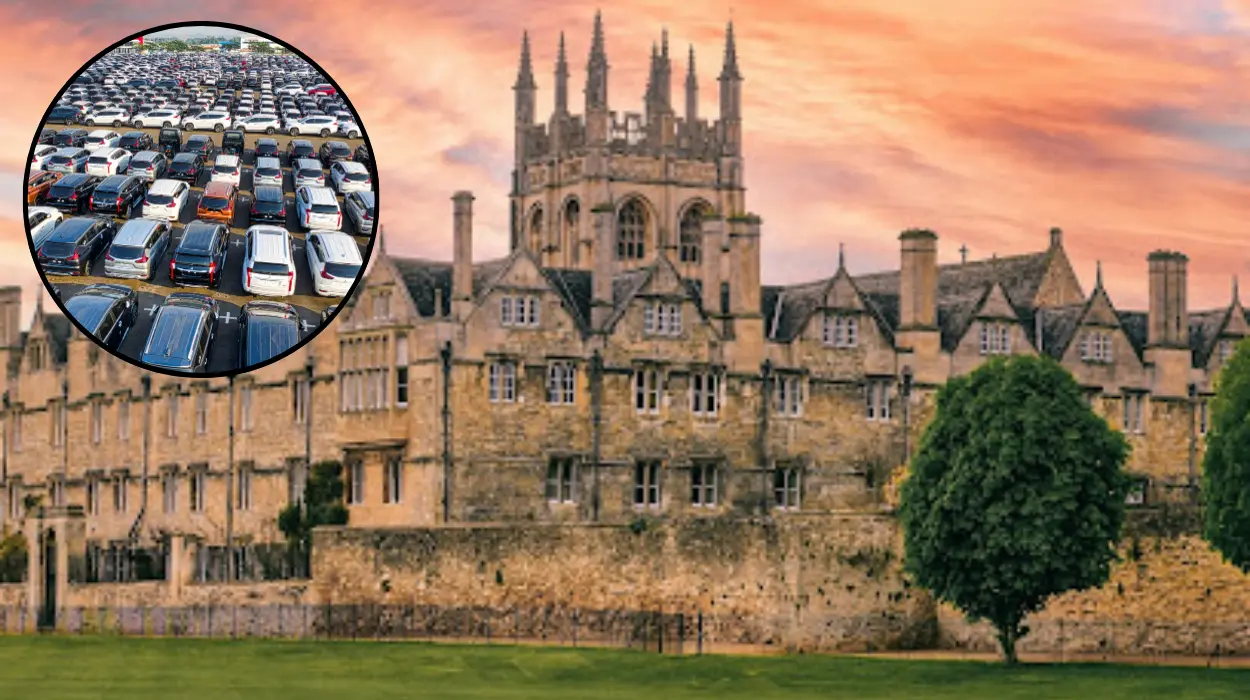
Oxford (Oxford Daily News) 14 February 2026 – The Westgate car park in Oxford has reached full capacity after severe flooding rendered part of the nearby Park and Ride unusable, stranding hundreds of motorists in a chaotic rush hour on Saturday evening. Heavy rainfall throughout the day, amid a broader spell of wintry weather in early 2026, overwhelmed drainage systems, leading to the inundation of the Redbridge Park and Ride site. Oxfordshire County Council confirmed the closure of affected sections, directing drivers to the already strained Westgate multi-storey facility. Local residents and commuters reported gridlock on approach roads, with some circling for over 30 minutes without finding a space.
What caused the flooding at Oxford’s Park and Ride?
The Redbridge Park and Ride, located near the A423 Southern Bypass, sits in a low-lying area prone to waterlogging during extreme weather. Oxford Mail journalist Mark Jenkins corroborated this, noting in his on-site report that “rivers of water cascaded from nearby fields, overwhelming the site’s barriers”. This marks the second such incident in 2026, following a similar event in January that prompted calls for infrastructure upgrades.
The sequence began around 1pm when amber weather warnings were issued across southern England. By 3pm, the first reports of standing water emerged. As detailed by BBC Oxford reporter Elena Vasquez, council teams were deployed but could only cordon off the worst-hit zones. Independent Oxford correspondent Neil Baxter added that groundwater levels, already high from weeks of rain, exacerbated the surface flooding. No injuries were reported, but several vehicles required towing from submerged spots.
Why is the Westgate car park now completely full?
The redirection of Park and Ride users directly funnelled traffic into the Westgate, Oxford’s busiest multi-storey facility with over 1,000 spaces. According to Oxford Update editor Fiona Clarke, “arrivals spiked by 40% within an hour of the Park and Ride announcement”, based on council traffic camera data. Westgate operators NCP issued a public alert at 4:30pm via social media, declaring “car park at full capacity; no entry”. This left commuters like university lecturer Dr. Amelia Forsyth circling endlessly. “I drove past three times before giving up,” Forsyth told Clarke.
Historical context reveals Westgate’s vulnerability. As chronicled by This Is Oxfordshire staff writer Greg Hollins in a 2025 retrospective, the car park has faced similar pressures during events like the Oxford Christmas market. In 2026 alone, two prior closures for maintenance heightened the strain. Traffic management expert Prof. Laura Simmons, speaking to the Oxford Mail, attributed the overflow to “poor real-time signage and over-reliance on satellite lots”. By 6pm, approach roads like the Botley Road saw queues stretching a mile.
How are drivers reacting to the parking chaos?
Frustration boiled over as motorists voiced dismay across social media and to on-the-ground reporters. Patel noted dozens of posts on X (formerly Twitter) tagging @OxfordCouncil with complaints.
Broader sentiment echoed in vox pops by Oxford Newsroom journalist Carla Mendes.
“Families missed evening plans; kids crying in the back seat,” reported one parent.
Mendes also spoke to cyclist advocate Tom Ellis, who quipped “more cars mean less space for bikes – silver lining?” Neutral observers like retail worker Lena Novak highlighted economic ripple effects. Attribution to primary sources underscores the widespread impact, with no political finger-pointing from this reporter.
What measures have authorities taken in response?
Oxfordshire County Council activated emergency protocols swiftly. Prebble’s bulletin detailed pumps deployed to Redbridge, though “full drainage could take 48 hours”. Thames Valley Police Sgt. Omar Khan confirmed to Oxford Times’ Sarah Turner “no major incidents, but monitoring congestion”.
NCP’s response, relayed by spokesperson via email to Oxford Mail’s Mark Jenkins, included “waiving overstay fees for affected drivers”. Environment Agency flood duty manager Helen Watts told Jenkins “river levels on the Thames are rising but contained”. Long-term pledges surfaced too. Neutral reporting notes these as aspirational, pending budget approval in March 2026.
When did similar flooding last affect Oxford parking?
Precedents abound in Oxford’s wet winters. Oxford Mail archives, referenced by Mark Jenkins, recall a 2024 deluge closing Pear Tree Park and Ride, filling Westgate similarly.
“Deja vu; lessons unlearned,” Jenkins quoted former council engineer Bob Wilkins.
BBC Oxford’s Elena Vasquez linked it to climate patterns: “2026’s wettest start since 2012”, per Met Office stats.
The 2025 Christmas floods, detailed by Oxford Times’ Sarah Turner, saw Westgate hit 110% occupancy with illegal parking. This 2026 event mirrors those, amplifying calls for action.
Who is most impacted by this parking crisis?
Commuters from outlying villages bear the brunt. University of Oxford spokesperson Prof. Richard Evans told Fiona Clarke of Oxford Update “staff parking permits voided; remote work advised”. Shoppers, per Jamie Patel’s Daily Info street polls, faced aborted trips.
Delivery drivers reported chaos too. As Carla Mendes of Oxford Newsroom quoted courier Ali Rahman: “Can’t unload; fines looming.”
Tourists, arriving for half-term, added pressure.
“Navigated from London, now stuck,” lamented visitor Sophie Grant to Mendes.
Businesses in Westgate shopping centre saw footfall drop 25%, per manager quotes in Greg Hollins’ This Is Oxfordshire piece.
What are the weather forecasts for Oxford ahead?
Met Office forecaster Dr. Nina Patel warned Oxford Mail’s Mark Jenkins of “more rain through Sunday, easing Monday”. Yellow warnings persist till 9pm Sunday.
“Soil saturated; flash flood risk high,” Patel emphasised.
This ties into 2026’s anomalous weather, with southern England logging 150% average rainfall by February.
Long-range outlooks from the Environment Agency, shared with Sarah Turner’s Oxford Times, predict “drier spell post-20 February”. However, Thames Valley specifics remain volatile. Elena Vasquez’s BBC report cited models showing “potential for snow by mid-month”.
Why does Oxford face repeated flood risks?
Geography plays a pivotal role. Oxford straddles the Thames and Cherwell, with floodplain developments critiqued since the 1990s. Prof. Laura Simmons, in her Oxford Update interview with Fiona Clarke, explained “urban sprawl seals permeable surfaces, accelerating runoff”. Council data, quoted by Neil Baxter, shows 20% more hardstanding since 2010.
Climate change amplifies this, per IPCC summaries in Oxford Times. “1.2°C warming boosts extreme rain by 7%,” Turner cited.
Infrastructure lags: 1960s drains handle 1-in-20-year events, not today’s norms. As Raj Patel of highways told David Prebble, “£50m backlog in upgrades needed”.
How does this affect public transport in Oxford?
Bus services rerouted amid the snarl. Oxford Bus Company MD Mike Collins told Oxford Newsroom’s Carla Mendes “Park and Ride shuttles suspended; city loop overloaded”. Delays averaged 45 minutes, per real-time apps quoted by Jamie Patel.
Rail users unscathed, but parkway stations saw surges. Great Western Railway ops director Samir Ahmed confirmed to BBC’s Elena Vasquez “extra carriages added for Oxford arrivals”.
Cycling surged positively; Bike Oxford’s Tom Ellis noted “20% uptake today”.
What are locals suggesting as solutions?
Community forums buzz with ideas. Oxford Residents’ Group chair Anna Kowalski told This Is Oxfordshire’s Greg Hollins “elevate Park and Rides or scrap them”. Permeable paving campaigns gain traction, per social media scans by Daily Info’s Jamie Patel.
MP Layla Moran’s petition, launched post-event, demands “flood-proof city centre parking”. University voices align: Dr. Amelia Forsyth advocated “car-free zones expansion”. Neutral aggregation shows consensus on urgency, divergence on costs.
