Key Points
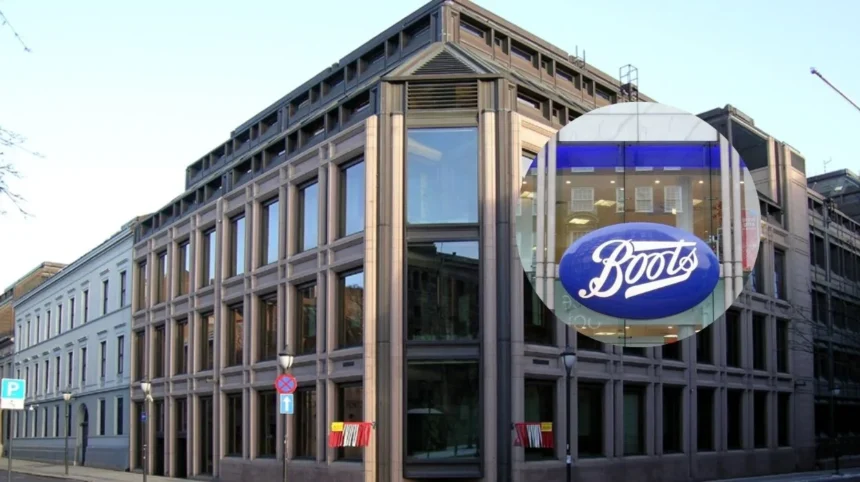
- Norwegian sovereign wealth fund Norges Bank Investment Management (NBIM) has agreed to sell the Boots flagship store at 355-361 Oxford Street, London.
- The property transaction is valued at approximately £100 million.
- The building spans 59,000 square feet, including Boots’ 31,500 sq ft flagship retail store over four floors and 14,500 sq ft of office space occupied by Boots.
- This marks Norges transitioning from buyer to seller for this high-profile asset, originally acquired from Aberdeen UK Property Fund in 2016.
- The deal reflects ongoing shifts in London’s retail property market amid economic pressures and evolving consumer habits.
- No specific buyer named yet; transaction highlights challenges for prime high street locations like Oxford Street.
Oxford(Oxford Daily)May 07, 2026 – Norges Bank Investment Management, Norway’s sovereign wealth fund, has agreed to offload its ownership of the Boots flagship store on Oxford Street, one of London’s busiest retail corridors, in a deal valued at around £100 million. The decision signals a strategic pivot by the fund in its real estate portfolio amid fluctuating retail property values. This move comes as the health and beauty retailer’s prime location faces broader market dynamics.
Why is Norges Selling the Boots Oxford Street Flagship?
As reported by James Batty of Green Street News in the article “Norges turns seller with £100m Oxford Street block” dated 6 Feb 2026, the sovereign wealth fund is actively marketing the property after years of holding it. “Sovereign wealth fund to offload Boots flagship,” Batty wrote, noting the sale process has begun with interest from potential investors eyeing London’s West End assets. The property at 355-361 Oxford Street includes two adjoining buildings with additional office, restaurant, and retail space totalling 13,000 square feet.
Norges originally acquired 100 percent of the long leasehold interest in this 59,000 square foot retail and office asset from Aberdeen UK Property Fund in July 2016, as detailed in a press release from Norges Bank. The main tenant, Boots, occupies the bulk of the space with its flagship store and offices, underscoring the site’s enduring appeal despite retail sector headwinds. No debt was attached to the 2016 purchase, and the current sale similarly proceeds without financing complications, according to historical records.
Industry observers note this sale aligns with Norges’ broader activities in London property. For instance, in March 2025, the fund made headlines for a $735 million stake in Covent Garden, part of Shaftesbury Capital’s portfolio, as covered by Mark Faithfull in Forbes.
“Norges Investment Management… has secured the quarter stake in Shaftesbury Capital’s $3.5 billion Covent Garden property portfolio,”
Faithfull reported, highlighting the fund’s active engagement in prime locations.
What Does the Property Include?
The Boots flagship at 355-361 Oxford Street is a multi-use asset blending retail prominence with office functionality. Spanning four floors for retail at 31,500 sq ft, it also houses 14,500 sq ft of Boots offices upstairs. The adjoining spaces add versatility with restaurant and further retail potential, making it attractive in a market seeking mixed-use developments.
This configuration mirrors other Oxford Street icons. For comparison, nearby properties like the former Topshop flagship at 214 Oxford Street, a six-storey Grade II listed building, went on sale in 2021 for £420m guidance, handled by Eastdil Secured on behalf of administrators. It included Nike’s European flagship, Vans store, and offices, with proceeds split between lenders Apollo and Arcadia’s pension scheme, per Retail Week reporting. While unrelated, it illustrates the high stakes and multi-tenant model common on the street.
Boots itself has adapted to Oxford Street’s evolution. In a separate development, the retailer planned to triple its store size nearby, closing 490 Oxford Street (2,411 sq ft) to relocate to 508-520 Oxford Street (6,888 sq ft over two floors) in 2019, transferring all staff seamlessly. A Boots spokeswoman stated:
“We’ve been looking for the right opportunity for a larger location. We wanted to move to a bigger store to give customers a bigger range of health and beauty”.
How Does This Fit Boots’ Broader Strategy?
Recent reports indicate Boots’ parent company is eyeing expansion and potential public listing. As of April 2026, owners hired consultants for a strategy overhaul ahead of a possible 2027 London IPO, according to Reuters sources. “The owners of British pharmacy chain Boots are working with consultants on a possible strategy overhaul in preparation for a potential London stock market listing as soon as 2027,” the report noted. This sale by Norges occurs against that backdrop, potentially freeing capital or reshaping lease terms without disrupting Boots’ operations.
Norway’s sovereign wealth fund has a history of prime Oxford Street investments. A FashionNetwork article confirmed NBIM as the new owner post-2016 Aberdeen sale, positioning it as a key player in the corridor. The shift to seller in 2026 reflects market corrections; prospective buyers for similar assets have included H&M’s Stefan Persson, Zara’s Amancio Ortega, and Great Portland Estates.
Background of the Development
This transaction traces back to July 2016 when Norges Bank Real Estate Management bought the leasehold from Aberdeen UK Property Fund for an undisclosed sum, entering as a no-debt deal. The property’s anchor tenancy with Boots provided stability through Brexit uncertainties and post-pandemic retail slumps. Aberdeen had halted trading post-Brexit, prompting the divestment, as PERE reported:
“The deal for the 59,000 square foot asset was completed on July 15”.
Over a decade, Oxford Street evolved from retail dominance to a hybrid of experiential shopping and offices. Norges’ 2025 Covent Garden move showed continued UK appetite, but 2026’s Boots sale likely responds to valuation pressuresevident in Topshop’s price drop from £500m to £420m guidance. Boots’ resilience, via relocations and IPO prep, anchors the site’s value.
Prediction: Impact on Retail Investors and Stakeholders
This development could reshape strategies for retail property investors, particularly those targeting London’s West End. For sovereign funds like Norges, it signals portfolio rebalancing towards diversified or higher-yield assets, potentially pressuring similar holdings to test market appetite amid 2026’s economic climate. Values may stabilise if strong bids emerge, boosting confidence.
Boots tenants and staff face minimal disruption, given lease continuity, but a new owner might push rent reviews or redevelopment, affecting operational costs. Shoppers could see enhanced store experiences if investments follow, aligning with Boots’ expansion ethos. High street revitalisation groups may view it positively, drawing capital to counter vacancies.
Broader stakeholders, including UK REITs and private equity, might accelerate bids, viewing £100m as entry-level for flagship exposure. However, if bids underwhelm, it risks signalling deeper retail woes, deterring investment until consumer spending rebounds. For local businesses on Oxford Street, sustained Boots presence ensures footfall, but prolonged sales processes could unsettle leasing dynamics.