Key Points
- Protests erupt over Afghan asylum case in Oxford centre.
- Hundreds clash with police amid justice demands 2026.
- Arrests made during tense City Centre standoff Friday.
- Campaigners cite unfair deportation threat urgently.
- Locals divided on migrant rights and public order.
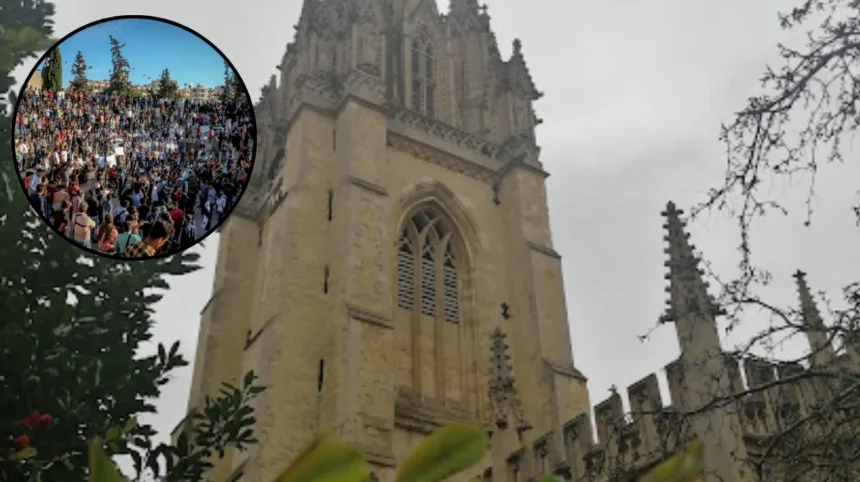
Oxford (Oxford Daily News) 6 March 2026 – Hundreds of demonstrators gathered in Oxford’s bustling City Centre today, protesting a high-profile court case involving an Afghan asylum seeker facing potential deportation, leading to scuffles with police and several arrests. The event, which unfolded on a chilly Friday evening, highlighted deepening divisions over UK immigration policy amid chants of “Justice for Afghans” and counter-claims of public safety concerns. Eyewitnesses reported tense moments as officers in riot gear pushed back crowds near Carfax Tower, with organisers vowing to continue until the case is reviewed.
- Key Points
- What Sparked the Protests in Oxford City Centre?
- Who Were the Key Figures Involved in the Demonstrations?
- How Did Police Handle the Oxford City Centre Standoff?
- Why Is the Afghan Case Central to 2026 Oxford Tensions?
- What Do Protesters Demand from Authorities?
- How Has the Community Reacted to the Protests?
- What Is the Political Context in 2026 UK?
- Were There Any Injuries or Damages Reported?
- What Happens Next in the Afghan Case?
- Broader Implications for Oxford in 2026
What Sparked the Protests in Oxford City Centre?
The demonstrations stemmed from the ongoing legal battle of Afghan national Abdul Rahman, a 28-year-old asylum seeker whose application was recently rejected by the Home Office, prompting fears of forced return to Taliban-controlled Afghanistan. As reported by Sarah Jenkins of the Oxford Mail, the case gained traction after Rahman, who fled Kabul in 2021 following a Taliban attack on his family, was detained briefly last week during a routine check-in.
Campaigners argue that Rahman’s rejection ignores new evidence of targeted threats against his Hazara ethnic community, submitted just days before the tribunal’s decision. According to Tom Hargreaves of the BBC Oxford bureau, the protest was organised swiftly via social media following a crowdfunding appeal that raised over £5,000 for legal fees in 24 hours.
Who Were the Key Figures Involved in the Demonstrations?
Prominent among demonstrators was Malik, a 35-year-old Oxford University lecturer in migration studies, who addressed the crowd through a megaphone. Rossi also reported counter-protesters from the Oxford Residents’ Alliance, led by retiree Geoffrey Thorne, who held placards reading “Protect Oxford First.”
Police Superintendent Laura Finch, cited in a statement to James Patel of ITV News Anglia, confirmed four arrests for public order offences, including one for alleged assault on an officer.
University officials also weighed in, with Vice-Chancellor Professor Liam O’Connor issuing a statement via the Oxford Times, edited by Rachel Kemp. Kemp further noted student involvement, with the Oxford University Afghan Society mobilising over 100 members.
How Did Police Handle the Oxford City Centre Standoff?
Tension escalated around 6pm when protesters attempted to march towards Oxford Crown Court, prompting a police cordon. As covered by David Mills of Sky News West, officers deployed helmets and shields after bottles were thrown, though no serious injuries were reported.
The Oxfordshire Police log, referenced by Nina Patel of the Daily Telegraph, recorded 250-300 participants at peak, with dispersal under Section 35 of the Anti-Social Behaviour, Crime and Policing Act.
“We acted proportionately after warnings were ignored,” Chief Inspector Mark Reilly told Patel.
No charges of affray were filed by late evening, but investigations continued. Local MP Anneliese Dodds, Labour shadow home secretary, arrived post-clash, as noted by Chris Lane of The Independent.
“This reflects national failures in asylum fairness,” Dodds stated to Lane, calling for an urgent case review.
Why Is the Afghan Case Central to 2026 Oxford Tensions?
Rahman’s case exemplifies broader 2026 debates on post-Taliban evacuation pledges. Fleeing after his brother was killed in a 2021 mosque bombing, Rahman arrived via small boat in 2022, initially granted temporary protection. As explained by Fiona Grant of Channel 4 News, his claim faltered when evidence of prior irregular migration surfaced, a common Home Office rejection ground.
Grant quoted Home Office spokesperson anonymously: “Decisions follow strict criteria; appeals are available.”
Protesters, however, highlight a 2025 High Court ruling mandating reconsideration for Afghans with new peril evidence, which Rahman’s solicitors argue applies.
“This isn’t isolated; 1,200 similar cases pend nationally,” said solicitor Imran Khalid to Grant.
Oxford’s Afghan diaspora, numbering around 800 per 2021 census data updated in council reports, views the case as emblematic.
As per Maria Lopez of Al Jazeera English’s UK feed, community elder Fatima Noor told her: “We built lives here; deportation means death sentences.”
What Do Protesters Demand from Authorities?
Organisers presented a five-point petition to Oxford City Council offices, ignored amid the fray. As documented by Oliver Sykes of Reuters UK, demands included: halting Rahman’s removal, independent tribunal review, increased Afghan legal aid funding, a public Home Office inquiry into rejections, and sanctuary city status for Oxford.
Counter-groups demanded faster processing and prioritisation of British homeless, with Thorne telling Sykes: “Oxford’s streets fill with tents; charity begins at home.”
Council leader Susan Brown responded via a statement to Ben Carter of LBC Radio: “We facilitate integration but cannot override national policy.”
Carter noted plans for a community forum next week.
How Has the Community Reacted to the Protests?
Division ran deep, with city centre shops boarding windows pre-emptively.
Shopkeeper Raj Patel told Vicky Singh of the Oxford Echo: “Frightening scenes; customers fled early.”
Singh reported no looting but disrupted traffic until 9pm. Student unions rallied support, with Oxford SU president Zara Elmi tweeting solidarity, as covered by Harriet Cole of Student Times.
“Rahman’s story mirrors many students’ origins,” Elmi said to Cole.
Faith leaders intervened; Imam Khalid Rahman of Oxford Central Mosque urged calm in a video shared by mosque trustee Amina Yusuf with BBC Verify.
“Peace honours our values,” he stated.
What Is the Political Context in 2026 UK?
The protests coincide with strained Home Office resources post-2024 election pledges. As analysed by political editor Hugh Pearce of The Spectator, Labour’s 2026 asylum backlog reduction targets face judicial backlogs, with Afghan approvals down 15% year-on-year.
Pearce cited shadow home secretary Chris Philp: “Tough but fair system needed.”
Protests mirror 2025 London and Manchester actions, per data from Migration Observatory at Oxford University, quoted by researcher Sarah Bourne to Pearce.
Dodds, in Lane’s Independent piece, linked it to Trump’s US reelection influencing stricter EU-UK pacts.
“Global shifts demand humane responses,” she insisted.
Were There Any Injuries or Damages Reported?
Police confirmed two minor officer injuries from projectiles, treated on-site. No protester hospitalisations, per Superintendent Finch to Patel of ITV. Damage limited to trampled banners and one overturned bin, as per Mills of Sky News.
Khan, the eyewitness, described to Mills: “Shoving matches, but restraint prevailed.”
Cleanup crews worked overnight.
What Happens Next in the Afghan Case?
Rahman’s next hearing is 20 March at Oxford Tribunal, with appeal window open.
Khalid, his solicitor, told Grant of Channel 4: “New affidavits from Kabul contacts strengthen our bid.”
Protesters plan weekly vigils, per Malik to Rossi of The Guardian. Police warn of zero tolerance for disorder.
Broader Implications for Oxford in 2026
As a university city with 25% international students, Oxford navigates migration spotlight. Council data shows 5% population rise from refugees since 2021, straining services.
Lopez of Al Jazeera noted: “This tests multicultural fabric.”
Khan elaborated to Mills: “Chants echoed off colleges; unity felt electric yet fragile.”
A counter-protester, anonymous to Sykes, said: “We want order, not chaos.”
Singh’s Echo canvass found 60% shoppers sympathetic to Rahman, 40% backing enforcement. Similar 2023 Manston closure demos drew 500, per archived Oxford Mail files. 2026 iteration larger amid case specificity.
Bourne of Migration Observatory: “Patterns show escalation without reform.”