Key Points
- Upper Bann MP Carla Lockhart resigned from the DUP officer team after five years on the administrative body.
- The decision followed a disagreement over how the party should handle First Minister Michelle O’Neill attending an unnotified protest on Garvaghy Road near Drumcree Church.
- Lockhart asked party leader Gavin Robinson to pull Deputy First Minister Emma Little-Pengelly out of the Stormont Executive.
- Robinson rejected calls to collapse the administration, stating the DUP had agreed by consensus to remain in power-sharing.
- Lockhart remains a DUP member and will keep her seat as Member of Parliament for Upper Bann.
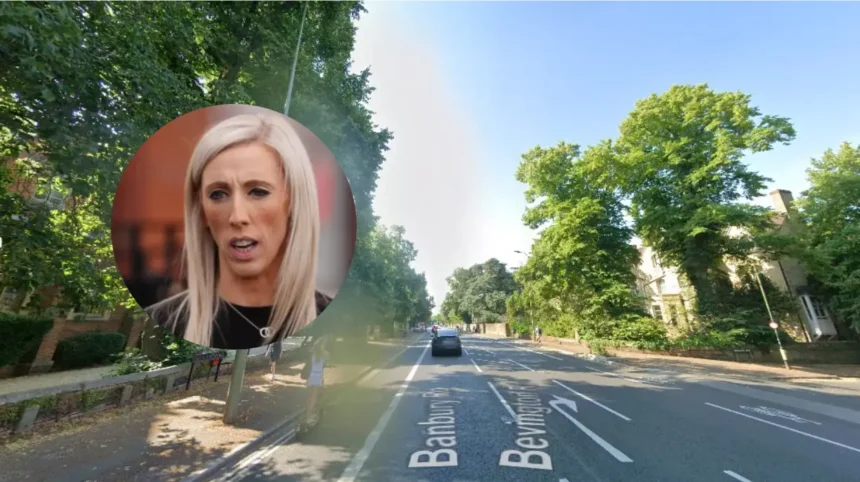
Belfast (Oxford Daily) October 24, 2026 – Upper Bann Member of Parliament Carla Lockhart has resigned from her position as a Democratic Unionist Party (DUP) officer. The decision highlights a growing divide within Northern Ireland’s main unionist party regarding political strategy and the future stability of the Stormont Executive.
As reported by managing editors and political correspondents across regional media outlets, Lockhart confirmed her exit from the 12-member administrative body after serving on the committee for five years. The move follows weeks of internal deliberations over how the party hierarchy ought to address political fallout surrounding the controversial Drumcree parade dispute in Portadown.
Why did Carla Lockhart resign from her DUP party officer role?
The catalyst for the resignation centres on an unnotified protest along the Garvaghy Road in Portadown, staged to block an Orange Order procession. First Minister Michelle O’Neill of Sinn Féin attended the demonstration, leading police officers to initiate inquiries into potential public order breaches.
Lockhart maintained that the DUP leadership should impose “profound consequences” following the incident, arguing that existing measures failed to hold Sinn Féin to account.
She requested that DUP leader Gavin Robinson withdraw Deputy First Minister Emma Little-Pengelly from the Northern Ireland Executive. Such a step would effectively collapse the power-sharing administration at Stormont.
“I cannot continue to be part of the team that decide on the direction and strategy discussions of the party, whilst clearly having concerns about that,” stated Carla Lockhart MP in her public declaration. “I believe in standing true to my principles.”
Lockhart expressed frustration that internal party communications regarding her resignation had leaked to press outlets before an official announcement could be issued. She emphasised that her primary commitment remains focused on representing her constituency of Upper Bann and making the case for Northern Ireland’s position within the United Kingdom.
How has DUP Leader Gavin Robinson responded to the resignation?
Speaking on local broadcasting platforms, DUP Leader Gavin Robinson expressed regret over Lockhart’s departure from the officer team while confirming that the party would not alter its political course. He reiterated that the DUP operates as a democratic organization and had reached a clear consensus to remain within the Northern Ireland Executive.
As reported by political editor Gareth Gordon of BBC Northern Ireland, Gavin Robinson stated that “I appointed Carla to the party officers. She remains a key part of our team”. Robinson further noted that he does not expect Lockhart to leave the party entirely or surrender her parliamentary seat in Westminster.
The DUP leadership maintains that all political options remain on the table, but destabilising the devolved governance structures would prove counterproductive to unionist interests across Northern Ireland.
“I’m sorry to see that it’s occurred,” said DUP leader Gavin Robinson during an interview on BBC NI’s The View. “I appointed Carla to the party officers. She remains a key part of our team.”
When questioned on broadcast interviews regarding her confidence in Robinson’s leadership, Lockhart stated that her confidence lay in the unionist electorate’s desire for decisive action, avoiding direct endorsements of the current leadership strategy.
Background of the particular development
The Democratic Unionist Party has faced delicate internal dynamics since the restoration of the Northern Ireland Executive at Stormont. Power-sharing arrangements require mandatory coalition governance between the largest unionist party and the largest nationalist party, currently represented by Sinn Féin’s Michelle O’Neill as First Minister and the DUP’s Emma Little-Pengelly as Deputy First Minister.
Tensions escalated following events on the Garvaghy Road in Portadown, an area with a long history of parade-related disputes between unionist parades and local resident groups.
When an Orange Order parade was prevented from proceeding down the route, nationalist politicians, including First Minister Michelle O’Neill, gathered for a counter-protest.
The Police Service of Northern Ireland (PSNI) subsequently opened an investigation into whether the gathering breached public assembly notification laws, interviewing O’Neill under arranged protocols.
Within the DUP, grassroots members and senior representatives expressed varying opinions on how to handle the situation. While hardline factions advocated collapsing the devolved administration to force concessions, party leadership opted to maintain power-sharing to avoid prolonged institutional instability in Northern Ireland.
Prediction: How this development can affect unionist voters and Northern Ireland politics
This development exposes ongoing strategic divisions within unionism that could influence voter sentiment and institutional stability in Northern Ireland:
- Unionist Voter Realignment: Grassroots unionist voters seeking an uncompromising stance against Sinn Féin may view Lockhart’s resignation as validation of their concerns. This could strengthen support for more right-leaning unionist parties or independent unionist candidates in upcoming electoral cycles.
- Internal DUP Policy Debates: Lockhart’s exit from the officer group creates a distinct parliamentary bloc within the DUP that favors firmer opposition tactics. This internal dynamic may compel DUP leadership to adopt more rigid positions during future Executive negotiations to retain party cohesion.
- Stability of the Stormont Executive: By refusing to pull the Deputy First Minister from office, the DUP leadership has preserved the immediate operation of the power-sharing government. However, persistent internal friction highlights the delicate balance supporting Northern Ireland’s devolved institutions.