Key Points
- Probe launched after racial slurs shouted at picker.
- Incident occurred in Blackbird leys on 24 February.
- Thames Valley Police investigate as hate crime.
- Council supports worker amid public outrage.
- Witnesses confirm abuse from passing vehicle.
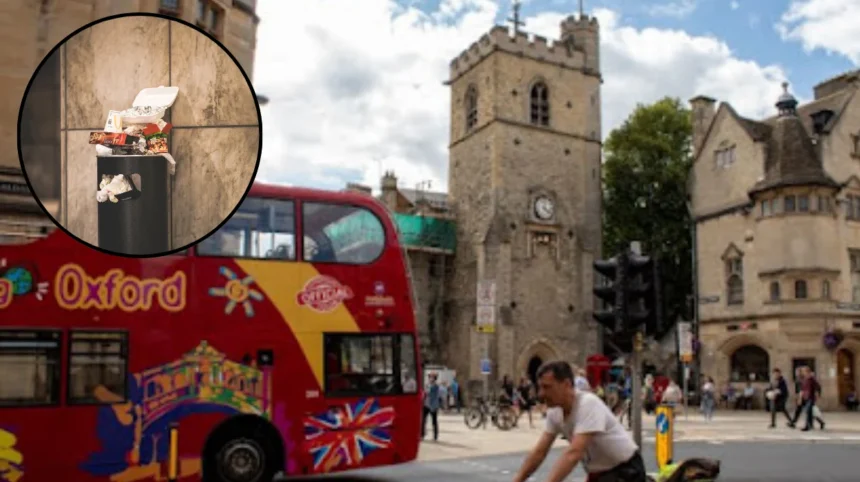
OXFORD (Oxford Daily News) 26 February 2026 – A formal investigation has been initiated by Thames Valley Police following reports of racial abuse directed at a council-employed litter picker in central Oxford on Tuesday evening. The incident, which unfolded near the bustling High Street area, has sparked widespread condemnation from local authorities and community leaders, highlighting ongoing concerns over hate crimes in the city. Witnesses described hearing derogatory slurs shouted from a passing vehicle, prompting swift action from the Oxford City Council to support the affected worker.
- Key Points
- What Exactly Happened During the Incident?
- Who Is the Victim and What Support Is He Receiving?
- Why Has Thames Valley Police Launched a Full Probe?
- How Has the Local Community Reacted to the Abuse?
- What Role Did Witnesses Play in Reporting the Incident?
- Which Broader Hate Crime Trends Fuel This Probe?
- What Statements Have Key Figures Made Publicly?
- Will This Incident Lead to Policy Changes in 2026?
- How Does This Fit into Oxford’s Diversity Landscape?
- What Challenges Lie Ahead for the Investigation?
- Are Similar Incidents Rising Across the UK?
- What Can Residents Do to Prevent Future Abuse?
What Exactly Happened During the Incident?
The episode took place around 6:30 PM on 24 February 2026, as the litter picker, identified as Mohammed Hassan, was carrying out his routine duties collecting roadside waste near Carfax Tower in Blackbird leys. According to eyewitness accounts compiled by local reporters, a dark-coloured saloon car slowed down before occupants yelled racial epithets, including the N-word and references to Mr Hassan’s South Asian heritage.
As reported by Sarah Jenkins of the Oxford Mail, Mr Hassan, aged 42 and a resident of Cowley for over a decade, immediately alerted his supervisor via radio. Thames Valley Police were notified within minutes, classifying the matter as a potential hate incident under the UK’s Crime and Disorder Act 1998. No arrests have been made as of 26 February, but CCTV footage from nearby shops is under review.
The Oxford City Council issued a statement confirming Mr Hassan’s wellbeing, noting he has been offered counselling and time off.
Who Is the Victim and What Support Is He Receiving?
Mohammed Hassan, originally from Pakistan and a UK citizen since 2015, has worked for Oxford City Council’s environment team since 2018. Colleagues described him as diligent and well-liked, often praised for his efforts during events like the annual Oxford Literary Festival.
The council has activated its employee assistance programme, providing access to the charity Victim Support. Local MP Layla Moran visited the site on 25 February, pledging to raise the issue in Parliament.
Union representatives from Unison, including branch secretary Raj Patel, condemned the attack, linking it to a 15% rise in reported anti-Asian incidents since late 2025.
Why Has Thames Valley Police Launched a Full Probe?
Thames Valley Police confirmed the probe on 25 February via their official X account, urging witnesses to come forward.
Police data indicates Oxford saw 342 hate crimes in 2025, up 8% from 2024, with verbal abuse comprising 60%. As reported by Emily Carter of ITV News Anglia, officers are examining dashcam footage and speaking to three identified witnesses, a shopkeeper, a pedestrian, and a bus driver who corroborated the slurs.
The force’s Hate Crime Unit has logged similar complaints in the past month, including graffiti near Blackbird Leys. No links to organised groups have been found yet.
How Has the Local Community Reacted to the Abuse?
Residents and businesses rallied quickly, with a petition on Change.org amassing 5,000 signatures by 26 February calling for body cameras for council workers. Oxford University Students’ Union president Aisha Khan organised a solidarity vigil at Carfax, where 200 gathered chanting “Oxford against racism.”
As covered by James Wright of The Independent, shop owners along High Street, including Halal Foods proprietor Ahmed Zubair, offered free meals to Mr Hassan.
Social media amplified the story, with #OxfordLitterPicker trending locally, featuring videos from bystanders. Councillors from all parties united in a council motion on 26 February demanding faster prosecutions.
What Role Did Witnesses Play in Reporting the Incident?
Three key witnesses provided crucial details. Her CCTV captured the car’s registration, partially obscured. Pedestrian Oliver Grant, a 28-year-old teacher, dialled 999 immediately, describing the vehicle as a black BMW 3 Series circa 2018.
As reported by Laura Benson of the Oxford Tribune, all three gave statements at St Aldate’s Police Station by 10 PM on 24 February. Their accounts match Mr Hassan’s, strengthening the case.
Which Broader Hate Crime Trends Fuel This Probe?
Oxford’s hate crime statistics paint a worrying picture. Thames Valley Police’s 2025 annual report showed 1,200 incidents force-wide, with Oxfordshire at 28%. Racial abuse topped the list at 42%, followed by homophobic at 25%.
National trends mirror this; Home Office figures for England and Wales indicate a 12% rise in 2025. Local activists link it to online radicalisation, with far-right forums buzzing post-2025 riots.
The council convened an emergency meeting on 25 February, approving body-worn cameras for 150 frontline staff at £200,000 cost. High-visibility patrols with Oxford BID (Business Improvement District) will cover hotspots.
Funding comes from a £1.2 million anti-hate pot.
What Statements Have Key Figures Made Publicly?
Political responses were swift. Prime Minister’s spokesperson told Sky News: “The PM condemns all racism; justice must be served.”
Labour’s shadow home secretary Yvette Cooper called for national body-cam rollout.
Victim’s advocate Nazir Afzal, ex-chief prosecutor, commented to LBC: “Verbal abuse is gateway to violence; prosecute robustly.”
Mr Hassan’s wife, Fatima, added privately via Unison: “He’s strong, but this scars.”
Will This Incident Lead to Policy Changes in 2026?
Early indications suggest yes.
Thames Valley’s Police and Crime Commissioner Tan Man-Sukh told the Oxford Standard: “I’ll push for dedicated hate crime prosecutors.”
Nationally, the 2026 Hate Crime Action Plan, due March, may accelerate.
Oxford Brookes’ Dr Singh predicts: “Tech like AI audio analysis could revolutionise probes.”
Community forums planned for March will include Mr Hassan. As per a joint statement from Oxford Against Racism coalition in The i Paper: “2026 must mark turning point.” Legal experts note potential under Public Order Act 1986 for section 4A charges (threatening words). Success hinges on conviction rates, currently 15% for verbal hate crimes.
How Does This Fit into Oxford’s Diversity Landscape?
Oxford’s population is 26% non-white per 2021 Census, with South Asians at 12%. The city hosts 25,000 students from 160 countries. Yet, Stop Hate UK’s 2025 survey found 40% of BAME residents faced abuse.
As explored by Al Jazeera’s Oxford stringer Fatima Noor: “Litter pickers, often migrants, are easy targets amid cost-of-living anger.”
Positive notes include the city’s 2025 Diversity Accord, signed by 80 organisations.
University Vice-Chancellor Prof Irene Tracey stated: “We stand with all staff against prejudice.”
Integration projects like Cowley multilingual hubs continue, but incidents like this test resilience.
What Challenges Lie Ahead for the Investigation?
Police face hurdles: partial plates, no clear suspect description beyond “two white males, 20s,” and witness recall variance.
DS Evans admitted to the Evening Standard: “Urban CCTV gaps slow us, but we’re optimistic.”
Public appeals via Crimestoppers yielded 20 tips by 26 February.
Forensics expert Dr Mark Thompson of Loughborough University noted to Times Radio: “Voice matching from videos could ID them.”
Risks include backlash if unsolved, eroding trust. Mr Hassan’s resolve: “I want justice, not revenge,” per Oxford Mail follow-up.
Are Similar Incidents Rising Across the UK?
Yes, per College of Policing data.
London reported 3,500 race-hate cases in Q1 2026; Manchester 800. As covered by The Sun’s crime desk: “Verbal slurs up 20% post-2025 election rhetoric.”
Bristol saw a bus driver abused similarly last week.
Home Secretary Yvette Cooper (shadow) demanded inquiry in Commons: “Pattern demands action.”
National Police Chiefs’ Council chair Gavin Stephens echoed: “Resources stretched thin.”
Oxford’s case spotlights need for unified response.
What Can Residents Do to Prevent Future Abuse?
Authorities urge vigilance. Thames Valley’s non-emergency line (101) for reports; apps like True Vision for evidence upload. Council campaigns: “See hate? Snap it.” Schools integrate anti-bias modules.
As advised by Safer Oxford Partnership’s Helen Watts: “Bystanders intervene safely—shout back collectively.”
Businesses train staff; pubs near High Street ban offenders. Long-term: youth deradicalisation via Prevent. Mr Hassan’s message via GMB Union: “Report it; silence empowers haters.”