Key Points
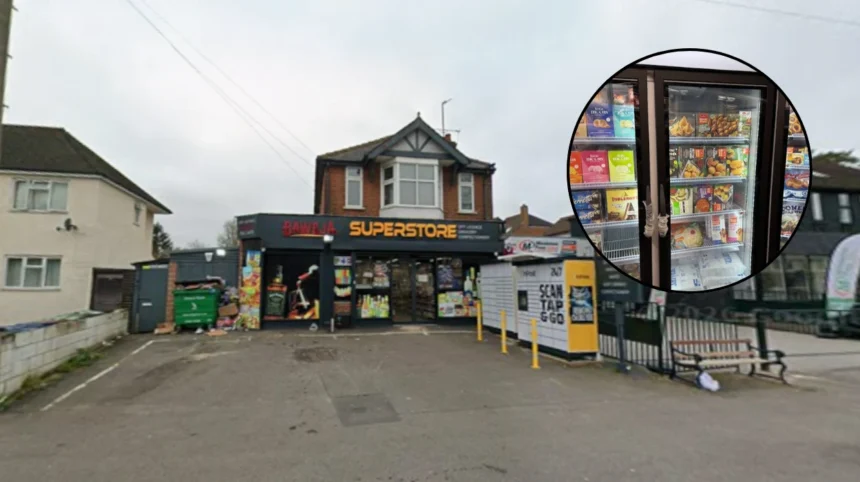
- Licence Revocation: Baweja Superstore, located at Abingdon Road in Oxford, is set to have its alcohol licence revoked following a licensing committee hearing held on July 27.
- Illegal Tobacco Seizure: Trading Standards officials discovered and seized 89 packs of illegal cigarettes in October, which included 55 confirmed counterfeit packs and 34 non-duty paid items.
- Display Breaches: The shop was found guilty of repeated breaches regarding tobacco display requirements, including keeping tobacco products on open display.
- Fire Safety Hazards: Explosives officers flagged concerns regarding the storage of fireworks at the premises, describing the arrangement as “very poor”.
- Food Safety Failings: The store was previously inspected by Food Standards Agency officials in April, where it received a dismal score of one out of five, highlighting that “major improvements” were needed, particularly regarding food safety management and cleanliness.
- Official Statements: Oxford City Councillor James Taylor chaired the licensing sub-committee and delivered the revocation verdict, while Oxfordshire County Council’s cabinet member for public health and inequalities, Councillor Kate Gregory, praised the vigilance of trading standards.
Oxford (Oxford Daily) July 30, 2026 — An Oxford convenience shop has been hit by a severe regulatory blow after a local authority licensing committee ordered its alcohol licence to be stripped away following a series of serious compliance failures. Baweja Superstore, situated along Abingdon Road, faced intense scrutiny at an Oxford City Council licensing sub-committee hearing on July 27, where comprehensive evidence was tabled detailing illicit trading, display law violations, and dangerous storage practices on the property. The decision marks the latest escalation in a troubled period for the retail business, which had already stumbled through separate hygiene and food safety examinations earlier in the year.
Why is Baweja Superstore facing an alcohol licence revocation?
The decision to strip the store of its ability to sell alcohol came after exhaustive evidence was presented by trading standards officers regarding illegal activities on the premises. As reported by Matt Simpson of The Oxford Mail and This Is Oxfordshire, evidence given to the Oxford City Council licensing committee revealed that illegal tobacco was stored inside the shop alongside repeated breaches of tobacco display regulations.
Further expanding on the nature of the contraband, official findings showed that in October, Trading Standards officials successfully seized 89 packs of illegal cigarettes. Out of this total haul, 55 packs were officially confirmed to be counterfeit, while the remaining 34 packs were identified as non-duty paid items. In addition to holding contraband, officers noted that tobacco products were left improperly on open display, violating strict retail standards.
What concerns were raised about the storage of fireworks?
Beyond the illicit tobacco infractions, the licensing committee heard alarming testimonies regarding public safety hazards inside the shop. As documented by Matt Simpson of This Is Oxfordshire, serious concerns were raised regarding the storage of fireworks at the business. An explosives officer evaluated the arrangement of the pyrotechnic items on-site and formally described the setup as being “very poor”, posing an unnecessary risk to customers, staff, and the surrounding community.
The accumulation of these infractions—ranging from tax evasion through non-duty paid goods to potential fire safety risks—formed the core rationale behind the local authority’s decision to act decisively against the license holder.
Explore More Local Oxford News
Oxford Shop Future Decided by Police Agreement – Oxford 2026
Trading Standards Issue Fake Toy Warning in Oxfordshire 2026
What were the findings of the recent food hygiene inspection?
The latest licensing penalty compounds existing operational troubles for the convenience store, which had already fallen foul of health inspectors just months prior. According to reports by The Oxford Mail, the store underwent an inspection by Food Standards Agency officials in April, resulting in a miserable hygiene rating score of just one out of five. This low score explicitly denoted that “major improvements” were urgently required across the board.
Inspectors emphasized that the management of food safety at the venue required “urgent improvement”. This critical metric assesses whether robust systems and checks are active to guarantee that all food sold or served to the public is completely safe to eat. Furthermore, inspectors questioned whether staff possessed adequate knowledge of food safety protocols and expressed a lack of confidence that proper standards would be independently sustained by management in the future. The physical cleanliness and overall condition of the building’s facilities, coupled with the hygienic handling of food, were likewise judged as needing “major improvement necessary”.
Who made the final ruling on the licence?
After carefully weighing the representations brought forward by trading standards alongside the arguments presented by the legal representative for the business, the panel reached its definitive conclusion. Oxford City Councillor James Taylor, who served as the chair of the licensing sub-committee, formally delivered the decision to revoke the premises licence.
The ruling underscores a zero-tolerance approach by local authorities toward businesses that flout regulatory frameworks. Commenting on the wider implications of the regulatory action, Councillor Kate Gregory, who serves as Oxfordshire County Council’s cabinet member for public health and inequalities, issued a strong statement via the local authority’s news service.
As reported by Oxfordshire County Council’s official communications channel, Councillor Kate Gregory stated that:
“I would like to thank our trading standards officers for their vigilance and dedication in protecting Oxfordshire residents and supporting legitimate businesses.”
Councillor Gregory further emphasized the broader message sent by the committee’s verdict, stating:
“This decision sends a clear message that illegal tobacco and other unlawful activity linked to licensed premises will not be tolerated.”
What previous enforcement actions involve the store’s connections?
The committee’s deliberations also factored in a history of compliance issues associated with the location. Further evidence presented to the licensing panel highlighted previous enforcement actions connected to individuals linked with the business sphere, including references involving Tamanpreet Singh. These accumulated historical markers reinforced the local council’s position that continuous oversight failed to yield voluntary compliance, necessitating the ultimate sanction of stripping the venue of its alcohol authorization entirely.
With the alcohol licence now revoked, Baweja Superstore faces a heavily restricted commercial horizon on Abingdon Road, having lost a key revenue stream while simultaneously pressured to rectify deep-seated food hygiene and safety failings. Local regulators have signaled that monitoring of commercial properties across Oxford will remain heightened to deter similar breaches.