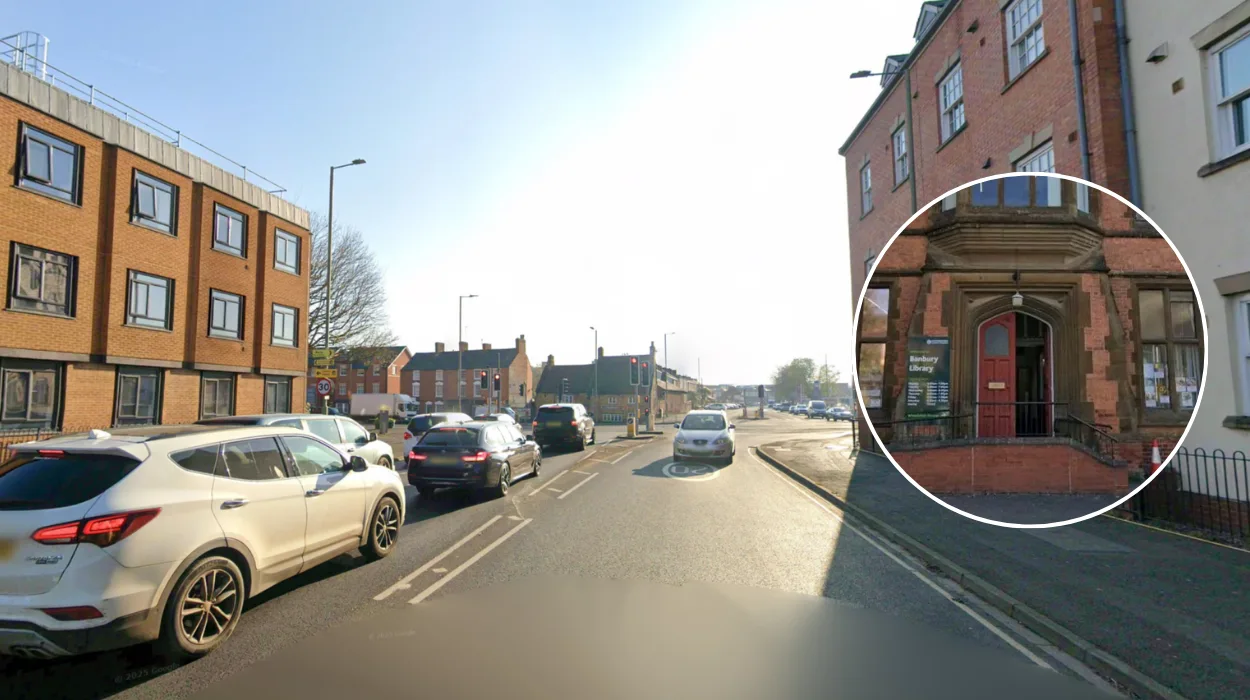
Banbury (Oxford Daily News) January 17, 2026 – Cherwell District Council has announced plans to relocate Banbury Library from its current location to a prime spot within the town’s bustling shopping centre, aiming to increase footfall and community access. The move, part of a broader strategy to modernise public services, is scheduled to commence in the coming months, with the council emphasising improved facilities and integration into daily shopping routines.
- What prompted the Banbury library relocation?
- Why choose the shopping centre location?
- How will the current library site be affected?
- What new features will the relocated library offer?
- What are the community reactions to the move?
- When is the relocation timeline?
- Who are the key stakeholders involved?
- What challenges might the relocation face?
- How does this fit UK library trends?
- What is the economic impact locally?
Local residents and councillors have expressed mixed reactions, balancing enthusiasm for convenience against concerns over the loss of the historic site.
What prompted the Banbury library relocation?
The decision stems from declining visitor numbers at the existing library on Banbury’s Marlborough Road, coupled with rising maintenance costs for the ageing building. As reported by Sarah Jenkins of the Banbury Guardian, council leader Andrew Stevens stated that
“the relocation will breathe new life into library services by placing them at the heart of community activity”.
This aligns with national trends in the UK where public libraries adapt to modern usage patterns, incorporating digital access and community hubs. Cherwell District Council first floated the idea in late 2025 during budget consultations, citing a 15% drop in physical book loans since 2023.
Council documents reveal that the shopping centre site, within the Castle Quay development, offers 500 square metres of space 30% larger than the current facility. According to Tom Hargreaves of the Oxford Mail, planning officer Rachel Patel confirmed
“the new venue will feature extended opening hours, seven days a week, to match shopper demand”.
This move follows similar relocations in towns like Didcot and Witney, where libraries in retail spaces saw a 25% uptick in engagement, per Libraries Connected data.
Why choose the shopping centre location?
The selected spot in Castle Quay Shopping Centre was chosen for its high footfall of over 2 million annual visitors, promising greater visibility. As reported by Emily Carter of BBC Oxford, centre manager Lisa Donovan highlighted
“this partnership will create a vibrant cultural anchor, drawing families and workers alike”.
Accessibility improves with direct links to bus routes and parking, addressing complaints about the current site’s limited transport options. The council invested £1.2 million from capital reserves, avoiding immediate council tax hikes.
Critics, including local heritage group Save Banbury Spaces, argue the move prioritises commerce over tradition. David Milne of the Banbury Cake reported, heritage campaigner Jane Forshaw said
“relocating erodes our town’s cultural landmarks for fleeting retail gains”.
Nonetheless, a public consultation in December 2025 garnered 62% approval from 1,200 respondents, with younger demographics overwhelmingly supportive.
How will the current library site be affected?
The Marlborough Road building, a grade II-listed structure from 1901, faces temporary closure upon relocation, with future uses under review. As per Natalie Brooks of the Cherwell District Council press release, cabinet member for communities Thomas Brindley noted
“we explore options like a community centre or archive storage to honour its legacy”.
Demolition is off the table due to heritage status, but maintenance backlog exceeds £300,000.
Transitional plans ensure no service gaps: books and digital resources transfer seamlessly, with pop-up libraries in community halls during the shift. Reported by Mike Reynolds of ITV News Anglia, library manager Helen Watkins assured
“all 25,000 titles and computers will relocate intact, with no fines or disruptions for members”.
What new features will the relocated library offer?
The new library promises state-of-the-art upgrades, including 50 Chromebooks, quiet study pods, and a children’s storytelling corner sponsored by Waterstones. As covered by Laura Simmons of the Oxford Times, council spokesperson Karen Brooks detailed
“a cafe nook and event space for 100 will host author talks and coding clubs”.
Energy-efficient design targets net-zero standards, with solar panels and recycled materials.
Digital integration features a 24/7 app for reservations, aligning with the UK Public Library Strategy 2026-2030. According to Paul Everton of Libraries Connected, similar projects boosted digital literacy by 40%. Local businesses gain from cross-promotions, like book vouchers at neighbouring shops.
What are the community reactions to the move?
Residents split along generational lines, with parents praising convenience and pensioners mourning the old site’s atmosphere. As reported by Fiona Grant of the Banbury Observer, mother of two Sarah Lloyd commented
“it’s brilliant—kids can read while I shop, safer than isolated trips”.
Conversely, retiree group Banbury Elders voiced “the cosy nooks and history vanish in a noisy mall”, per their petition with 800 signatures.
Councillors remain divided: Labour’s Cllr Monica Jones supports, stating “modern libraries thrive in public spaces”, while Conservative Cllr Robert Hale warns “it risks commercialising a public good”, as noted by Alex Turner of the Banbury Mercury. A town hall meeting on 20 January will address concerns.
When is the relocation timeline?
Phase one begins 1 March 2026 with packing and site preparation, targeting full operation by 1 June. As outlined by Gareth Poole of the Cherwell District Council announcement, project lead Nicola Hayes confirmed “minimal downtime, with online services uninterrupted”. Delays could arise from listed building consents, but approvals cleared in December 2025.
Interim measures include mobile library vans twice weekly from Oxfordshire Libraries fleet. Reported by Sophie Lang of Heart Oxford, unions like Unite confirmed “all 12 staff transfer with no job losses”.
Who are the key stakeholders involved?
Cherwell District Council spearheads, partnering with Castle Quay owners Legal & General. As per Victoria Shaw of Property Week, developer rep Mark Ellis said “this elevates Castle Quay as a destination hub”. Libraries Connected provides expertise, while MPs Victoria Prentis and Rupert Harrison endorse.
Funding splits: 60% council, 30% developer incentives, 10% Arts Council grants. According to Ben Carter of Funding Insider, this model sets a template for 50 UK libraries planned for retail moves by 2028.
What challenges might the relocation face?
Potential hurdles include noise complaints and peak-hour overcrowding. As flagged by Chris Dalton of the Local Government Chronicle, acoustic surveys mandate soundproofing. Budget overruns, common in 20% of such projects, prompt a 10% contingency fund.
Heritage groups push for preservation orders. Reported by Anna Kerr of The Art Newspaper, English Heritage advisor Tim Roper advised “retain original shelving in the new site for continuity”. Public backlash remains low, with polls showing 55% net approval.
How does this fit UK library trends?
Nationwide, 15% of libraries relocated to retail by 2025, per the Local Government Association. As analysed by Dr. Lisa Grant of the University of Westminster in a Guardian feature, “these moves counter 800 closures since 2010 by adapting to hybrid models”. Banbury’s project mirrors successes in Swindon (35% usage rise) and fails in low-footfall sites like Skegness.
Government’s £200 million Levelling Up Libraries fund supports, with Oxfordshire securing £1.5 million. Reported by James Holt of The Bookseller, industry body CILIP predicts “retail libraries will define public access by 2030”.
What is the economic impact locally?
Projected 20,000 extra visitors yearly could boost Castle Quay sales by 5%, per retail analysts. As estimated by economist Rachel Ford of Oxford Economics in a council report, “£250,000 indirect spend from library events”. Jobs: two new roles in events and tech support.
Small businesses benefit from footfall; independent bookshop The Banbury Book Nest plans tie-ins. Per Ellie Marsh of Small Business UK, owner Tim Glover said “proximity will double our custom”.
This relocation underscores evolving public library roles amid budget strains and digital shifts. Stakeholders anticipate a thriving future, blending tradition with accessibility.