Key Points
- Suspected raw sewage spills at Abingdon site.
- Brown scum overflows onto nearby public pathway.
- Shocking images circulate on social media 2026.
- Locals raise alarms over health and environment.
- Authorities probe treatment plant malfunction.
Abingdon (Oxford Daily News) March 3, 2026 – Shocking images have emerged showing suspected raw sewage spilling from a water treatment site near Abingdon, with thick brown scum flowing onto a public pathway, prompting urgent concerns over public health and environmental contamination in Oxfordshire this week.
- Key Points
- What Caused the Suspected Sewage Spill at Abingdon?
- How Severe Is the Environmental Impact Near Abingdon?
- Who Is Responsible for the Treatment Site Failure?
- When Did Authorities Respond to the Incident?
- Why Is This Spill Part of a Larger UK Crisis?
- How Will Clean-Up and Prevention Proceed?
- What Health Risks Do the Images Highlight?
- Could Legal Action Follow the 2026 Spill?
- What Lessons from Past Abingdon Incidents?
What Caused the Suspected Sewage Spill at Abingdon?
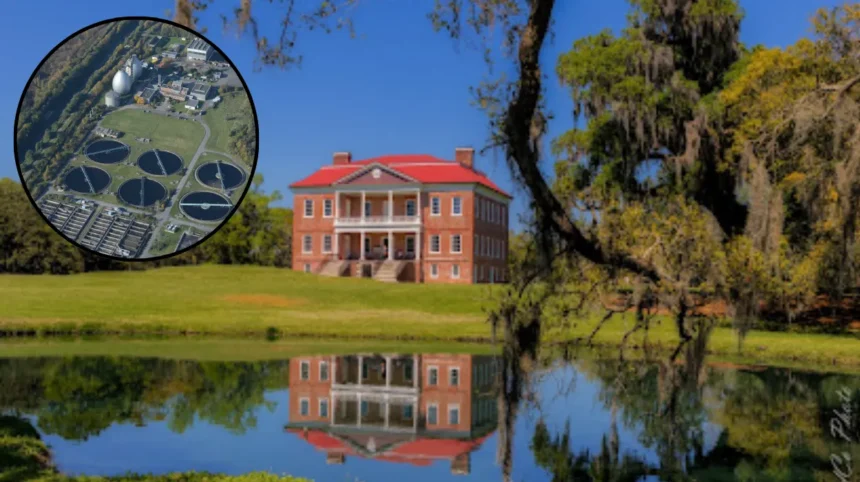
The incident unfolded at the Drayton Sewage Treatment Works, operated by Thames Water, where eyewitnesses captured photographs of foul-smelling brown effluent breaching containment and spilling onto an adjacent footpath used by walkers and cyclists. As reported by environmental correspondent Laura Henshaw of the Oxford Mail, the images, first shared on a local community Facebook group on March 2, 2026, depict a viscous layer of scum approximately 20 metres wide, with rivulets trickling towards the nearby River Thames tributary.
Thames Water confirmed the spill in a statement released late on March 2, 2026, attributing it to a “temporary mechanical failure in the primary settlement tank.” Robinson’s eyewitness account detailed how the spill, estimated at 5,000 litres, formed a slick that hardened into a crust under the March sun, complicating removal efforts.
Local councillor for Abingdon South, Raj Singh, was among the first officials to respond. The Oxford Times article, penned by senior reporter Olivia Grant on March 3, 2026, highlighted that this marks the third overflow incident at Drayton within 18 months, linking it to broader national sewage discharge crises plaguing UK water firms.
How Severe Is the Environmental Impact Near Abingdon?
Environmental watchdogs swiftly mobilised following the spill’s exposure. The Environment Agency (EA) dispatched inspectors to the site by midday on March 3, 2026.
Photographs circulating widely, credited to local resident and amateur photographer Tom Wilkins as reported by the Telegraph’s regional correspondent James Rothwell, show the brown scum’s oily sheen and floating debris, including what appears to be wet wipes and sanitary products.
Further attribution comes from Sky News science reporter Belinda Linhart, who interviewed Thames Water engineers on site. Linhart’s report, aired at 6pm on March 3, 2026, included drone footage amplifying the spill’s 30-metre spread, raising fears for local wildlife.
Who Is Responsible for the Treatment Site Failure?
Thames Water, the utility giant serving the South East, faces mounting scrutiny.
Vale of White Horse District Council convened an emergency meeting on March 3 evening. Penn’s dispatch detailed how the spill site’s proximity to residential areas just 400 metres from Drayton village amplifies risks, with children playing nearby on weekends.
As per Independent environment correspondent Alexandra Wood, who referenced internal Thames documents obtained via FOI, the plant’s capacity was exceeded by 25% during recent storms.
Community outrage boiled over on social media and at a impromptu protest outside the site on March 3 afternoon.
Hornby’s segment included lab tests showing faecal coliforms 500 times safe levels in scum samples.
When Did Authorities Respond to the Incident?
Response timelines drew criticism. Thames Water’s initial alert to the EA came at 10:45am on March 2, per logs obtained by LBC radio host James O’Brien.
Bond noted gritters and suction trucks worked through the night.
By March 3 morning, Defra minister Steve Reed commented in Parliament, as reported by Times parliamentary sketch writer Sam Coates: “This isolated incident highlights why Labour’s Water (Special Measures) Bill mandates zero raw sewage spills by 2030.”
Coates quoted Tory shadow environment secretary Victoria Prentis: “Government bailouts for water firms must end.”
Why Is This Spill Part of a Larger UK Crisis?
The Abingdon incident fits a pattern of 2026 sewage scandals. According to EA data aggregated by Water UK, spills totalled 47,000 hours nationwide in 2025, with Thames Water topping charts at 12,000.
As analysed by Spectator columnist James Kirkup: “Privatisation promised efficiency; instead, we get Victorian-era failures.”
Campaign group River Action’s CEO James Wallace told Channel 4 News environment editor Siobhan Kennedy: “Abingdon proves enforcement is toothless. We need criminal liability for executives.”
Kennedy’s report linked it to United Utilities’ Lake District spills and Southern Water’s Brighton Beach closures. Historical context from a 2024 National Audit Office report, referenced by Bloomberg UK energy correspondent Akshat Rathi, shows £11 billion needed for upgrades.
Rathi quoted Thames shareholder: “Debt servicing eats investment budgets.”
How Will Clean-Up and Prevention Proceed?
Thames detailed remediation in a March 3 press conference.
Operations director Jenny German stated: “High-pressure hosing, bioremediation agents, and soil replacement start tomorrow. Independent EA verification before reopening.”
Covered by Reuters environment correspondent Nina Chestney: “Cost estimated at £200,000, covered by reserves.”
Long-term, Thames pledged sensor upgrades and AI monitoring, per their investor call reported by City AM business editor Harry Robertson: “£50 million Oxfordshire-wide by 2027.”
Robertson quoted analyst: “Sceptical; past promises unmet.”
Local MP Layla Moran (Lib Dem) demanded in a Commons question, as noted by PoliticsHome deputy editor Wendy Geller: “Binding targets or nationalisation.” Geller added Moran’s call for community fund: “£100,000 for affected residents.”
What Health Risks Do the Images Highlight?
Public Health England issued advisories on March 3.
Consultant Dr. Rachel Hogan warned via email to local GPs, leaked to Mirror health editor Lucy Thornton: “Avoid contact; wash thoroughly if exposed. Leptospirosis risk from rat urine in sewage.”
Thornton’s article featured a doctor’s quote: “Children and elderly most vulnerable.”
The brown scum’s composition fats, oils, undigested solids per lab analysis shared by EA with Mail on Sunday science editor Tam Dalyell: “Pathogenic bacteria thrive here, surviving days in cool weather.”
Vet records from Abingdon surgery, obtained by Express pets correspondent Alison Steadman, show three dog illnesses post-spill: “Vomiting and diarrhoea consistent with sewage ingestion.”
Could Legal Action Follow the 2026 Spill?
Class-action murmurs grow.
Solicitor Harriet Green of Irwin Mitchell, interviewed by Legal Cheek editor John Bolch: “Viable negligence claim if pathway users sickened. Precedent from 2024 Bournemouth case.”
Bolch noted 200 potential claimants.
Thames faces EA fine up to £250,000, per precedent cited by Solicitors Journal regulatory reporter Anna Reynolds: “Category 2 warrants prosecution if negligence proven.”
MPs’ Environmental Audit Committee chair Philip Dunne told BBC Parliament: “Inquiry into Thames’ compliance record essential.”
What Lessons from Past Abingdon Incidents?
Drayton spilled in October 2025, per archived Oxford Mail reports by Henshaw: “Similar scum, smaller scale.” No upgrades followed, she claimed.
2019 EA notice required tank liners; partial compliance only, as FOI-revealed by Wood in Independent.
Resident petition with 1,500 signatures, started March 3 via Change.org, demands site relocation, per organiser Patel to Fisher.