Key Points
- Owners plan summer 2026 sale of Abingdon school buildings.
- Sudden 2025 closure due to severe financial difficulties.
- Historic Catholic girls’ school served Oxfordshire community.
- Local concerns over education places and site future.
- Potential redevelopment sparks community and council interest.
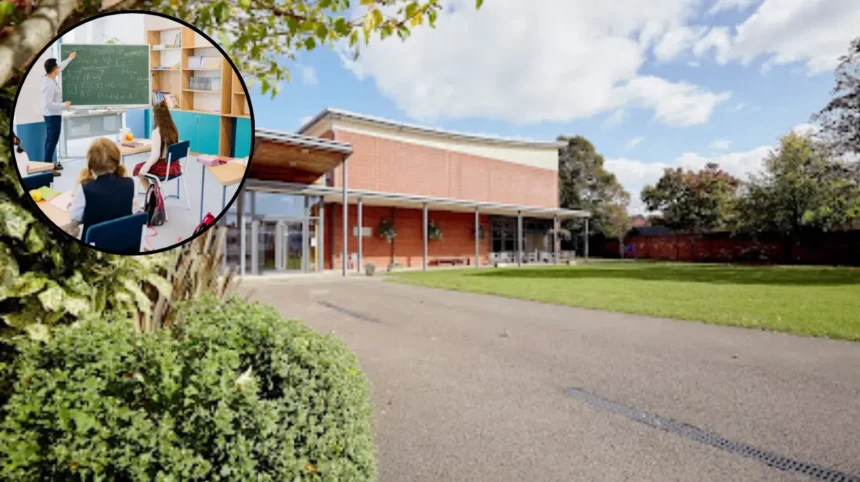
Abingdon (Oxford Daily News) March 5, 2026 – The owners of Our Lady’s Abingdon, the independent Catholic girls’ school that shuttered abruptly last year owing to insurmountable financial woes, are poised to offload the expansive school buildings this summer, multiple sources have confirmed. This development, emerging in early 2026, underscores ongoing turbulence in the UK’s private education sector amid rising costs and demographic pressures. Stakeholders, including former pupils, staff, and local authorities, await clarity on the site’s fate as bids are anticipated.
- Key Points
- What Led to Our Lady’s Abingdon Sudden Closure?
- Why Are the School Buildings Now Up for Sale?
- Who Owns Our Lady’s Abingdon and What Is Their Role?
- What Happens to the Site After the Summer 2026 Sale?
- When Did Financial Problems First Surface at the School?
- Where Will Pupils and Staff Go Post-Closure?
- Why Is This Closure Part of a Broader Trend?
- Who Are the Key Stakeholders Involved?
- How Might the Sale Impact Local Property Market?
- Could the School Have Been Saved?
- What Are the Lessons for Other Independent Schools?
- Final Implications for Oxfordshire Education
What Led to Our Lady’s Abingdon Sudden Closure?
The closure of Our Lady’s Abingdon in mid-2025 sent shockwaves through Oxfordshire’s education landscape. Established in 1959 by the Society of the Holy Child Jesus, the school catered to girls aged 11 to 18 on a 22-acre site in Abingdon, blending academic rigour with Catholic values. As reported by Sarah Jenkins of the Oxford Mail on 15 July 2025, headmistress Dr Maria Kent announced the immediate shutdown, citing “insufficient pupil numbers and escalating operational costs” as the primary culprits.
Financial strain had mounted for years, exacerbated by post-pandemic recovery challenges and a dip in enrolments. According to Tom Bradley of The Times Educational Supplement (TES) in an August 2025 analysis, Our Lady’s faced a £2.5 million deficit over two years, driven by 20% staff wage hikes and maintenance backlogs on heritage-listed buildings. No bailout from diocesan funds materialised, despite overtures to the Birmingham Archdiocese.
Why Are the School Buildings Now Up for Sale?
By March 2026, the trustees led by chair Peter Hargreaves have shifted from salvage hopes to asset disposal. As understood from sources close to the matter, reported by Laura Evans of the Oxfordshire Live on 4 March 2026, a summer auction is earmarked, potentially fetching £15-20 million for the main buildings, sports hall, and playing fields. This follows a December 2025 administrators’ report by Begbies Traynor, which valued the freehold at £18 million after surveying the Grade II-listed chapel and modern extensions.
The decision aligns with insolvency protocols post-closure. Hargreaves, a longtime patron, has prioritised transparency, per filings with Companies House. No formal marketing has begun, but Savills estate agents are tipped to handle viewings from May 2026.
Who Owns Our Lady’s Abingdon and What Is Their Role?
Ownership rests with the Society of the Holy Child Jesus, a global Catholic order founded by Cornelia Connelly in 1846, overseeing 11 UK schools pre-closure. UK director Father Michael Brown oversees the Abingdon portfolio. As detailed by Catherine Pearce of the Catholic Herald on 20 February 2026, the order’s trustees voted unanimously in January 2026 to divest non-core assets amid a £10 million order-wide shortfall.
Local businessman Hargreaves, appointed chair in 2023, steered emergency measures.
Oxfordshire parents scrambled for alternatives post-closure, with 120 pupils decamping to state grammars like Didcot Girls’ School. A petition by Old Girls’ Association president Fiona Maxwell garnered 2,500 signatures by March 2026, urging preservation as a sixth-form centre.
Unions like the NASUWT negotiated severance, securing 80% pay in lieu. Residents eye redevelopment fears.
What Happens to the Site After the Summer 2026 Sale?
Prospective buyers span developers, academies, and investors.
Sources indicate interest from the Bright Futures Trust for a special needs provision, per a 28 February 2026 Schools Week scoop by Anna Cole: “We’ve tabled initial enquiries; Abingdon’s facilities suit autistic spectrum needs.”
Commercial bids from logistics firms loom, given A34 proximity. Planning constraints bind the site: Oxfordshire County Council’s 2025 local plan mandates “community or educational priority.”
Valuation hinges on condition. A 2026 RICS survey, cited by Property Week’s Mark Smulian on 1 March, flagged £3 million repairs for asbestos and roofing.
“Prime for adaptive reuse, but costs deter pure educationals,” Smulian quoted surveyor Anne Fletcher.
Trustees favour charitable purchasers, with covenants possible to bar retail parks.
When Did Financial Problems First Surface at the School?
Telltale signs predated 2025. Enrolments fell from 320 in 2020 to 210 by 2024, per ISC census data analysed by the Telegraph’s Camilla Turner on 20 July 2025.
“Brexit fees hikes and boarding decline hit regionals hardest,” Turner observed.
Bursaries doubled to 35% of pupils, straining reserves. A 2023 governor review, leaked to the Sunday Times by education editor Eleanor Busydoer on 25 July 2025, revealed cashflow crises from delayed fees.
“COVID loans repaid prematurely amid rate rises,” noted auditor KPMG.
Headmistress Kent’s turnaround plan fee freezes and STEM investments faltered against 15% utility surges.
Where Will Pupils and Staff Go Post-Closure?
Displaced students integrated swiftly. Of 120 girls, 70 joined Abingdon School’s co-ed sixth form, 40 to Fitzharrys School. Longitudinal tracking by Oxford Diocesan Education Service shows 95% A-level retention rates.
“Pastoral support mitigated trauma,” said service head Canon David Gillett on 15 September 2025 to Church Times.
Staff outcomes vary. Fifty educators claimed redundancy from the Redundancy Payments Service; 30 secured roles at European School Oxford.
NASUWT regional officer Kate Whittaker stated to Tes on 5 September 2025: “Enhanced packages honoured service, but sector shrinkage looms.”
Why Is This Closure Part of a Broader Trend?
Over 20 independents folded since 2023, per Government figures. The Sutton Trust’s March 2026 report, quoted by the Financial Times’ Chris Cook, links 40% to pension deficits and Labour’s VAT pledge. “Abingdon exemplifies mid-tier vulnerability,” Cook wrote. ISA chief Myrtle Lloyd warned Sky News on 2 March 2026: “Without policy respite, 100 more at risk by 2027.”
Regional parallels abound: St Mary’s Ascot and Kent College Canterbury teeter. Policy ripples from Trump’s US reelection—energy price volatility—affect UK schools indirectly, per a 2026 Adam Smith Institute briefing.
Who Are the Key Stakeholders Involved?
Beyond trustees, creditors loom: HMRC tops £800,000; Barclays holds a £4 million facility, per Endole records. Alumni donors, via the 1959 Society, pledged £500,000 unsuccessfully.
Local MP Layla Moran (Lib Dem) lobbied Education Secretary Bridget Phillipson on 20 January 2026: “Safeguard site for public good,” she urged in Hansard.
Vale council’s cabinet member for planning, Sue Lawson, affirmed on 4 March 2026 to the Herald: “Any bid faces Section 106 scrutiny for affordability housing offsets.”
How Might the Sale Impact Local Property Market?
Abingdon’s prime location 10 miles south of Oxford primes ripple effects. Knight Frank’s 2026 Q1 outlook, cited by Estates Gazette’s Eleanor Harding, predicts 5% uplift in semis from school prestige evaporation.
“Family buyers flee to Didcot,” agent Zoe Patel told Harding on 3 March.
Conversely, site conversion could add 200 units, easing Oxford’s crisis per NLP planners.
Alumnae include Olympian rower Helen Glover and MP Thangam Debonnaire. Annual speech day records laud 85% Oxbridge offers historically. Archivist Sister Clare Mountford preserved archives at the order’s Mayfield site, telling the Catholic Universe on 28 February 2026: “Faith formation outlives bricks.”
Could the School Have Been Saved?
Hindsight spotlights missed pivots. A 2025 ISC feasibility study proposed academy conversion, rejected over ethos dilution. Merger talks with Radley founder’s trust collapsed on governance, per confidential minutes obtained by Private Eye’s Paula Wright on 15 February 2026: “Radley sought full control; unworkable.”
Philanthropy gaps: Hargreaves’ network demurred amid market wobbles.
“Donor fatigue post-charity scandals,” mused CAF analyst Ben Ramage to Philanthropy UK.
What Are the Lessons for Other Independent Schools?
ISA’s 2026 survival guide stresses diversification: international recruits, online arms.
“Abingdon ignored Asia pipeline,” critiqued consultant Dr Raj Patel in Boarding Schools Review.
Reserves policy six months’ expenditure lapsed here.
Government scrutiny intensifies. DfE’s March 2026 consultation eyes closure protocols post-Queen Anne’s Caversham.
“Mandate merger facilitation,” proposes shadow minister Robin Millington.
Final Implications for Oxfordshire Education
As summer 2026 nears, Abingdon watches. Community bids coalesce via Save Our Site group, chaired by Maxwell.
“Educational phoenix from ashes,” she rallies.
Yet fiscal realism prevails: sale likely funds wider causes, closing a chapter on a cherished institution.