Key Points
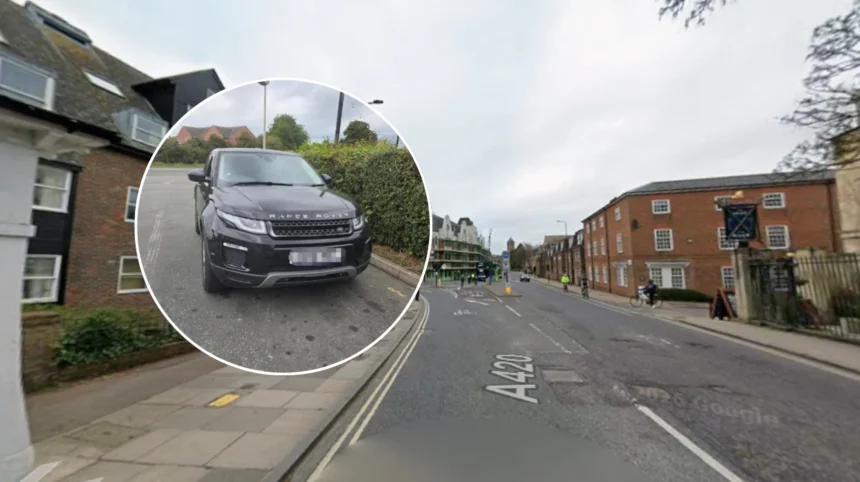
- Thames Valley Police seized a Range Rover near Eynsham in West Oxfordshire during an evening patrol.
- PC Uren stopped the vehicle and found the driver held only a provisional licence.
- Police reported the motorist for the driving offence and impounded the car at the scene.
EYNSHAM (Oxford Daily) September 25, 2026 — Officers from Thames Valley Police have impounded a Range Rover near an Oxfordshire village after detecting a motoring offence during an evening road patrol.
- Key Points
- What prompted the Thames Valley Police action near Eynsham?
- What are the legal requirements for provisional licence holders in the UK?
- What power do police have to seize vehicles driven illegally?
- Background of vehicle enforcement operations in West Oxfordshire
- Predictions: How this enforcement action affects local motorists and provisional drivers
As reported by Matthew J C Evans of the Oxford Mail, PC Uren of Thames Valley Police intercepted the vehicle near Eynsham in West Oxfordshire. Subsequent checks carried out by the officer revealed that the individual behind the wheel was operating the high-value SUV on a provisional driving licence without complying with necessary statutory supervision requirements.
Following the roadside identification of the legal breach, police officers impounded the Range Rover and formally reported the driver for the motoring offence.
A spokesperson for Thames Valley Police stated: “PC Uren has started the shift tonight by seizing this Range Rover near Eynsham. It was being driven by a provisional licence holder. Vehicle seized and driver reported for the offence.”
What prompted the Thames Valley Police action near Eynsham?
The police intervention took place as part of proactive routine patrols conducted across West Oxfordshire designed to target road safety violations and illegal vehicle usage. Traffic officers routinely verify driver entitlement, insurance validity, and vehicle licensing conditions during stops along major rural arteries.
When PC Uren stopped the Range Rover near Eynsham, standard database verification checks indicated that the driver held only provisional driving status, making the vehicle’s operation illegal without a fully licensed supervisor and displaying appropriate learner plates.
What are the legal requirements for provisional licence holders in the UK?
Under United Kingdom road traffic legislation, drivers holding a provisional licence must adhere strictly to statutory regulations. Provisional licence holders are required by law to be supervised at all times by a qualified driver who is at least 21 years old and has held a full UK driving licence for a minimum of three years.
Furthermore, vehicles driven by provisional holders must clearly display prominent L-plates (or D-plates in Wales) on both the front and rear, and the vehicle must be covered by a valid insurance policy specifically authorising learner supervision. Failure to observe these conditions invalidates the driver’s insurance policy and constitutes a formal driving offence under section 87 of the Road Traffic Act 1988.
What power do police have to seize vehicles driven illegally?
Under Section 165A of the Road Traffic Act 1988, UK police forces hold statutory powers to seize vehicles if an officer has reasonable grounds to believe that a driver is operating a vehicle without a valid licence or without third-party insurance coverage. Once a vehicle is seized, it is removed to an authorized police impound lot.
To reclaim an impounded vehicle, the registered keeper must present valid proof of ownership, a full driving licence, valid insurance covering the release of an impounded vehicle, and pay statutory removal and storage fees. If the owner fails to clear the fees and produce proper documentation within 14 days, the impounded vehicle can be auctioned or crushed.
Background of vehicle enforcement operations in West Oxfordshire
In recent years, Thames Valley Police has heightened enforcement operations across rural West Oxfordshire to combat illegal vehicle usage, uninsured motoring, and vehicle-related crime. Villages surrounding Oxford, such as Eynsham, serve as key transit points between the city and rural routes, making them priority zones for targeted traffic stops and Automatic Number Plate Recognition (ANPR) monitoring.
Police enforcement teams regularly deploy specialist traffic units to intercept vehicles operating outside the law. These enforcement campaigns aim to deter unlicensed and uninsured drivers who pose elevated risks to road safety, while simultaneously disrupting wider criminality that relies on illegal road travel.
Predictions: How this enforcement action affects local motorists and provisional drivers
This enforcement action underscores the strict stance taken by Thames Valley Police against provisional driving infractions and uninsured vehicle use. The immediate impact of this intervention will be felt across several local sectors:
- Provisional and Learner Drivers: The seizure serves as a direct warning to learner drivers in Oxfordshire that non-compliance with provisional licensing laws carries immediate consequences, including vehicle seizure, fixed penalty points, financial penalties, and potential delays in securing a full licence.
- Local Residents and Community Safety: Residents in Eynsham and surrounding West Oxfordshire villages can expect continued visible traffic enforcement. Proactive vehicle impoundments help remove potentially unsafe or unvetted drivers from rural roads, enhancing overall public safety.
- Insurance and Financial Implications: For the motorist involved, the seizure incurs substantial costs, including police impound fees, recovery charges, prospective penalty points, and elevated future vehicle insurance premiums.