Key Points
- Why Are Parents So Concerned About Safety on the A40 Path?
- How Are Local Campaigners Framing the Barrier Proposal?
- What Has the Council Said So Far?
- How Do Campaigners Respond to the Council’s Position?
- What Broader School‑Travel Concerns Are Highlighted in Headington?
- How Does This Fit Into the Wider A40 Corridor Strategy?
- Background of the Development
- Prediction: How This Development Could Affect Families and Local Residents
- Residents in Headington, Oxford, are calling for a physical barrier on an A40‑adjacent school walking route to protect children.
- Parents and campaigners say the current path exposes children to fast‑moving traffic with minimal protection.
- Local campaigners back the proposal, citing years of complaints about noisy, hostile conditions and near‑misses.
- Oxfordshire County Council has so far ruled out adding a barrier, citing wider A40‑corridor plans and budget constraints.
- Campaigners argue that waiting for long‑term projects is unacceptable and say the council should act now before a serious accident occurs.
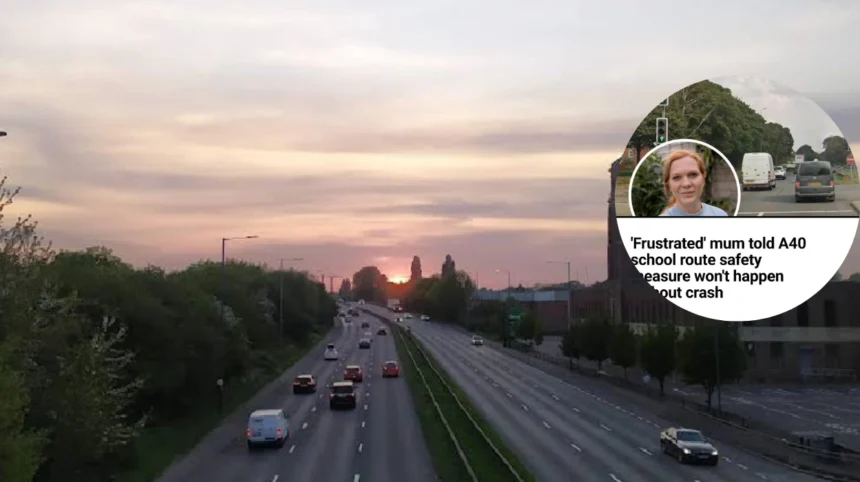
Oxford(Oxford Daily)May 06, 2026-Headington, Oxford, is escalating pressure on the local authority to install a physical barrier along an A40‑adjacent school walking route. Parents and active‑travel campaigners say the current path is “exposed, noisy and hostile” and that children are forced to walk close to fast‑moving traffic with no meaningful separation.
As highlighted by campaigners quoted in the Infrastructure‑Now article, the route is used by pupils travelling to at least one Headington primary school, with walkers sharing a narrow, unprotected corridor next to the A40. Residents argue that the lack of a barrier leaves children vulnerable to exhaust fumes, noise, and the risk of vehicles encroaching on the path, especially at busy times.
Why Are Parents So Concerned About Safety on the A40 Path?
Parents told Infrastructure‑Now that they no longer feel comfortable allowing their children to walk alone along the current A40‑side route. One parent is reported to have described the experience as “heart‑stopping”, saying that large vehicles pass so close that children are often “pressed against the railing” or forced to step back to avoid being clipped.
Residents also point to anecdotal evidence of repeated near‑misses, with several parents recalling incidents where lorries or buses have brushed the edge of the path or swerved sharply, causing children to jump back. In a separate local‑campaigning piece on Headington school travel, writers from the Headington Liveable Streets blog note that children on this stretch of the A40 corridor are “subjected to unacceptable levels of health‑harming air pollution” and that the route compares poorly to protected paths elsewhere in Oxford.
How Are Local Campaigners Framing the Barrier Proposal?
Campaigners behind the barrier proposal frame it as a basic, low‑cost safety measure rather than a radical change to the road network. They argue that a simple median‑style barrier or extended kerb could create a physical separation between vehicles and pedestrians, giving parents peace of mind and making it easier for children to travel to school on foot or by bike.
The Headington Liveable Streets group has previously criticised the “Access to Headington” scheme, a £18‑million project completed around 2020, for failing to deliver meaningful improvements for walkers and cyclists. In that context, campaigners say the barrier request is part of a wider demand for “separated, protected cycle lanes on the main roads” and safer walking routes around Headington, including low‑traffic neighbourhoods and car‑free connectors.
What Has the Council Said So Far?
According to Infrastructure‑Now, Oxfordshire County Council has so far declined to commit to installing a barrier at the specific A40 school‑walking location. Council officials are reported to have cited broader A40‑corridor plans, including the A40 Smart Corridor and other active‑travel improvements, as the reason for not adding a one‑off barrier at this point.
The council is said to argue that any changes to the A40 corridor, including new crossings or cycle facilities, must be coordinated with the wider scheme and with national‑level funding constraints. Officials also emphasise ongoing work to improve signage, lighting and junction layouts in built‑up areas along the A40, which they say forms part of a broader safety‑upgrade programme rather than piecemeal barrier‑by‑barrier measures.
How Do Campaigners Respond to the Council’s Position?
Campaigners and parents quoted in the coverage reject the council’s “wait‑for‑the‑big‑plan” approach as out of step with the urgency of the situation. One parent, speaking via Infrastructure‑Now, is reported to have said that the council seems willing to “let children walk in what is effectively a traffic‑buffer zone” until long‑term projects are completed, which could be years away.
Headington‑based livable‑streets activists add that several other routes in Oxford already benefit from protected crossings, cycle lanes and traffic‑separating infrastructure, yet children in Headington remain “left behind” with an exposed path alongside the A40. They argue that the candidate barrier is not a standalone project but a “stop‑gap” measure that would sit alongside, rather than undermine, larger‑scale smart‑corridor and active‑travel upgrades.
What Broader School‑Travel Concerns Are Highlighted in Headington?
Beyond the immediate A40 barrier issue, the Infrastructure‑Now report situates the call within a wider pattern of parent‑led concerns about school‑travel safety in Headington. Local campaigns have previously highlighted dangerous junctions, poor crossings and the lack of low‑traffic alternatives for children walking or cycling to schools such as Windmill Primary, St Andrews Primary and Sandhills Primary.
The Headington Liveable Streets blog notes that the “Access to Headington” scheme, despite its £18‑million price tag, did not deliver the promised “greater legibility and continuity” of cycle routes or “new and improved crossings” for families. As a result, parents have taken to organising protests, school‑street initiatives and informal “walk to school” groups to push for safer conditions, often using the same A40 corridor as a backdrop to their activism.
How Does This Fit Into the Wider A40 Corridor Strategy?
The A40 corridor through Headington is already a focus of multiple strategic documents, including the A40 HIF2 Smart Corridor and other Oxford‑area transport‑strategy papers. These documents outline plans to improve active‑travel links, public transport and road‑safety measures, sometimes including new crossings, cycle lanes and junction re-designs along the route.
However, critics argue that the pace of implementation is too slow to address immediate safety concerns for children on existing walking routes. They point out that while the council talks about “enhancing pedestrian and cycle routes” in the long term, short‑term, low‑cost measures such as a simple barrier on the Headington A40 path remain politically and bureaucratically stalled.
Background of the Development
The current push for a barrier on the Headington A40 school walking route sits within a broader, years‑long debate over active‑travel infrastructure and road‑safety priorities in Oxford. Headington activists have long complained that major capital projects, including the Access to Headington scheme, have failed to deliver promised improvements for walkers and cyclists, leaving many children reliant on exposed routes alongside busy roads.
The A40 corridor itself has been the subject of repeated consultations and strategy documents that emphasise “active travel”, public‑transport improvements and junction re-designs, yet residents say visible changes on the ground have been patchy. In this context, the demand for a barrier on the school walking route is framed not as a standalone fix but as one element of a larger push for safer, protected routes for children in Headington and neighbouring areas.
Prediction: How This Development Could Affect Families and Local Residents
For Headington families, the outcome of the barrier campaign is likely to shape how children travel to school in the short‑ to medium term. If the council eventually agrees to install a barrier, it could immediately reduce stress for parents, encourage more walking and cycling, and feed into broader campaigns for low‑traffic neighbourhoods and safer school streets in the area.
If the council continues to defer the barrier while waiting for wider A40‑corridor projects, parents may feel further disillusioned with local transport planning and respond with more coordinated protests, school‑street campaigns or even legal challenges over road‑safety standards. That could, in turn, pressure Oxfordshire County Council and regional transport bodies to fast‑track or redesign elements of the A40 suite of projects, making the Headington A40 barrier request a symbolic test case for how seriously child‑safety concerns are taken in the county’s transport policy.