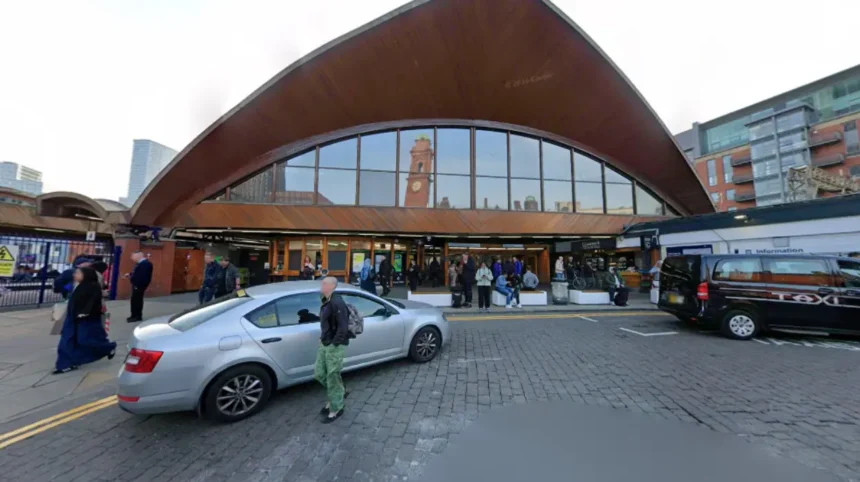
The Manchester Oxford Road station fire occurred on June 23, 2025, when a major blaze erupted at the adjacent historic Hotspur Press building on Gloucester Street. Heavy smoke engulfed the platforms, prompting an immediate station evacuation and total rail suspension across Greater Manchester.
- What Happens During a Major Fire Evacuation at Manchester Oxford Road Station?
- How Do Line-Side Fires Affect Rail Infrastructure and Commuter Traffic in Greater Manchester?
- What Emergency Response Protocols Protect Passengers and Historic Urban Sites?
- What caused the fire near Manchester Oxford Road station?
- Were train services canceled due to the Oxford Road fire?
- How were passengers evacuated from Manchester Oxford Road station?
- Which emergency services responded to the Oxford Road station blaze?
- How do line-side fires impact Manchester rail operations?
The incident began around 4:30 PM near the railway tracks, causing widespread chaos during peak evening commute hours. Greater Manchester Fire and Rescue Service deployed 20 fire engines and aerial appliances to combat the three-story blaze.
Network Rail and train operators, including Northern and TransPennine Express, halted all train operations through the station. Emergency service personnel established security cordons around Oxford Street, Cambridge Street, and Whitworth Street to protect the public from severe structural collapses and potential airborne hazards like asbestos.
The structural proximity of the nineteenth-century cotton mill to the elevated railway tracks presented immediate operational challenges for emergency responders. Radiant heat and thick smoke compromised signal systems and overhead power lines, making immediate train operations impossible.
Residents living in surrounding apartment complexes on Cambridge Street were safely evacuated as firefighting operations continued throughout the night. This emergency event highlighted critical vulnerabilities in managing historic industrial buildings located adjacent to core urban transit corridors across the United Kingdom.
What Happens During a Major Fire Evacuation at Manchester Oxford Road Station?
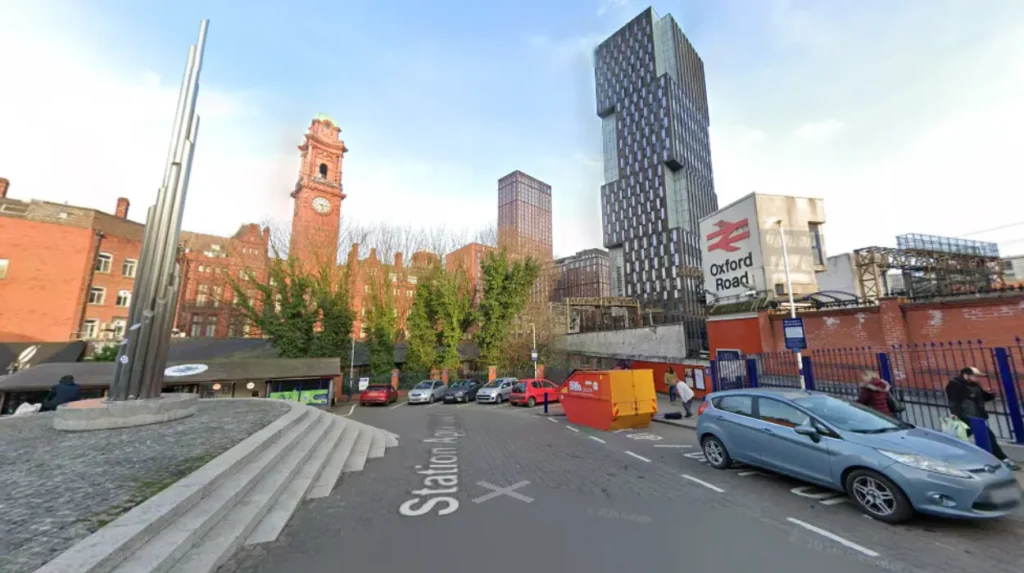
During a major fire evacuation at Manchester Oxford Road station, automated alarm systems trigger immediate public address announcements. Station staff clear platforms, direct passengers toward safe street exits, and halt incoming rail traffic to guarantee complete public safety.
Station evacuation protocols rely on a multi-tiered emergency response framework designed by Network Rail and local emergency authorities. Once station sensors or staff detect smoke or external fire risks, acoustic alarms activate across all platforms and concourses.
Designated station wardens assist mobility-impaired passengers while guiding crowd movement toward primary emergency exits on Station Approach and Oxford Road. Signal operators immediately change track signals to red, preventing trains from approaching the station perimeter.
Emergency coordination centers communicate directly with Greater Manchester Police and Greater Manchester Fire and Rescue Service to manage street-level crowd dispersion. Station doors are secured to prevent unauthorized re-entry while firefighters establish tactical positions on the elevated rail infrastructure.
Safety audits conducted following emergency evacuations evaluate response speeds, public announcement clarity, and inter-agency communication metrics. These protocols ensure passenger survival during sudden structural fires, hazardous material incidents, or line-side infrastructure emergencies.
How Do Line-Side Fires Affect Rail Infrastructure and Commuter Traffic in Greater Manchester?
Line-side fires halt rail operations by damaging electrical wiring, signaling cables, and trackside equipment. Smoke reduces driver visibility, forcing control centers to suspend all passenger services and reroute regional traffic across Greater Manchester networks.
The railway network surrounding Manchester Oxford Road forms a critical bottleneck known as the Castlefield Corridor. When a line-side fire occurs, intense heat degrades overhead line equipment that supplies high-voltage electricity to electric trains.
Thermal expansion from intense fires can warp steel tracks, requiring structural inspections before train travel can safely resume. Signal cables containing sensitive fiber optics melt quickly under extreme temperatures, causing complete signal system failures across the network.
Network Rail engineers must conduct manual safety inspections of bridges, track beds, and signaling hubs after fires are extinguished. Commuters face widespread delays, cancellations, and bus replacement services across major routes connecting Liverpool, Leeds, and London.
Logistical delays cascade throughout the northern rail grid, affecting thousands of passengers and freight operators. Infrastructure resilience plans require continuous trackside vegetation management and structural monitoring of surrounding city center buildings.
What Emergency Response Protocols Protect Passengers and Historic Urban Sites?
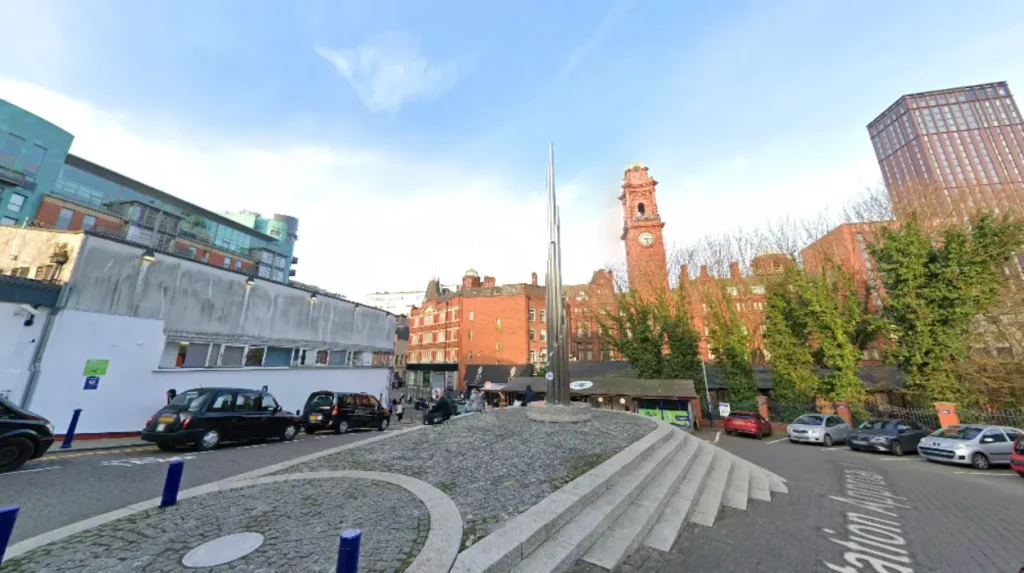
Emergency response protocols integrate fire suppression, immediate evacuation, structural monitoring, and traffic control. Specialized fire crews use aerial platforms and high-pressure hose jets to isolate blazes while protecting surrounding heritage structures and public transit lines.
When fires threaten historic industrial sites and adjacent infrastructure, fire services deploy specialized incident response units. Command structures implement hazard containment tactics to isolate flames and prevent ignition of surrounding urban properties.
Firefighters utilize high-reach aerial appliances to pump water onto upper floors while ground teams secure lower access points. Containment boundaries prevent toxic smoke and hazardous building materials from spreading into densely populated public spaces.
Heritage protection officers work alongside fire commanders to evaluate structural stability during fire suppression efforts. Emergency services coordinate with municipal councils to provide temporary shelter, medical support, and clear safety guidance to evacuated residents.
Post-incident investigations gather forensic evidence, assess structural integrity, and determine underlying ignition sources. These comprehensive safety management frameworks balance public safety requirements with urban heritage preservation standards across historic industrial cities.
What caused the fire near Manchester Oxford Road station?
The fire broke out at the derelict Hotspur Press building adjacent to the station tracks. Flames quickly enveloped the historic mill structure, prompting emergency services to close nearby rail lines and evacuate surrounding areas due to safety risks.
Were train services canceled due to the Oxford Road fire?
Yes, all rail lines running through Manchester Oxford Road were completely blocked during the incident. Train operators suspended services to ensure passenger safety, resulting in widespread delays across Greater Manchester routes.
How were passengers evacuated from Manchester Oxford Road station?
Station staff executed established emergency response protocols, guiding passengers off platforms and out through primary exits. Alarm systems alerted travelers while emergency crews cordoned off surrounding streets to ensure safe evacuation.
Which emergency services responded to the Oxford Road station blaze?
Greater Manchester Fire and Rescue Service deployed 20 fire engines alongside aerial appliances. Greater Manchester Police and rail safety officers secured the perimeter, closed roads, and managed public safety cordons.
How do line-side fires impact Manchester rail operations?
Line-side fires cause severe heat damage to overhead electrical lines, signaling cables, and track infrastructure. Rail operators must stop trains to allow safety inspections, causing cascade delays across regional transport networks.