Key Points
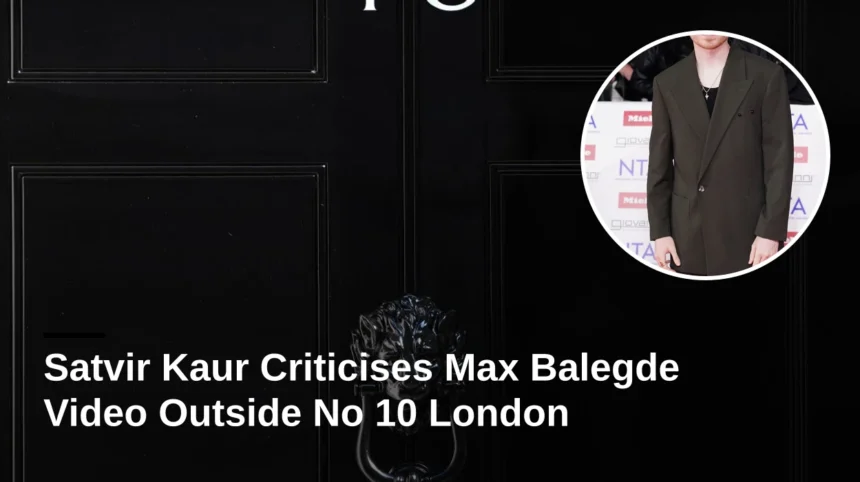
- Safeguarding Minister Satvir Kaur criticised social media influencer Max Balegde for mouthing explicit lyrics outside 10 Downing Street.
- Prime Minister Andy Burnham defended communicating through social media and engaging online audiences.
- Conservative leader Kemi Badenoch called a separate influencer video inside Downing Street “jarring” and “extremely unserious”.
- Luke Hamnett filmed himself recreating Hugh Grant’s dance from Love, Actually inside No 10.
London (Oxford Daily) November 24, 2026 – Safeguarding Minister Satvir Kaur has criticised influencer Max Balegde after he filmed himself mouthing explicit lyrics outside 10 Downing Street. The video followed Prime Minister Andy Burnham’s efforts to engage online personalities through social media content and a Downing Street creators’ reception. Kaur said she would not use or want to hear such language, while defending the Prime Minister’s decision to communicate through platforms used by the public.
Why did Satvir Kaur criticise Max Balegde’s video?
As reported by ITV News and the Press Association, Max Balegde filmed himself outside the black door of No 10 mouthing along to a viral meme song containing explicit language. Kaur, whose ministerial responsibilities include tackling violence against women and girls, said: “Would I use that language? Absolutely not.”
“Do I want to hear that kind of language anywhere, wherever it is? No, I don’t,” she said.
Kaur made the comments while defending Burnham’s engagement with TikTok influencers during an interview with LBC Radio. She said it was right for a Prime Minister to speak to different people through different media outlets and added that neither the Prime Minister nor the Government could control what broadcasters say outside No 10.
What did Kemi Badenoch say about the Downing Street videos?
Conservative leader Kemi Badenoch criticised the use of No 10 in a post on X on November 23. She said it was “jarring” to see a Labour Prime Minister turn the building into “a bit of a joke”.
Badenoch contrasted the video content with international events and concerns among people in Britain, saying the approach appeared “extremely unserious”. She added that being relatable did not mean treating the public as children who needed entertaining.
Her comments followed a video by influencer Luke Hamnett, who danced through No 10 and down its stairs while recreating Hugh Grant’s prime ministerial dance from the film Love, Actually. The clip used the Pointer Sisters’ song Jump (For My Love) and ended with Hamnett meeting Burnham for an interview.
How has Andy Burnham’s office responded?
The Prime Minister’s official spokesman said Burnham had been open about wanting to communicate with the public in different ways and on the channels they used. The spokesman said the content involving Hamnett formed part of an interview and reflected how people received information.
The response came as critics questioned whether access for online personalities risked making official government communications appear less serious. Reports by the Daily Echo, The Independent and the Press Association described the criticism as focusing on a series of videos filmed during or after influencer access to Downing Street.
What is the background to the influencer outreach?
Burnham hosted a creators’ reception at No 10 as part of an effort to engage social media personalities and reach audiences beyond traditional political media. Luke Hamnett was later filmed inside the building during an interview with the Prime Minister. Max Balegde’s video outside No 10 then drew criticism because of its explicit lyrics. The events prompted debate over whether government communication should use informal online content alongside conventional political interviews.
What could the controversy mean for Downing Street’s online strategy?
The dispute is likely to increase scrutiny of how influencers are selected and how material recorded around No 10 is approved before publication. Supporters of the approach may argue that online creators help political messages reach younger audiences who do not regularly follow traditional broadcasters. Critics may continue to focus on standards, access and the risk that informal videos distract from government priorities. The immediate effect is likely to be greater attention on whether future creator partnerships provide substantive public information as well as audience engagement.