Key Points
- Oxford City Council’s Labour group backed a motion seeking changes to the traffic-filter scheme.
- The motion calls for Oxford residents to be fully exempt and asks Oxfordshire County Council to review filter locations and operating times.
- Independent Oxford Alliance Group leader David Henwood called for the scheme to be scrapped and plans to take a similar motion to the county council.
- Oxford Bus Company managing director Luke Marion said congestion on Botley Road was particularly severe at weekends.
- The trial began on 28 September, with drivers without permits facing £70 penalty notices.
- Oxfordshire County Council says the scheme is experimental and will be monitored before a long-term decision.
Oxford (Oxford Daily) November 24, 2026 – Calls for changes to Oxford’s traffic filters have intensified after Oxford City Council’s Labour group supported a motion seeking exemptions for residents and a review of the scheme’s locations and timings. The traffic filters operate at six points in the city and restrict cars without permits. The debate followed concerns about congestion, fairness and the effect on residents, businesses and bus journeys after the filters replaced a previous congestion-charge arrangement.
- Key Points
- Why are Oxford councillors calling for changes to the traffic filters?
- What concerns have been raised about congestion and bus journeys?
- How does the current traffic-filter scheme operate?
- What happens next for the traffic-filter debate?
- What is the background to Oxford’s traffic filters?
- How could the development affect calls for changes?
Why are Oxford councillors calling for changes to the traffic filters?
As reported by the BBC, the Labour group said it supported the traffic filters’ aim of addressing congestion but wanted people living in Oxford to be fully exempt. The group also called for Oxfordshire County Council to review where and when the filters operate.
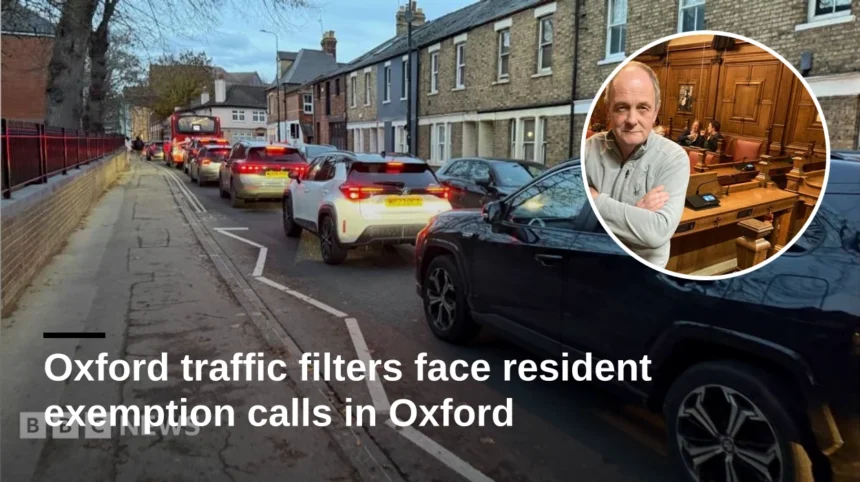
Oxford City Council debated a motion led by David Henwood, leader of the Independent Oxford Alliance Group. Mr Henwood argued that the trial had not resolved congestion and described it as unfair to residents. His original call to scrap the scheme was amended following discussions with the Labour group.
Anna Railton, Oxford City Council’s cabinet member for transport, said congestion was a genuine problem requiring a solution but said residents needed greater consideration. She said the accepted amendment could help bring people together after a divisive debate.
What concerns have been raised about congestion and bus journeys?
Luke Marion, managing director of the Oxford Bus Company, told the BBC that Botley Road had experienced significant congestion, particularly at weekends. The road is the only route into Oxford’s Westgate shopping centre that does not pass through a traffic filter.
Mr Marion also said return bus journeys were affected because Botley Road has no bus lane leaving Oxford. He suggested that the county council consider adjustments, including the possibility of introducing a filter on Botley Road. He contrasted the current arrangement with the former congestion charge, under which motorists could pay £5 to travel through restricted points.
Tim Bearder, leader of Oxfordshire County Council, said the traffic filters were experimental and would not be right from the first day. He said the council needed to remove cars from in front of buses, while warning that giving everyone free passes would undermine the scheme.
How does the current traffic-filter scheme operate?
The filters began on 28 September after the reopening of Botley Road. Automatic number-plate recognition cameras enforce restrictions at six locations, and motorists without valid permits can receive a £70 penalty notice. Unlike the previous congestion charge, the scheme does not provide a £5 payment option for drivers who want to pass through.
Oxfordshire County Council describes the arrangement as an experimental traffic regulation order, allowing the authority to monitor its effects and make changes before deciding whether to retain it. The council’s published monitoring information has recorded lower traffic volumes on several key routes, including reductions of 8 per cent at Magdalen Bridge, 12 per cent at Folly Bridge and 5 per cent on Abingdon Road in June 2026.
The council has also reported increased use of park-and-ride services. Its monitoring material says journeys connected with increased park-and-ride use reached about 17,450 each week, although the available datasets do not cover every aspect of the trial.
What happens next for the traffic-filter debate?
Tim Bearder said the programme was being reviewed continuously and that the authority was looking for changes where necessary. David Henwood said he planned to take a similar motion to Oxfordshire County Council in December.
The wider trial consultation is scheduled to run until 28 March 2027. Oxfordshire County Council has said monitoring will include traffic, journey times, public transport and effects on businesses and shopping areas. The outcome of that monitoring is expected to inform any changes to exemptions, filter locations, operating times or enforcement.
What is the background to Oxford’s traffic filters?
The traffic filters were introduced to reduce through-traffic and improve bus reliability in Oxford. They replaced a temporary congestion-charge arrangement that allowed motorists to pay £5 at six locations. The current system uses cameras to enforce restrictions and applies £70 penalties to drivers without permits. Political disagreement has continued because supporters emphasise congestion and bus movement, while critics have raised concerns about residents, businesses, route changes and fairness.
How could the development affect calls for changes?
The Labour group’s support gives calls for changes wider political backing at city level, particularly among Oxford residents seeking exemptions. Bus operators and businesses may use evidence about Botley Road congestion and visitor impacts to press for revised filter locations or timings. However, Oxfordshire County Council’s stated aim of prioritising bus movement means a blanket exemption for residents is not guaranteed. The December county-level motion and monitoring results are likely to shape the next stage of the debate.