Key Points
- Emma Dutton, 43, fell asleep behind the wheel of her blue Nissan Qashqai and hit a roadside telegraph pole on Stadhampton Road in Little Milton, South Oxfordshire.
- Blood tests showed Dutton had over 800 micrograms of benzoylecgonine—a cocaine metabolite—per litre of blood in her system.
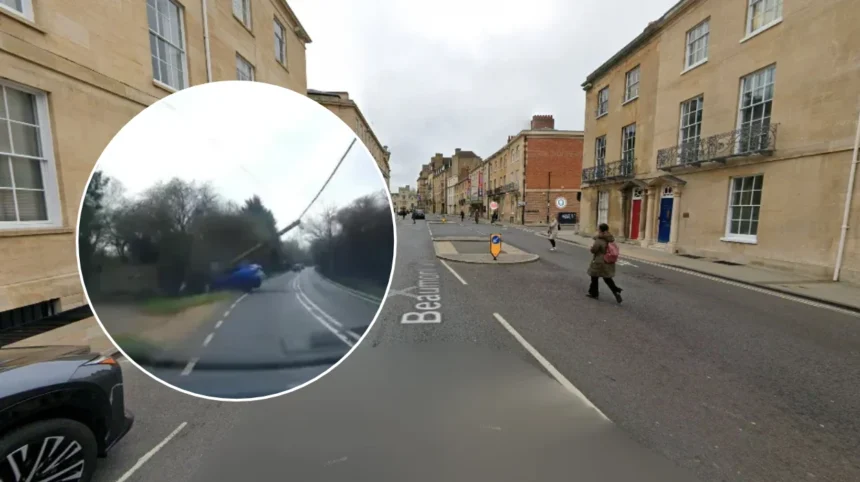
- A trailing motorist’s dashcam filmed the vehicle veering off a slight bend before colliding with the pole.
- Dutton appeared at Oxford Magistrates’ Court on October 8 and pleaded guilty to dangerous driving and drug driving.
- Magistrates sentenced her to 12 months in prison suspended for two years, a 22-month driving ban, £85 in prosecution costs, and an £187 victim surcharge.
Little Milton (Oxford Daily) October 16, 2026 – A 43-year-old motorist has escaped immediate imprisonment after veering off a countryside road and ploughing into a telegraph pole while under the influence of cocaine, following a court appearance in Oxfordshire.
As reported by Matt Simpson, Chief Reporter of the Oxford Mail, Emma Dutton, residing at Church View in Berinsfield, admitted responsibility for driving dangerously and operating a motor vehicle whilst over the legal drug limit.
The collision occurred on February 5 along Stadhampton Road in the village of Little Milton, South Oxfordshire, when Dutton lost control of her blue Nissan Qashqai after falling asleep behind the wheel.
Subsequent blood tests administered following the collision determined that Dutton had accumulated greater than 800 micrograms of benzoylecgonine—the primary metabolite of cocaine—per litre of her blood.
“We say this every time, but please don’t drug drive. It isn’t worth risking your licence, your freedom, or somebody else’s life.”
Dashcam footage captured by a motorist travelling directly behind Dutton’s vehicle documented the entire sequence of events. The recorded footage demonstrated the blue Nissan Qashqai steadily drifting off course on a slight bend in the roadway before colliding squarely with the roadside telegraph pole.
At a hearing conducted at Oxford Magistrates’ Court on October 8, magistrates sentenced Dutton to one year in prison, suspended for two years. In addition to the suspended custodial term, the court imposed a 22-month driving ban and ordered Dutton to pay £85 in prosecution costs alongside an £187 surcharge.
Following the sentencing, a spokesperson for Thames Valley Police issued a public statement highlighting the severe dangers associated with drug-impaired driving across regional roads.
“It isn’t worth risking your licence, your freedom, or somebody else’s life.”
What Is the Background to This Particular Development?
The court outcome comes against a backdrop of increasing police enforcement targeting drug-impaired drivers across Oxfordshire and the wider Thames Valley region.
Thames Valley Police have continuously deployed preliminary roadside drug testing kits—commonly known as DrugWipes—to screen drivers suspected of operating vehicles under the influence of illicit substances such as cannabis and cocaine.
Under current UK traffic legislation, strict legal limits are enforced for specified controlled drugs to ensure road safety. The legal threshold for benzoylecgonine is set at 50 micrograms per litre of blood, meaning Dutton’s recorded level of over 800 micrograms per litre was more than sixteen times the statutory limit.
The imposition of suspended sentences alongside extended driving bans remains a standard judicial remedy for first-time or qualifying offenders admitting guilt at the earliest opportunity in magistrates’ courts.
How Can This Development Affect Drivers and Local Communities?
This judicial ruling serves as a strong operational deterrent for motorists across Oxfordshire and the United Kingdom who might consider operating heavy vehicles while under the influence of Class A drugs.
For local residents in rural communities like Little Milton, roadside collisions involving infrastructure—such as telegraph poles—frequently result in temporary utility disruptions, localized traffic diversions, and heightened safety hazards for pedestrians and oncoming traffic.
Furthermore, the publication of clear dashcam evidence alongside court outcomes underscores the expanding role of public reporting and recorded footage in securing convictions.
Motorists facing similar charges risk immediate driving disqualifications, substantial financial penalties, increased vehicle insurance premiums upon license reinstatement, and potential custodial sentences if secondary offences occur during a period of suspension.