Key Points
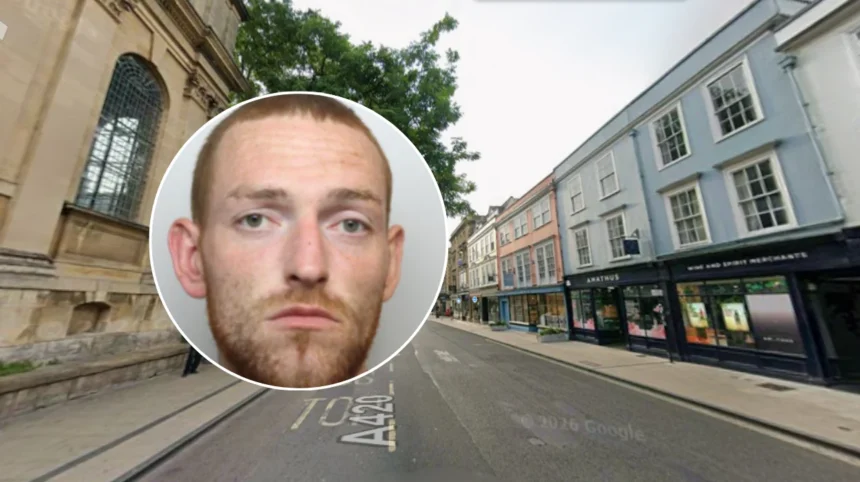
- Ethan Jenkins, 28, of no fixed abode, received a three-year prison sentence at Oxford Crown Court.
- The presiding judge stated during sentencing that the Oxford public “must be protected” from repeated offending.
- Jenkins pleaded guilty to 10 charges: four counts of shop theft, four counts of non-residential burglary with intent to steal, one count of non-residential burglary with theft, and one count of residential burglary with intent to steal.
- The offences targeted premises on Little Clarendon Street and Turl Street, including the Duke of Cambridge cocktail bar, George & Davis Ice Cream, Mahogany hair salon, Blushes hair salon, and Walters of Oxford.
- All break-ins took place on 10 June, with police arresting Jenkins on 19 June and remanding him into custody on 20 June.
- The court postponed the original 28 August sentencing to 18 September because a defence barrister was unavailable.
OXFORD (Oxford Daily) September 21, 2026 As detailed by Matthew J C Evans of the Oxford Mail, Ethan Jenkins, who was listed as having no fixed abode, received a three-year custodial term after appearing at Oxford Crown Court for sentencing. His conviction follows a concentrated spree of break-ins on June 10, which caused substantial damage and disruption to independent traders and heritage retailers operating in the city.
According to court filings cited by the Oxford Mail and reported by Matthew J C Evans, Jenkins formally admitted his guilt at Oxford Magistrates’ Court prior to his crown court appearance. He entered guilty pleas to a total of 10 separate counts:
- Four counts of theft from a shop.
- Four counts of burglary other than a dwelling with intent to steal.
- One count of burglary other than a dwelling with theft.
- One count of residential burglary with intent to steal.
Thames Valley Police investigators tracked down Jenkins shortly after the offences took place, taking him into custody on June 19 before he was formally remanded on June 20. Although sentencing was initially scheduled for August 28, proceedings were adjourned until September 18 due to a lack of available defence counsel.
Which Oxford Businesses and Properties Were Targeted in the Spree?
As reported by Matthew J C Evans of the Oxford Mail, Jenkins focused his activity primarily on commercial premises in Little Clarendon Street, a prominent shopping and dining thoroughfare in Oxford, alongside an established retailer on Turl Street.
Among the primary businesses targeted was the Duke of Cambridge, an iconic establishment operating on Little Clarendon Street since 1981 and widely recognized as one of Oxford’s oldest cocktail venues. Security footage gathered from the premises depicted Jenkins inside the building during the commission of the offence.
As documented in coverage by the Oxford Mail, the full list of impacted commercial and academic establishments includes:
- The Duke of Cambridge: Iconic cocktail bar on Little Clarendon Street.
- George & Davis Ice Cream: Popular local ice cream parlor on Little Clarendon Street.
- Mahogany: Hair salon located on Little Clarendon Street.
- Blushes: Hair salon based on Little Clarendon Street.
- Walters of Oxford: Historic Turl Street retailer renowned for supplying formal suits and traditional Oxford academic wear.
In addition to the commercial break-ins, court records show Jenkins committed a residential burglary with intent to steal during the same timeframe.
How Have Local Business Owners and Authorities Responded?
In statements obtained by the Oxford Mail and recounted by reporter Matthew J C Evans, business leaders impacted by the offences reflected on the operational consequences of the break-ins. Julian Rosser, owner of the Duke of Cambridge cocktail bar, noted that while the incident caused immediate disruption, he was choosing to treat the aftermath as an opportunity to “reinvent” and restructure the long-standing venue.
Court logs highlight that judicial authorities took a stern stance regarding persistent property crime in Oxford’s retail districts. During the sentencing remarks, the judge underlined the necessity of removing habitual offenders from the streets to safeguard local traders, employees, and residents, summarizing that the Oxford public “must be protected” through a meaningful custodial term.
Background of the Particular Development
Commercial burglary and shoplifting across urban retail centres in the United Kingdom have come under heightened scrutiny from business associations, local councils, and police forces. Independent commercial districts—such as Oxford’s Little Clarendon Street—often feature high footfall and concentrated retail activity, making them primary targets for opportunistic property crime.
In response to persistent anti-social behavior and commercial offences, local authorities and Thames Valley Police have regularly utilized legal instruments such as Public Spaces Protection Orders (PSPOs) and targeted court enforcement to maintain safety in city centre shopping corridors. The rapid identification, arrest, and prosecution of Ethan Jenkins within nine days of his June 10 burglary spree reflects an intensified push by law enforcement to address high-volume commercial crime and mitigate losses for local independent traders.
Prediction: How This Development Can Affect Oxford Businesses and the Local Community
The three-year prison sentence handed to Ethan Jenkins is expected to produce several tangible effects for business owners, consumers, and law enforcement agencies across Oxford:
- Restored Confidence for Independent Retailers: For business owners along Little Clarendon Street and Turl Street, the removal of a prolific offender provides immediate operational relief. The successful prosecution demonstrates that commercial break-ins carry substantial custodial penalties, which may serve as a deterrent to other potential offenders targeting independent shops.
- Enhanced Security and Resilience Measures: In the wake of the June 10 incidents, affected businesses—including hospitality venues like the Duke of Cambridge—have evaluated and upgraded their physical security infrastructure. Establishments are likely to continue investing in updated CCTV equipment, reinforced entry points, and alarm systems to minimize vulnerability to future break-ins.
- Increased Demands on Legal and Defense Resources: The procedural delay in Jenkins’ sentencing—caused by a lack of available defence counsel on August 28—highlights ongoing systemic pressures within the UK’s legal aid and court systems. Similar cases in the region may continue to face scheduling bottlenecks until broader staffing challenges within the legal sector are addressed.
- Strengthened Business Improvement Collaboration: Commercial operators in Oxford are expected to work more closely with Thames Valley Police and local crime reduction partnerships, sharing real-time intelligence and surveillance data to ensure quick identification of suspicious activity in shopping districts.