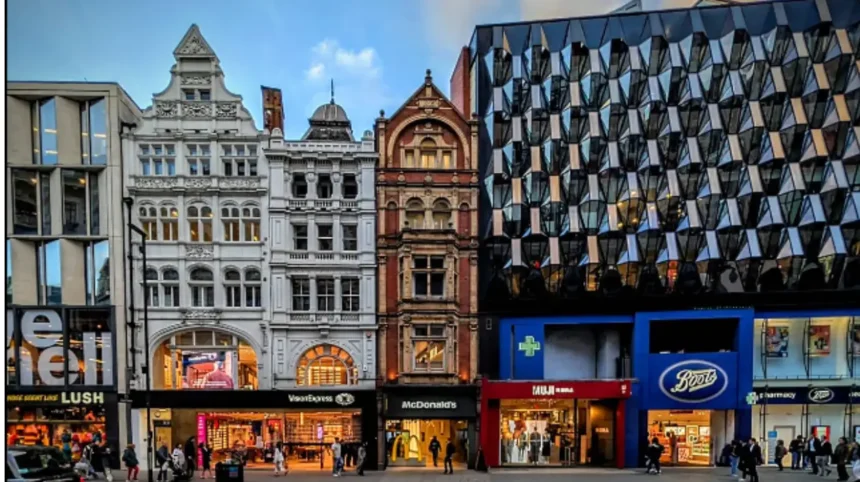
MUJI Oxford Street serves as a vital flagship retail location in Central London, providing minimalist Japanese lifestyle products, sustainable apparel, and functional home organization items to millions of international shoppers and local consumers every year.
- What Is the Historical Origin of MUJI in the United Kingdom Retail Market?
- How Does MUJI Oxford Street Implement Minimalist Product Design?
- What Product Categories Are Available at MUJI Oxford Street?
- How Does MUJI Oxford Street Drive Sustainability in Retail Operations?
- What Accessibility and Transport Options Serve MUJI Oxford Street?
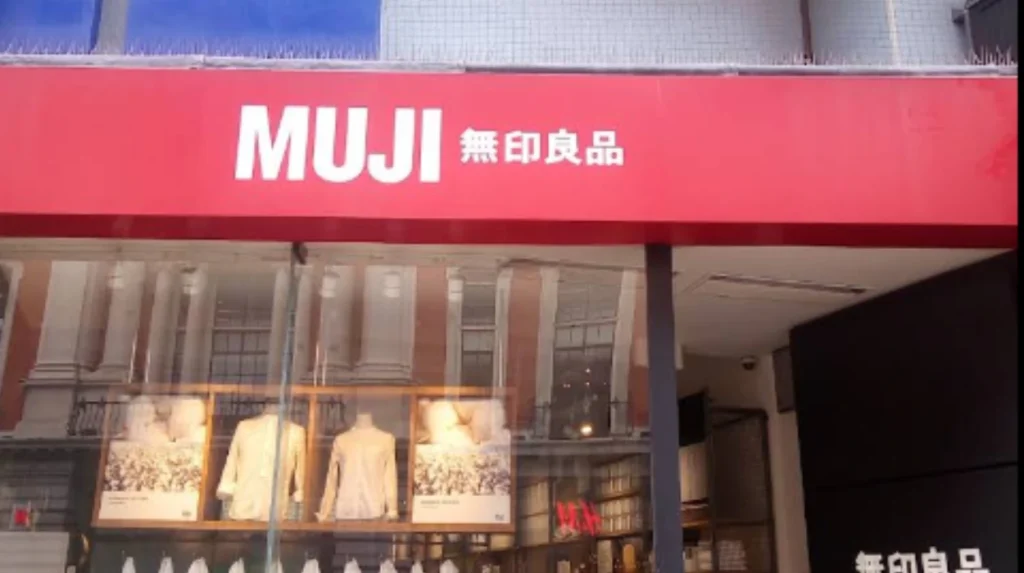
MUJI Oxford Street is located at 187 Oxford Street, W1D 2JY, positioned in the City of Westminster in Central London. The retail branch represents the physical manifestation of Ryohin Keikaku Co., Ltd., the parent company established in Japan in 1980.
The core operational objective of this location centers on delivering accessible, unbranded, high-quality merchandise across multiple everyday categories. Situated within the primary shopping precinct of London, the store acts as a strategic commerce node connecting Japanese functional design principles with Western urban consumer markets.
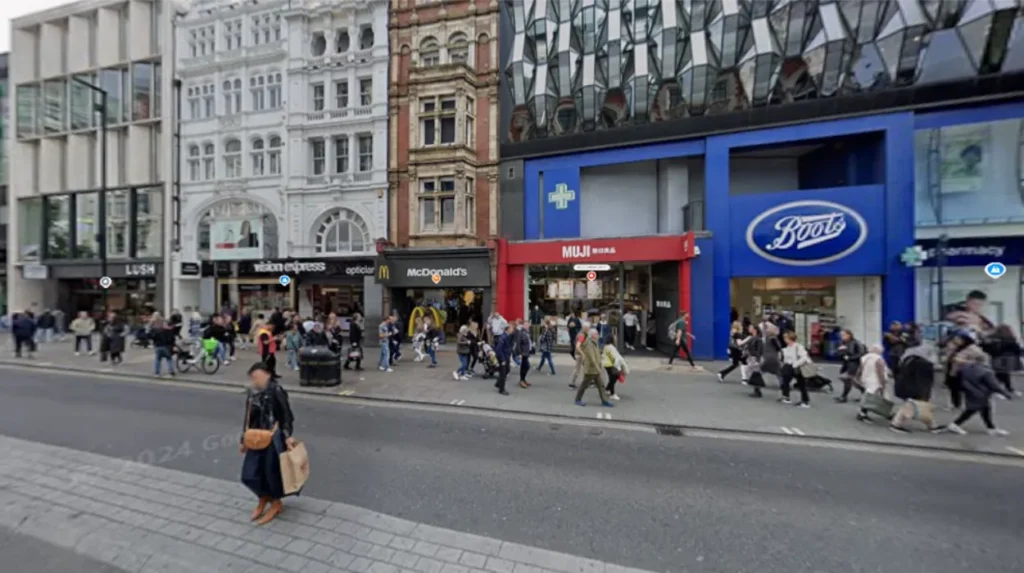
The retail landscape of Oxford Street experiences high pedestrian footfall, recorded at over 200 million annual visitors prior to recent retail shifts. MUJI Oxford Street occupies two distinct functional levels covering thousands of square feet of retail floor space. The branch operates 7 days a week, opening from 10:00 AM to 8:00 PM Monday through Thursday, 10:00 AM to 9:00 PM Friday and Saturday, and 12:00 PM to 6:00 PM on Sunday. This physical footprint allows the company to showcase large-format home furniture, full seasonal apparel lines, and specialized storage solutions that smaller satellite locations cannot accommodate.
The architectural layout prioritizes open, well-illuminated floor plans, utilizing natural wood finishings, neutral industrial palettes, and modular steel displays. This physical design creates a stark visual contrast with surrounding commercial retail spaces on Oxford Street. By eliminating ornate decorative fixtures, the store layout direct consumer focus toward product functionality, material composition, and tactile qualities. The location serves as a model for physical retail efficiency, demonstrating how spatial planning reinforces brand identity through structural restraint.
The strategic placement of 187 Oxford Street places it between major London Underground transport hubs, including Oxford Circus Station and Tottenham Court Road Station. This positioning ensures maximum physical connectivity via the Central, Victoria, Northern, and Elizabeth transit lines. The store captures diverse demographic segments, ranging from commuter office workers purchasing everyday stationery to international tourists seeking specialized Japanese goods. Consequently, MUJI Oxford Street remains a key revenue generator and brand anchor within the European retail portfolio of Ryohin Keikaku Co., Ltd.
What Is the Historical Origin of MUJI in the United Kingdom Retail Market?
MUJI entered the United Kingdom market in 1991 by opening its first international store outside Japan on Carnaby Street, setting the stage for its eventual expansion into major commercial flagships like Oxford Street.
The founding corporate philosophy of MUJI originated in Japan in December 1980 as a private label brand for the Seiyu supermarket chain. The Japanese phrase Mujirushi Ryohin translates directly to No Brand Quality Goods. The initial product catalog comprised 40 distinct items, primarily focused on basic food products, stationery, and household items. The overarching purpose was to create a direct critique of foreign luxury brand inflation and low-quality mass-produced goods dominant in late 20th-century consumerism.
In 1991, Ryohin Keikaku Co., Ltd. initiated its global expansion strategy by selecting London as its first international territory outside East Asia. The inaugural store opened on Carnaby Street in Soho, proving that European consumers accepted minimalist, unbranded products. The success of the Carnaby Street location led to accelerated capital investment across London, establishing additional retail branches along key thoroughfares, culminating in the establishment of the Oxford Street presence.
The development of the Oxford Street store reflected a broader commercial trend toward experiential flagship locations in global capitals. During the late 1990s and 2000s, MUJI expanded its inventory from basic paper goods to complex furniture systems, electronics, and technical outerwear. The Oxford Street location underwent multiple structural renovations to incorporate expanding product lines, including dedicated skincare areas and specialized travel equipment departments.
Today, the Oxford Street location stands as an historical milestone for Japanese corporate expansion into Western retail markets. The historical trajectory of the store demonstrates the evolution of consumer preferences from hyper-branded goods toward functional, understated aesthetics. Statistical metrics from European retail analyses confirm that the UK business model developed on Oxford Street provided the operational blueprint for subsequent store openings across France, Germany, Italy, and Spain.
How Does MUJI Oxford Street Implement Minimalist Product Design?
MUJI Oxford Street implements minimalist product design through three fundamental principles: strict selection of raw materials, thorough streamlining of manufacturing processes, and total simplification of product packaging across all inventory items.
The product selection strategy relies on the rigorous elimination of unnecessary production steps. MUJI selects industrial raw materials based on utility, durability, and environmental sustainability rather than aesthetic trendiness. Examples of these raw materials include unbleached paper pulp, organic cotton, Kapok tree fiber, and recycled polypropylene plastic. By utilizing unbleached paper pulp for notebooks and notepad products, the manufacturing process reduces chemical processing steps, resulting in a signature natural light-brown tone.
Manufacturing processes undergo systematic rationalization to eliminate waste. Standard industrial manufacturing discards materials that possess minor cosmetic variances, such as slight color variations or irregular shapes. MUJI reclaims these usable materials to manufacture consumer goods at lower costs without compromising structural integrity. For example, the production of Right Angle Socks utilizes scrap yarn variations, yielding functional garments designed specifically to match the 90-degree human heel angle.
Packaging design across the Oxford Street inventory adheres to absolute minimalism. Products are displayed either without exterior packaging or wrapped in plain, recyclable polypropylene film with standard brown paper labels. Typography remains uniform across all product lines, utilizing Helvetica or similar sans-serif fonts to convey factual item specifications without promotional adjectives. This packaging reduction decreases shipment weight, lowers shipping costs, and reduces landfill waste generated by retail packaging.
The resulting retail offering presents a distinct aesthetic known in Japanese culture as su, meaning plain or unadorned. The absence of corporate logos on consumer products allows items to integrate into any residential or professional environment. By focusing entirely on functional performance, material honesty, and affordable pricing, MUJI Oxford Street maintains a product ecosystem where individual items interact seamlessly with one another.
What Product Categories Are Available at MUJI Oxford Street?
MUJI Oxford Street stocks six main retail product categories: apparel, homeware and furniture, stationery, beauty and skincare, travel accessories, and specialty food items across its two spacious retail floors.
The apparel section occupies a primary portion of the basement floor level, housing the largest clothing selection of any UK MUJI store. Garments are manufactured using natural fibers like organic cotton, linen, and wool. Examples of apparel items include trench coats, flannel shirts, pyjamas, seamless underwear, and right-angle socks. The clothing line includes the specialized MUJI Labo collection, which focuses on unisex, gender-neutral sizing and experimental silhouettes designed for long-term wear.
Homeware and furniture represent a major department located on the ground floor. The store displays modular furniture systems designed specifically for urban living spaces with limited square footage. Examples of furniture and homeware items include oak stacking shelves, steel unit shelves, bean bag body fitting cushions, ultrasonic aroma diffusers, and linen bed sheets. The modular shelving systems adhere to standardized metric measurements, allowing consumers to expand furniture setups incrementally over time.
Stationery items remain among the highest-volume sales categories within the Oxford Street branch. The stationer department provides precise, functional tools for students, creative professionals, and office workers. Examples of stationery products include 0.5mm gel ink pens, recycled paper notebooks, acrylic desk organizers, polypropylene ring binders, and aluminum ruler tools. These products are displayed in open testing stations where shoppers can write with various pen nib widths before purchasing.
Beauty, travel, and food categories complete the retail catalog at 187 Oxford Street. The skincare department offers sensitive skin formulas made with Japanese mountain spring water. Examples of beauty and travel goods include toning water, cleansing oils, hard-shell polycarbonate luggage, packing cubes, instant curry packs, and Japanese rice snacks. The integration of diverse product categories allows consumers to fulfill multiple domestic needs within a single retail location.
How Does MUJI Oxford Street Drive Sustainability in Retail Operations?
MUJI Oxford Street drives sustainability by utilizing responsibly sourced raw materials, offering product repair and recycling initiatives, minimizing retail packaging waste, and enforcing energy-efficient physical store management systems across all operating levels.
Material selection forms the foundation of environmental compliance at the store level. The company sources 100% organic cotton for its core garment lines, eliminating synthetic chemical pesticides and artificial fertilizers from farming processes. Furthermore, MUJI incorporates alternative botanical fibers such as Kapok, derived from wild tree seed pods. Kapok harvesting requires no irrigation or agricultural clearing, significantly reducing carbon emissions and soil degradation associated with industrial textile production.
Waste reduction policies directly govern daily retail operations at 187 Oxford Street. The store actively discourages single-use plastic bags, offering reusable jute tote bags and recycled paper alternatives at point-of-sale terminals. Product packaging uses minimal ink printing and unbleached paperboard materials. Store operations include internal recycling programs for plastic display fixtures, shipping pallets, and cardboard transport cartons used during stock replenishment cycles.
Circular economy initiatives allow consumers to extend product lifecycles through in-store disposal points. The store provides collection bins for used garments, textiles, and empty acrylic cosmetic containers. Examples of circular materials processing include converting returned cotton garments into recycled yarn for new apparel production and melting acrylic bottles into raw material for industrial plastic storage units. These mechanisms reduce the volume of consumer waste entering municipal waste streams across Greater London.
Energy management across the retail premises utilizes low-emission LED lighting arrays and automated climate control systems calibrated to reduce electricity consumption. By optimizing lighting density based on ambient natural light entering street-level windows, the store minimizes daily kilowatt-hour consumption. These combined operational strategies position MUJI Oxford Street as an active model of sustainable retail management within the West End commercial district.
What Accessibility and Transport Options Serve MUJI Oxford Street?
MUJI Oxford Street is accessible via multiple Underground lines, public bus routes, and pedestrian thoroughfares, featuring step-free access at the main ground-level entrance for shoppers with mobility requirements.
Public transit connections to 187 Oxford Street are among the most robust in Central London. Oxford Circus Station sits approximately 200 meters west of the storefront, servicing the Central, Bakerloo, and Victoria lines. Tottenham Court Road Station lies 400 meters to the east, providing access to the Northern Line and the Elizabeth Line. The Elizabeth Line connection provides direct rapid transit to London Heathrow Airport and East London commercial districts, facilitating access for international visitors.
Surface transport options include multiple London Bus routes operating continuously along Oxford Street and Regent Street. Major bus stops located within 50 meters of the store entrance serve route numbers 55, 73, 98, 139, 390, and night bus services. Pedestrian access pathways feature wide, paved footpaths managed by the City of Westminster, allowing high-density foot traffic to navigate the retail storefront safely during peak shopping hours.
Accessibility features within the physical retail structure are designed to accommodate visitors with physical impairments. The main ground floor entrance features step-free thresholds and automated doors, enabling straightforward entry for wheelchair users and strollers. Floor aisles on the ground level maintain wide clearances, exceeding standard UK building accessibility regulations to permit maneuverability around display units.
Navigational access between store levels relies on a central staircase connecting the ground floor with the basement apparel department. Shoppers with specific mobility requirements should note that the basement level is accessed primarily via stairs, and store personnel are trained to assist customers in bringing items from lower levels up to the ground floor cash desks upon request. Nearby London flagship branches, such as MUJI Covent Garden, offer alternative architectural layouts with lift access for comprehensive step-free navigation.
What are the opening hours for MUJI on Oxford Street?
MUJI Oxford Street opens Monday through Thursday from 10:00 AM to 8:00 PM. Friday and Saturday hours extend from 10:00 AM to 9:00 PM, while Sunday trading hours run from 12:00 PM to 6:00 PM.
Is there a lift inside the MUJI Oxford Street store?
The MUJI Oxford Street location features step-free access across its ground floor, but the basement level is reached via stairs. Store staff assist shoppers with retrieving items from the basement level if required.
Which tube station is closest to MUJI Oxford Street?
Oxford Circus Underground Station is the closest transit stop, located a short walk west of the store at 187 Oxford Street. Tottenham Court Road Station is also nearby, offering Elizabeth Line and Northern Line connections.
Does MUJI Oxford Street sell the full furniture range?
MUJI Oxford Street displays popular homeware and compact modular furniture units on its ground floor. Larger furniture pieces can be ordered in-store for home delivery across the United Kingdom.
Can I return online MUJI purchases at the Oxford Street branch?
Online orders must be processed through the official MUJI UK web portal returns system. Customers should check current store policies or contact customer service prior to bringing online returns directly to the store.