Key Points
- A common snapping turtle (Chelydra serpentina) was released back into the wild near New Oxford, Adams County, after recovering from its injuries.
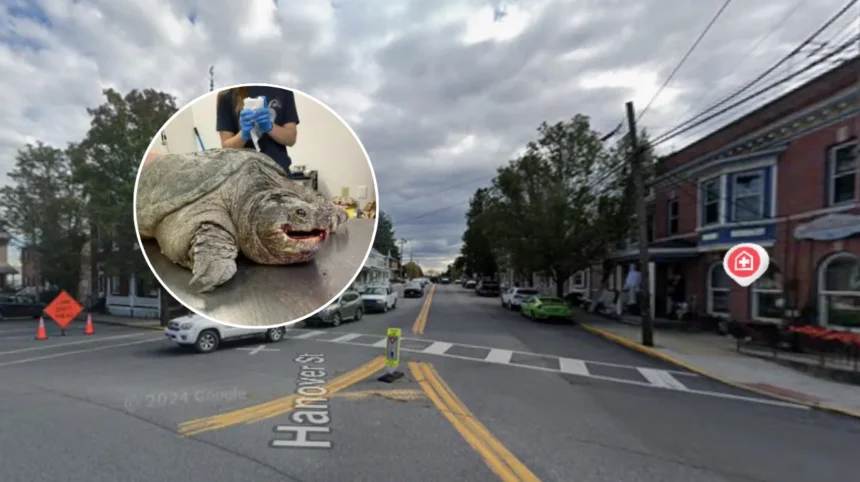
- Rescuers found the turtle with an ingested fishing hook, entangled line, and shell damage from a car strike.
- Wildlife rehabilitators removed the hook, treated the shell fractures, and cared for the animal until it fully recovered.
- The turtle was returned to its native habitat at Conewago Creek near New Oxford.
- Local news outlets and environmental specialists noted that snapping turtles help maintain aquatic ecosystems in Adams County.
NEW OXFORD (Oxford Daily) September 2, 2026 — A common snapping turtle has been restored to its natural aquatic habitat in a local creek near New Oxford after surviving dual human-related threats: ingestion of a fishing hook and a motor vehicle strike. Following weeks of specialized veterinary care and rehabilitative treatment by regional wildlife specialists, the fully recovered reptile was released into the Conewago Creek watershed, marking a successful environmental intervention in Adams County.
What Led to the Emergency Rescue of the Snapping Turtle?
As reported by staff writers at Adams County News, the adult snapping turtle was initially located in distress along a local roadway near an Adams County waterway, exhibiting signs of severe physical trauma. Upon inspection by responding wildlife caretakers, the animal was found to have swallowed a embedded fishing hook with attached line trailing from its mouth, while simultaneously sustaining shell damage consistent with a vehicular strike.
According to reporting published by Adams County News, the combination of hook ingestion and vehicle collision presented immediate life-threatening challenges. Entangled fishing gear often causes internal hemorrhaging, soft-tissue tearing, or digestive blockages in aquatic species, whilst blunt-force impacts from vehicles frequently compromise the structural integrity of the turtle’s carapace and plastron.
How Was the Rehabilitation and Medical Treatment Executed?
As detailed by local news reports gathered by Gettysburg Wire, the injured reptile was promptly transported to a licensed wildlife rehabilitation facility specializing in native Pennsylvania herpetofauna. Licensed rehabilitation personnel performed radiographs to determine the precise location of the embedded hook before performing extraction procedures to minimize internal damage.
Concurrently, veterinary staff administered wound management protocols to treat exterior shell fractures and secondary bacterial infection risks. Over the course of the rehabilitation period, the turtle was housed in controlled aquatic enclosures to assess its diving, foraging, and swimming capabilities, ensuring full physical functional recovery prior to authorization for release into the wild.
Where Was the Turtle Released Back Into the Wild?
As documented by reporting from Adams County News, once medical professionals confirmed that the animal had regained sufficient mobility and feeding capability, the decision was finalized to return the reptile to its native ecosystem. The release took place at a quiet stretch along the Conewago Creek near New Oxford.
Wildlife handlers carefully placed the snapping turtle near the water’s edge, where it immediately submerged and paddled into deeper water. According to environmental experts cited across local reporting sources, returning rehabilitated specimens to their original localized watersheds is critical for maintaining established population genetics and territorial familiarity.
Background of the Particular Development
The common snapping turtle (Chelydra serpentina) is a foundational species within the freshwater habitats of the Susquehanna River watershed and Adams County tributaries. Occupying creeks, ponds, and slow-moving rivers, these reptiles act both as apex scavengers and opportunistic predators, actively cleaning waterways by consuming decaying organic matter, sick fish, and invasive vegetation.
Despite their ecological resilience, snapping turtle populations face consistent threats from human infrastructure. Late spring and summer months routinely mark peak road mortality periods as female turtles venture out of waterways to locate nesting sites in surrounding soil. Furthermore, increased recreational fishing along local streams frequently leads to accidental hookings, discarded monofilament entanglements, and secondary lead toxicity. The systematic rescue and medical rehabilitation of these long-lived reptiles directly addresses regional biodiversity loss caused by anthropogenic hazards.
Prediction: How This Development Can Affect Local Communities and Anglers
This successful rehabilitation and release event is expected to influence local public practices, environmental management protocols, and community awareness across Adams County in several key ways:
- Enhanced Angler Protocols and Conservation Awareness: The publicity surrounding hook ingestion incidents will likely prompt local angling clubs and environmental agencies to promote turtle-safe fishing gear. Anglers operating along the Conewago Creek are anticipated to adopt barb-less hooks and utilize proper line-cutting or reporting procedures when turtles accidentally swallow bait.
- Infrastructure and Wildlife Crossing Considerations: Repeated incidents of road strikes involving turtles migrating between waterways near New Oxford may encourage local municipal planners to evaluate seasonal signage or culvert crossings to reduce vehicular mortality along high-risk stream corridors.
- Preservation of Ecosystem Health: By successfully reintroducing a breeding-age adult snapping turtle back into the Conewago Creek, local biological balance is preserved. Residents and outdoor enthusiasts who utilize local creeks for recreation benefit directly from clean water systems maintained by native scavenger populations.