Key Points
- Emergency crews rescued a 50-year-old Swartz Creek man trapped for nearly five hours following a trench collapse in Oxford Township.
- First responders arrived around 3:45 p.m. at the Brabb-Dewey subdivision, where workers were installing a new sewer system.
- The worker fell into the pit when the surrounding earth collapsed, landing beside a protective trench box.
- Local teams and regional mutual-aid crews used shoring panels and a vactor truck to clear dirt from around his lower body.
- Extricated at approximately 8:05 p.m., the conscious worker climbed out on a ladder before being airlifted to a hospital for evaluation of potential compression injuries.
- The incident marks the third trench collapse in Oakland County in recent months.
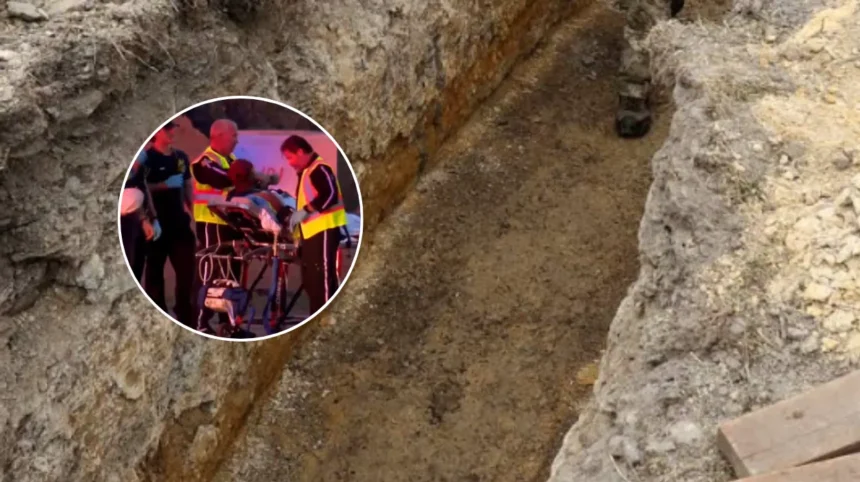
OXFORD TOWNSHIP (Oxford Daily) September 2, 2026 – Emergency rescue teams successfully extricated a 50-year-old construction worker after he became trapped waist-deep in a severe trench collapse in Oxford Township. The complex rescue operation lasted nearly five hours, with emergency personnel working under delicate conditions to secure the earth surrounding the victim before lifting him to safety. The worker, an individual from the Swartz Creek area, was airlifted to a nearby hospital for thorough medical evaluation.
What Caused the Trench Collapse in Oxford Township?
As reported by DeJanay Booth-Singleton of CBS Detroit, emergency responders were called at approximately 3:45 pm on Tuesday to the Brabb-Dewey subdivision, where construction teams were engaged in installing a new sewer system. According to Fire Chief Matt Majestic, the 50-year-old worker was walking alongside the excavated trench when the surrounding earth suddenly gave way beneath him, causing him to plunge into the pit.
As reported by DeJanay Booth-Singleton of CBS Detroit, Fire Chief Matt Majestic stated that the man fell directly next to a protective trench box, which officials believe was a crucial factor in saving his life. Although trapped from the waist down under a significant volume of soil, the worker remained conscious and able to communicate with rescue crews throughout the entire ordeal.
How Was the Emergency Technical Rescue Executed?
As reported by DeJanay Booth-Singleton of CBS Detroit, Fire Chief Matt Majestic explained that the local department initiated the Oakland County technical rescue team, triggering a regional mutual-aid response from multiple surrounding emergency agencies. Responders faced considerable challenges in stabilising the dirt walls to prevent secondary collapses during the delicate extrication process.
As reported by DeJanay Booth-Singleton of CBS Detroit, Chief Majestic stated that rescue crews installed specialised shoring panels around the victim to stop additional soil from falling into the pit. First responders then utilised a heavy-duty vactor truck to vacuum and collect loose soil from around the man’s lower body.
Throughout the process, Chief Majestic acted as the designated safety officer on the east side of the trench, maintaining continuous verbal contact with the trapped worker. As reported by DeJanay Booth-Singleton of CBS Detroit, Chief Majestic remarked that the man was “in pretty good spirits, all things considered,” and noted that the worker confirmed he was in a standing position and could move his toes inside his boots.
Crews successfully pulled the man out at approximately 8:05 pm. Despite the prolonged trauma, the victim insisted on climbing up the escape ladder himself before being loaded into an air ambulance helicopter for transport to a hospital. No other injuries were reported amongst workers or first responders on site.
As reported by DeJanay Booth-Singleton of CBS Detroit, Chief Majestic voiced medical concerns regarding long-term physical effects, stating, “Our biggest concern is that because he was in soil for so long from the waist down, that we have concern of compression”. He added, “Luckily, he’s out and alive”. The incident has officially been reported to the Michigan Occupational Safety and Health Administration (MIOSHA) for further safety evaluation.
Background of Trench Safety Incidents in Oakland County
This latest rescue highlights a alarming trend of trench-related structural collapses across the regional area over recent months. As reported by DeJanay Booth-Singleton of CBS Detroit, Chief Majestic pointed out that this event represents the third trench collapse in Oakland County in recent memory.
On June 30, 2026, a 35-year-old worker from Ira Township was trapped while installing field tile for a septic system on Barber Road in Oxford Township. In that incident, reported by J.N. of the Oxford Leader, a trench wall collapsed while the worker was gluing pipes together, completely burying him beneath the soil. He was extricated by the Oakland County Sheriff’s Office and Oxford Fire Department before being taken to McLaren Oakland Hospital in a stable condition.
Barely 24 hours after that incident, a 25-year-old Clarkston man became trapped in Orion Township when a trench collapsed at a new residential development. While both workers in Oakland County survived those events, a separate collapse in nearby Livingston County resulted in the death of a 23-year-old worker. These recurring incidents have placed civil engineering projects and safety protocols under increased scrutiny across Michigan.
Prediction: How This Development Will Affect Construction Workers and Contractors
This surge in trenching incidents is expected to trigger strict regulatory enforcement and heightened operational compliance for local civil engineering firms, site contractors, and utility workers throughout Oakland County and broader Michigan.
For construction contractors and employers, MIOSHA investigations following these repeated incidents are likely to lead to increased site inspections, mandatory safety audits, and potential administrative penalties or revised safety standards. Contractors will likely face higher insurance premiums and will be forced to enforce strict compliance on daily protective measures—such as mandatory trench boxes, soil classification testing, hydraulic shoring, and designated daily safety checks—to avoid legal liabilities and project delays.
For site laborers and ground crews, this rescue highlights both the crucial importance of properly placed protective equipment and the physiological risks of crush injuries from prolonged soil compaction. Workers can anticipate mandatory refreshed training on trench entry protocols, clearer stop-work authority when soil conditions deteriorate, and increased reliance on regional technical rescue teams during emergency scenarios.