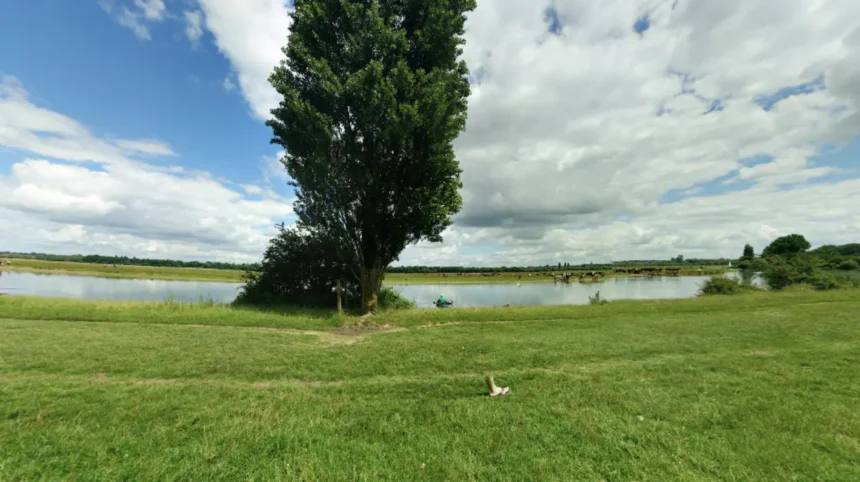
Port Meadow is a 440-acre expanse of ancient common grazing land situated along the eastern bank of the River Thames in Oxford, England, stretching from the northern suburb of Wolvercote down to Jericho. Functioning as a landscape that has never been systematically plowed since prehistoric times, the meadow serves as a vital ecological flood plain, a legally protected Site of Special Scientific Interest (SSSI), and a historic civic commons governed by centuries-old customary rights. Operated under a unique tenure framework, the land supports year-round free-roaming livestock including cattle and horses, while preserving structural traces of human activity spanning four millennia, from Bronze Age barrows to English Civil War earthworks.
- What Is the Historical Origin and Governance of Port Meadow?
- How Does the Ecosystem and Ecology of Port Meadow Function?
- What Archaeological and Prehistoric Remains Exist on the Site?
- How Was Port Meadow Utilized for Recreation and Sport Historically?
- What Is the Connection Between Port Meadow and Literature?
- What Environmental and Conservation Challenges Face Port Meadow Today?
- Frequently Asked Question
What Is the Historical Origin and Governance of Port Meadow?
Port Meadow is an ancient civic common land whose governance and livestock grazing privileges have been legally documented for over 900 years, beginning with its entry in the Domesday Book of 1086 under the designation Portmaneit. Historical tradition attributes the initial grant of the land to King Alfred the Great, who allegedly awarded the pasture to the freemen and burgesses of Oxford in the ninth century as a reward for military defense against Viking incursions. While this specific royal attribution remains folkloric, the historical reality is that the burgesses of Oxford held collective pasture rights that predated the formal municipal corporation.
In the 1086 Domesday survey, the land was recorded as yielding six shillings and eight pence from the burgesses who maintained pasture outside the city walls. Throughout medieval and early modern periods, governance of the meadow was a frequent source of friction between the urban populace (“town”) and the University of Oxford (“gown”), as academic authorities attempted to encroach upon or regulate civic properties. The legal basis of the commoners’ rights was preserved through successive charters, culminating in modern frameworks where local livestock owners exercise historic registration rights under the Commons Registration Act 1965.

How Does the Ecosystem and Ecology of Port Meadow Function?
Port Meadow operates as a dynamic alluvial flood plain ecosystem characterized by seasonal inundations from the River Thames, supporting specialized wetland flora, unfertilized grassland habitats, and migratory wildfowl. Because the topsoil has never been treated with synthetic fertilizers, artificial pesticides, or mechanical plowing, the meadow retains a pristine soil profile that promotes native botanical diversity. Botanical surveys identify three primary plant communities across the 440 acres: mesotrophic grassland species such as meadow buttercup (Ranunculus acris) and bird’s-foot trefoil (Lotus corniculatus); damp-tolerant wetland flora including silverweed (Potentilla anserina) and strawberry clover (Trifolium fragiferum); and aquatic marginal species along the ditches.
This structural integrity earned the site designation as a Site of Special Scientific Interest (SSSI) alongside neighboring Wolvercote Common. Furthermore, the location functions as an overwintering sanctuary for thousands of migratory birds, hosting species such as Eurasian wigeon (Anas penelope), northern lapwing (Vanellus vanellus), and teal (Anas crecca), making it one of Oxfordshire’s premier ornithological observation zones.
What Archaeological and Prehistoric Remains Exist on the Site?
Port Meadow contains preserved archaeological earthworks and subterranean features spanning four major historical epochs, including Bronze Age round barrows, an Iron Age settlement zone, medieval monastic structures, and seventeenth-century military fortifications. The oldest visible monument is Round Hill, a Bronze Age barrow measuring approximately 115 feet in diameter and standing four feet above the surrounding terrain, which was partially excavated by a young T. E. Lawrence in the late nineteenth or early twentieth century.
Additional prehistoric features include ring ditches and multiple round barrows that serve as structural evidence of ancient funerary practices and habitation. Later historical layers include the architectural outlines of Godstow Abbey, a twelfth-century Benedictine nunnery established beside the northern edge of the meadow, which was dissolved under King Henry VIII in 1539. Additionally, the southern section of the meadow preserves linear earthworks and defensive trenches constructed during the Parliamentary siege of Oxford in 1644 during the English Civil War, when Royalist forces utilized the flat terrain to muster thousands of horses prior to tactical withdrawals.
How Was Port Meadow Utilized for Recreation and Sport Historically?
Port Meadow served as Oxford’s primary public venue for organized secular recreation, large-scale public gatherings, and spectator sports—including official horse racing meetings—from the seventeenth century through the late Victorian era. Historical records from the seventeenth and eighteenth centuries document the establishment of an official horse racing track on the level turf, which contemporaries described as being as smooth as a croquet lawn. Major race meetings attracted thousands of spectators from across the region, featuring traditional events such as the “smock-race,” where female competitors ran for prizes in petticoats while male participants raced in breeches.
Beyond equestrian sports, the frozen expanse of the flooded meadow historically functioned as an arena for ice skating, bare-knuckle boxing, and cricket during dry summer months. In the twentieth century, the meadow’s flat topography led to its temporary requisition as a military airfield during the First World War, followed by use as a staging camp for troops evacuated from Dunkirk during the Second World War.
What Is the Connection Between Port Meadow and Literature?
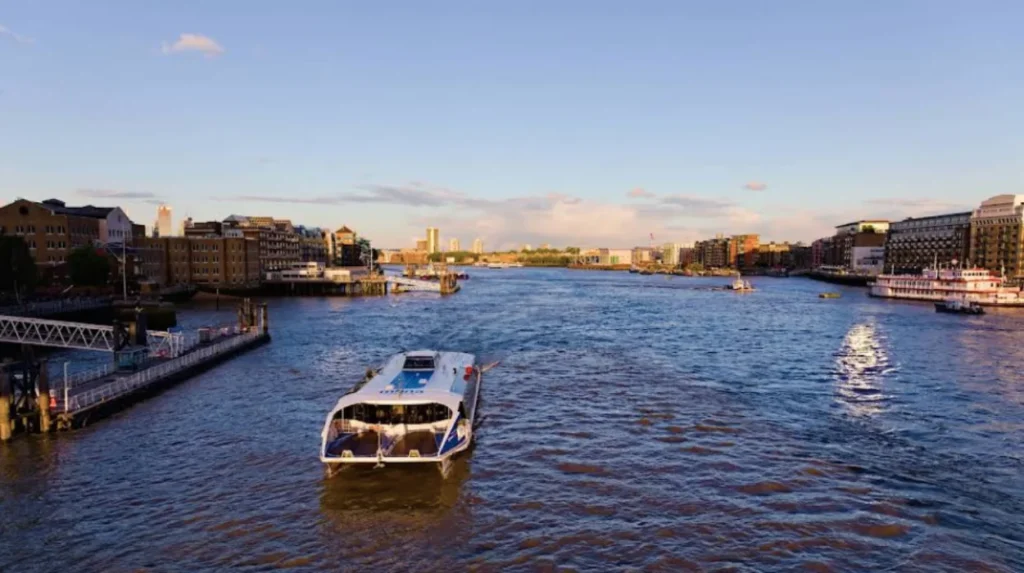
Port Meadow provided the real-world setting and atmospheric inspiration for several canonical works of English literature, most notably providing the backdrop for the boat trip on July 4, 1862, during which Lewis Carroll conceived Alice’s Adventures in Wonderland. On that summer afternoon, mathematics lecturer Charles Lutwidge Dodgson (writing under the pen name Lewis Carroll) navigated a rowing boat up the River Thames alongside Port Meadow with Alice Liddell and her two sisters.
At the request of the children, Dodgson improvised a fantastical narrative featuring a bored girl falling down a rabbit hole, a story subsequently published in 1865 that transformed children’s literature globally. Furthermore, the meadow’s unique landscape of grazing horses, ancient floodwaters, and distant views of Oxford’s spires has inspired generations of writers, poets, and naturalists, securing its status as an enduring cultural touchstone for Oxford Daily readers and visitors alike.
What Environmental and Conservation Challenges Face Port Meadow Today?
Port Meadow faces modern environmental threats driven by urban expansion, increased recreational footfall, sewage discharges into the River Thames, and climate change-induced hydrological instability. As Oxford has expanded northward, high-density residential and commercial developments—such as the controversial Castle Mill student housing blocks constructed in 2013—have significantly impacted the scenic skyline and visual integrity of the historic western approach to the meadow.
Furthermore, water quality degradation along the River Thames poses ecological hazards to the flood plain ecosystem, with frequent releases of untreated sewage from municipal wastewater treatment facilities affecting aquatic life and public safety. Conservation authorities, including Oxford City Council and Natural England, regulate access rules—such as seasonal dog-leash mandates during bird nesting seasons between March and July—to protect ground-nesting wading birds while balancing public access rights guaranteed under the Countryside and Rights of Way Act 2000.
Frequently Asked Question
Can the Public Visit and Walk Across Port Meadow freely?
Yes, the public possesses open access to walk across the entirety of Port Meadow year-round, facilitated by public footpaths and civic rights of access established under historic customary law and modern legislation. Visitors can traverse the 440-acre landscape via established walking routes originating from Jericho, Wolvercote, and the Godstow area, though certain seasonal restrictions apply to protect local wildlife. For instance, Natural England and local authorities enforce voluntary or statutory dog-leash zones and ground-nesting bird protection rules between March and July to safeguard vulnerable species like the northern lapwing. Additionally, visitors must exercise caution during heavy winter rains when the River Thames floods large portions of the common grazing land, temporarily submerging paths and turning the meadow into an active flood basin.