Key Points
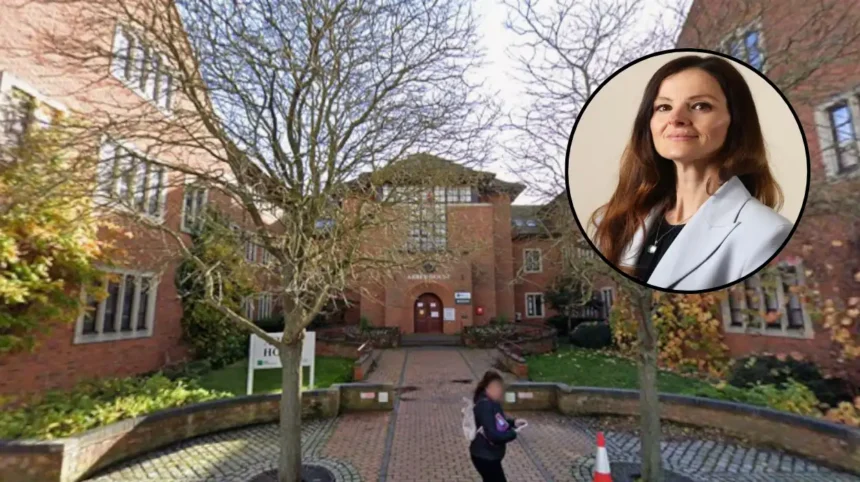
- Call to Action: Maggie Filipova-Rivers, the leader of South Oxfordshire District Council, has written an official letter to Neale Coleman CBE, the chair of the Government-backed Oxford Growth Commission. Oxford Mail
- Core Demand: The council leader urged the commission to ensure that any future housing, economic, and regional growth plans are sustainable and directly benefit local communities. Oxford Mail
- Focus on Existing Allocations: Filipova-Rivers argued that the priority should not be finding and designating new housing sites, but rather unblocking infrastructure bottlenecks to deliver homes already planned under the local framework. South Oxfordshire District Council
- Key Regional Barriers: The council’s submission highlights that local bottlenecks—including strained wastewater capacity, utilities, skills shortages, and developer build-out rates—remain the primary hindrances to development rather than a lack of land allocation. South Oxfordshire District Council
- Infrastructure Deficits: The council stressed that community pressures such as congested roads, overstretched GP surgeries, and a shortage of affordable housing must be actively managed with timely public investments rather than letting infrastructure lag behind development. South Oxfordshire District Council
- Commission Timeline: The Oxford Growth Commission was established by the central government to evaluate how regional growth can be sped up, with its official recommendations anticipated later in the year. Oxford Mail
South Oxfordshire (Oxford Daily) August 1, 2026 — The political leadership of South Oxfordshire has formally stepped into the regional planning debate, demanding that a high-profile, government-backed inquiry prioritize local residents above unbridled targets. In a development that has drawn strong regional interest, the head of the district authority has laid out strict terms for how future housing and infrastructural development must proceed across the Thames Valley corridor, shifting the focus squarely from expanding raw land volume to solving critical delivery bottlenecks.
What did the South Oxfordshire leader say to the Oxford Growth Commission?
The dialogue centers around a formal communication dispatched by the local authority to the oversight body charged with shaping the future of the region. As reported by journalists at The Oxford Mail, Councillor Maggie Filipova-Rivers, leader of South Oxfordshire District Council, addressed Neale Coleman CBE, the chair of the Oxford Growth Commission, to demand a complete philosophy shift in how future growth is managed.
Outlining her council’s official position ahead of the commission’s forthcoming final report, Councillor Filipova-Rivers argued that while growth is essential, community welfare must dictate the pace and nature of future builds. As documented by The Oxford Mail, Councillor Filipova-Rivers stated that:
“South Oxfordshire is a wonderful place to live, work and raise a family, and we all want to see it continue to thrive. We know our district needs new homes, jobs and investment. But growth has to work for people. That means making sure new development is supported by roads, schools, GP surgeries, utilities and green spaces, rather than expecting communities to catch up afterwards.”
Further amplifying these points in parallel publications by the local authority’s official media channels, the council leader emphasized that the district has already carried its share of planning obligations. As detailed by the communications team of South Oxfordshire District Council, Councillor Filipova-Rivers elaborated on the district’s capacity constraints, noting:
“South Oxfordshire has already planned for significant growth. The challenge today isn’t simply allocating more land for housing, it’s making sure the homes we’ve already planned actually get built. That means tackling infrastructure constraints, improving utilities, removing barriers to delivery and ensuring growth happens in the right places, at the right pace and with the services communities need.”
Why are local leaders opposing the continuous identification of new housing sites?
The core tension behind the district’s intervention lies in the reality that allocated lands frequently remain dormant due to structural, environmental, and financial impediments. According to coverage by The Oxford Mail, thousands of homes have already been sanctioned under the district’s adopted Local Plan. However, these blueprints have repeatedly stalled due to external complications beyond local municipal control.
Elaborating on these roadblocks, The Oxford Mail noted that issues such as tight wastewater capacities, wider market viability challenges, and sluggish developer build-out rates are choking actual construction. Building on this, the official council publication highlighted that residents are already suffering from hyper-localized pressures. Citing local infrastructure strains, South Oxfordshire District Council reported that communities face heavily congested roadways, severely overstretched general practitioner (GP) surgeries, constrained wastewater utilities, and a deep deficit of genuinely affordable housing options.
Consequently, the local authority maintains that piling on extra site designations without first fixing structural failures is a counterproductive exercise that exacerbates community friction rather than resolving the housing shortage.
Explore More South Oxford News
East Ilsley A34 Crash Causes Massive Oxford Rush Hour Traffic Queues Today, South Oxford 2026
Rare Private Gardens Open to Support Maggie’s Oxford, 2026
What role does the Oxford Growth Commission play in this dispute?
The Oxford Growth Commission represents a critical regulatory and advisory touchpoint established directly by the central government. Its primary objective is to investigate and formulate strategies on how economic and physical growth across the wider Oxfordshire region can be heavily accelerated. Because its recommendations—expected later this year—will directly steer future governmental decisions regarding housing zones, transport upgrades, and public service funding, local councils are aggressively jockeying to influence its final conclusions.
While Councillor Filipova-Rivers has struck a collaborative tone by welcoming the commission’s initial acknowledgement that infrastructure, utilities, and regional skill shortages are core barriers to expansion, she insists that recognition must translate into active funding interventions. As covered by The Oxford Mail, Councillor Filipova-Rivers stated:
“I welcome the Commission’s recognition that infrastructure is one of the biggest barriers to sustainable growth, and I hope its final recommendations will help unlock the investment needed to deliver homes, protect our environment and improve quality of life for both existing and future residents.”
How should the wider regional economy be supported moving forward?
Beyond immediate housing delivery, the council’s blueprint submitted to Neale Coleman CBE pushes for a decentralized economic model. Rather than funnelling all regional development into isolated, high-density mega-hubs, South Oxfordshire District Council is advocating for a broader approach.
According to documentation released by South Oxfordshire District Council, the authority’s submission urges the commission to value the distinct contributions of smaller market towns, rural villages, and multi-faceted employment clusters spread out across the district. The council argues that bolstering local transport networks, investing in localized training and skills, and reinforcing diverse employment hubs will cultivate a far more durable and resilient regional economy than narrow, centralized planning strategies.
As the commission prepares to draft its conclusive guidance, local authorities and journalists will be monitoring whether Westminster and regional planners choose to heed these warnings from community-level leaders, or if top-down growth models will continue to test the limits of South Oxfordshire’s fragile infrastructure.