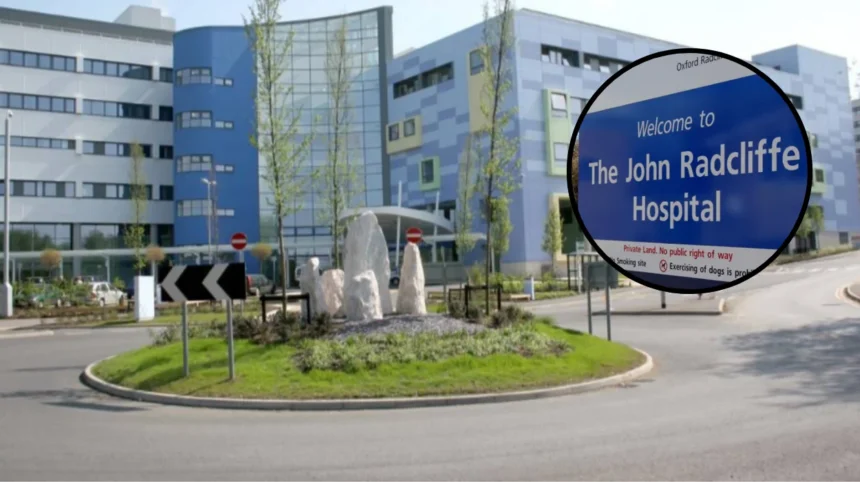
Key Points
- An £11m urgent and emergency care (UEC) project is currently underway at Oxfordshire’s largest hospital, the John Radcliffe Hospital in Oxford.
- The comprehensive scheme is designed to help patients access urgent medical care faster, reduce treatment delays, and enhance the overall experience for both patients and hospital staff.
- A central component of the development is a brand-new 51-bed Emergency Assessment Unit (EAU) tailored for adult patients, with a specific focus on older individuals and those with complex medical needs.
- The project will also establish a new Urgent Treatment Centre (UTC) situated directly next to the Emergency Department to manage minor illnesses and conditions.
- Construction work began earlier in the year, and the new facilities are scheduled to open progressively in phases starting from spring 2027.
- The development is being part-funded through national NHS capital funding and involves transforming currently unused space on Level 1 of the hospital site.
Oxford (Oxford Daily) July 28, 2026 – A major £11 million transformation project aimed at overhauling urgent and emergency care services is officially underway at Oxfordshire’s largest medical facility, the John Radcliffe Hospital. Spearheaded by the Oxford University Hospitals NHS Foundation Trust (OUH) and backed by national NHS capital investment, the extensive scheme has been strategically formulated to streamline patient flow, eradicate bottlenecks, and ensure that individuals presenting with acute medical issues can access rapid, high-quality care in the most fitting clinical environment.
- What does the £11m project entail for the John Radcliffe Hospital?
- Who are the key figures leading the project?
- When will construction finish and facilities open?
- How will the new Urgent Treatment Centre change patient flow?
- How does the EAU integrate with community healthcare services?
- How is the project being funded and supported?
What does the £11m project entail for the John Radcliffe Hospital?
As detailed in coverage by the BBC, the multi-million-pound initiative focuses heavily on modernising infrastructure that has faced mounting operational pressures. According to project outlines released by Oxford University Hospitals NHS Foundation Trust (OUH), the capital investment will fundamentally convert currently underutilised spaces located on Level 1 of the John Radcliffe Hospital complex into a state-of-the-art suite of clinical care environments.
The primary architectural and clinical deliverable of the project is a 51-bed Emergency Assessment Unit (EAU) designated for adult patients. Health authorities have emphasised that this unit will place a distinct, targeted focus on vulnerable demographic groups, specifically older patients and those managing complex multi-system health conditions. By offering a dedicated space for short-stay assessments and streamlined clinical treatments, the EAU is expected to heavily mitigate systemic blockages within the wider hospital network.
Who are the key figures leading the project?
Leadership within the hospital trust has been vocal about the long-term strategic value of the initiative. As reported by the BBC, Felicity Taylor-Drewe, Chief Operating Officer at Oxford University Hospitals NHS Foundation Trust (OUH), stressed that the initiative forms a vital pillar of the trust’s clinical roadmap.
As reported by Felicity Taylor-Drewe of Oxford University Hospitals NHS Foundation Trust (OUH), the extensive work
“represents a significant investment in the future of urgent and emergency care at the John Radcliffe.”
Expanding on the operational benefits, Felicity Taylor-Drewe of Oxford University Hospitals NHS Foundation Trust (OUH) stated that
“the new facilities will help us reduce delays in care, enhance the experience of patients and staff, and support our teams to deliver high-quality care in the most appropriate setting.”
Trust administrators have further noted that the physical layout of the development has been co-designed with frontline personnel to ensure that clinical teams can work more cohesively, thereby slashing waiting times and improving safety metrics across the board.
Explore More Local Oxford News
Oxford Bin Collections Change Due to Heatwave in Oxford 2026
Piddington Picnic Protest Over MOD Asylum Centre Plans in Oxfordshire 2026
When will construction finish and facilities open?
The construction timeline is already well underway. Project managers confirmed that physical building work kicked off earlier this year. Because the scale of the development involves complex internal restructuring and retrofitting of unused hospital zones, the rollout will not happen all at once.
Instead, project updates indicate that the state-of-the-art facilities will open progressively in successive phases. If construction milestones and logistical schedules remain on track without unforeseen interruptions, the first set of completed zones is projected to welcome patients by spring 2027.
How will the new Urgent Treatment Centre change patient flow?
A critical structural addition accompanying the 51-bed EAU is the creation of a brand-new Urgent Treatment Centre (UTC). Positioned directly adjacent to the main Emergency Department, this dedicated centre is planned to absorb a large volume of walk-in traffic.
Medical planners intend for the UTC to handle patients presenting with minor illnesses, minor injuries, and other isolated medical complaints that do not strictly require the high-acuity interventions of a major trauma centre. By filtering these cases away from the primary emergency hub, the hospital aims to free up core emergency physicians and nurses, allowing them to concentrate fully on patients suffering from life-threatening conditions, severe trauma, and acute medical emergencies.
How does the EAU integrate with community healthcare services?
Beyond the physical walls of the John Radcliffe Hospital, the operational philosophy of the new EAU is deeply tied to wider regional healthcare integration. Trust documentation highlights that the EAU will work in tandem with local community medical services, most notably the ‘Hospital at Home’ initiative.
By aligning short-stay assessment pathways directly with community-based virtual wards and home-support frameworks, OUH expects to drastically curb unnecessary inpatient bed occupancy. This collaborative approach is projected to shorten overall lengths of stay for patients, while simultaneously empowering vulnerable individuals to recuperate safely and comfortably within their own homes or local community settings wherever clinically appropriate.
How is the project being funded and supported?
Financial backing for this multi-faceted upgrade is being delivered through a combination of internal trust resources and vital central government assistance. The undertaking is part-funded via national NHS capital funding streams designated specifically for upgrading urgent and emergency care (UEC) infrastructure across England.
This injection of national capital reflects a broader, systemic push by health authorities to modernize aging hospital stock, enhance infection control compliance, and introduce digital and structural efficiencies capable of weathering future surges in winter hospital admissions. As the spring 2027 target approaches, health officials remain confident that the completed £11m ecosystem will permanently elevate acute care standards across Oxfordshire.