Key Points
- Escalating Political Feud: Police and Crime Commissioner (PCC) Matthew Barber has been told by local politicians to “go back to his day job” following his public intervention regarding Oxfordshire County Council’s controversial “Quiet Lanes” transport scheme.
- Infrastructure Details: The planned scheme seeks to restrict vehicular through-traffic on ten rural and semi-urban roads across the county using barriers such as gates or bollards, prioritizing cyclists, horse riders, and pedestrians where alternative routes exist.
- Leaked Versus Official Lists: While Oxfordshire County Council initially maintained that no definitive list of targeted locations existed and that choices would be entirely demand-driven by parish councils, internal documents leaked by Conservative councillors revealed explicit, pre-existing site considerations.
- The West Lockinge Disagreement: Public friction intensified after Barber announced that West Lockinge Road near Wantage was officially “off the table,” despite the council asserting the road had never been formalised on a designated proposal list.
- Clashing Interpretations: Opposition figures accuse the PCC of weaponizing local anxieties for political gain, whereas Barber defends his actions as addressing legitimate constituent distress caused by unclear communication from the local authority.
Oxfordshire (Oxford Daily) July 11, 2026 – A bitter war of words has erupted between senior political figures in Oxfordshire following escalating confusion and administrative contradictions surrounding Oxfordshire County Council’s proposed “Quiet Lanes” active travel program. The local transport initiative, which intends to implement physical vehicle restrictions such as gates or bollards across ten rural routes to prioritize pedestrians, cyclists, and equestrians, has drawn heavy criticism from both community groups and opposition politicians over its perceived lack of transparency. The situation reached a boiling point after Thames Valley Police and Crime Commissioner (PCC) Matthew Barber publicly declared that a route near Wantage had been removed from consideration, prompting a scathing rebuke from Liberal Democrat spokespeople who accused the high-ranking security official of distracting from his primary civic duties to engineer a pre-election narrative.
- What Is the Core Conflict Surrounding the Oxfordshire Quiet Lane Scheme?
- How Did Leaked Council Documents Contradict Official Public Assurances?
- Why Has Police and Crime Commissioner Matthew Barber Intervened in a Transport Dispute?
- How Have Local Politicians and the Liberal Democrats Responded to the PCC?
- What Is Oxfordshire County Council’s Official Stance on the Controversy?
- How Do Broad Road Safety Strategies Intersect with the Quiet Lanes Row?
What Is the Core Conflict Surrounding the Oxfordshire Quiet Lane Scheme?
The foundational dispute revolves around the mechanical implementation of active travel infrastructure across Oxfordshire’s extensive network of rural lanes. Under the blueprint drafted by the Liberal Democrat and Green-led coalition controlling Oxfordshire County Council (OCC), the authority plans to seal off up to ten designated roads to motorized through-traffic. The infrastructure mechanism relies on physical barriers—predominantly gates or bollards—designed to restrict standard automotive bypass while maintaining structural accessibility for agricultural machinery, emergency services, and local residential traffic.
The primary objective, according to policy documents published by the local authority, is to generate safe, low-traffic environmental corridors linking disparate villages, encouraging non-vehicular transit options where suitable alternative arterial roads are readily available to motorists.
However, the administrative handling of the rollout has triggered extensive local skepticism. As reported by the Oxford Mail, the county council originally issued public assurances stating that no pre-determined, rigid list of candidate roads existed. Instead, the local authority claimed the program would function on a strictly demand-driven, bottom-up framework, responding exclusively to formal expressions of interest and structural requests submitted directly by individual parish councils.
This assertion was heavily challenged when internal administrative documents were brought to light by opposition figures, revealing that specific locations had already been mapped out and scrutinized by county highways officers long before formal parish-level public consultations had occurred.
How Did Leaked Council Documents Contradict Official Public Assurances?
The narrative of an organic, parish-led consultation framework suffered a significant blow when opposition politicians chose to publish internal data caches detailing the inner workings of the active travel pipeline. As documented by reporters at the Oxford Mail, Conservative county councillor Thomas Ashby shared highly sensitive screenshots of a internal council document across various social media platforms. The leaked material listed specific geographic coordinates and road names where quiet lane initiatives had already been categorized as “requested or supported” within the council’s internal planning framework.
The publication of these documents immediately ignited accusations of administrative double-talk, with local residents expressing alarm that their daily commuter routes had been earmarked for closure without direct community input. The leaked list detailed several highly utilized rural shortcuts and minor cut-throughs spanning multiple districts, forcing parish councils to rapidly clarify their institutional involvement in the project.
Which Specific Locations Were Targeted in the Leaked Council Lists?
The investigative disclosures published by the Oxford Mail exposed a comprehensive geographical array of roads currently undergoing varying degrees of evaluation by transport planners:
- Bagley Wood Road (Kennington): Heavily utilized by local motorists as a vital, practical cut-through linking the main Oxford Road from Abingdon directly into the heart of Kennington. The document asserted this inclusion was formally initiated following a structural request from Kennington Parish Council.
- Sunningwell Road and Green Lane (Sunningwell): Positioned within the constituency of Sunningwell Parish Council, these narrow paths were explicitly logged within the internal files as designated candidates for conversion into active travel corridors.
- Sugworth Lane (Radley): A key rural link connecting Kennington Road to the main Oxford Road. Internal logs indicated that Radley Parish Council had submitted expressions of interest, aligning with regional long-term infrastructure shifts, including the impending construction of the Lodge Hill A34 junction designed to act as the primary vehicular alternative.
- Lower Road and Station Road (Blackthorn): Situated directly to the east of Bicester, these strategic agricultural roads were highlighted as requested sites by the local Blackthorn parish authorities.
- Bainton Through-Road (Stoke Lyne and Caversfield): A vital rural corridor running from the busy B4100 down to Stratton Audley Road, causing immediate concern among local agricultural haulers relying on the passage.
Why Has Police and Crime Commissioner Matthew Barber Intervened in a Transport Dispute?
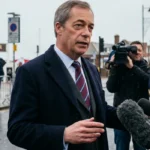
The administrative friction transitioned into a high-profile political conflict following an unprompted public intervention by the Thames Valley Police and Crime Commissioner, Matthew Barber. Taking to public channels, Barber explicitly declared that West Lockinge Road—a rural lane situated near Wantage—was now fully “off the table” and would not feature in any subsequent trials or active closures.
The intervention caught regional transport officials off guard, given that West Lockinge Road had not been formally broadcasted on any finalized, publicly available candidate lists distributed by the county council’s central executive.
Barber’s public declaration exposed deep communication breakdowns between regional media reporting, local parish anxieties, and the county council’s central administrative apparatus. According to the Oxford Mail, Matthew Barber stated that:
“Lockinge was one of the locations highlighted by the BBC as a potential pilot site. It certainly caused great concern within the parish. The parish council stated they had a significant number of emails from concerned residents.”
The PCC further elaborated on the procedural confusion that occurred at the grassroots level, noting that during subsequent institutional meetings, the local authority’s internal outreach strategies appeared to contradict their public claims of passive, demand-driven selection. As recorded by the Oxford Mail, Matthew Barber explained:
“At the meeting the Parish confirmed that the Parish Council had not put themselves forward as a pilot but did receive an email from OCC asking if they wanted to be included in the scheme. The suggestion was certainly being considered by OCC at the request of the Active Travel Group, it was made public by the BBC—certainly where I saw it—and there is great relief that it will not be part of the trial scheme as there is significant local resistance to the idea.”
Explore More Oxford Council News
Bicester Pharmacy Delivery Delayed by Camp Road Closure: Upper Heyford 2026
Oxfordshire Council Collects £8.3m In Traffic Fines: Oxford 2026
How Have Local Politicians and the Liberal Democrats Responded to the PCC?
The public intervention by a security and law enforcement official into matters of local highway infrastructure provoked immediate, fierce political retaliation from the ruling council coalition. Proponents of the active travel measures viewed Barber’s statements as an overreach of his constitutional mandate, interpreting the move as an attempt to stoke anti-traffic-calming sentiment among rural voters ahead of upcoming electoral cycles.
In an official statement released to the press and carried by the Oxford Mail, an Oxfordshire Liberal Democrats spokesperson issued a highly critical rebuttal of the PCC’s conduct, stating:
“Here’s another example of Matthew Barber making stuff up in an attempt to win votes, rather than concentrating on his day job as Police & Crime Commissioner.”
The Liberal Democrat leadership maintained that Barber was actively constructing a false narrative of aggressive, top-down enforcement to position himself as a community savior, arguing that he was deliberately mischaracterising standard exploratory emails sent to parish councils as finalized dictums. The party asserted that by focusing on unconfirmed transport pilots, the PCC was neglecting pressing law enforcement challenges across the Thames Valley policing region.
What Is Oxfordshire County Council’s Official Stance on the Controversy?
Faced with mounting pressure from opposition councillors, the public statements of the Police and Crime Commissioner, and growing concern from rural commuters, Oxfordshire County Council sought to stabilize the narrative by clarifying the precise legal and administrative status of the disputed documents. The local authority reiterated that the leaked spreadsheet did not constitute an active executive plan, but rather an early-stage administrative registry of historical dialogue.
As reported by the Oxford Mail, spokespeople for the local authority formally described the leaked list as an internal tool designed exclusively for:
“identifying areas where there have previously been expressions of interest or conversations about quiet lanes but is not a list of proposed or confirmed sites.”
The council’s long-term transport framework emphasizes that no physical bollards or gates will be deployed without rigorous, statutory public consultation periods, safety audits, and formal cabinet votes. Transport planners within the authority have long argued that physical barriers are essential for active travel success, pointing to Department for Transport (DfT) research indicating that traditional, signage-only “Quiet Lane” designations have historically demonstrated little to no statistical influence on lowering actual motorist volumes or reducing overall vehicle speeds in rural zones.
How Do Broad Road Safety Strategies Intersect with the Quiet Lanes Row?
The political impasse over the Quiet Lanes scheme occurs at a time when road safety policy in Oxfordshire is undergoing systemic structural overhauls. The county council remains heavily committed to its overarching ‘Vision Zero’ initiative, an ambitious transport safety policy that explicitly seeks to entirely eliminate all deaths and serious injuries across the county’s road network by a target date of 2050.
As part of this broader safety drive, transport authorities are simultaneously rolling out a comprehensive data-led reassessment of speed limits across approximately 60 separate major A and B roads, frequently reducing existing limits from 60mph down to 40mph or 50mph in high-risk collision zones.
Ironically, the broader institutional push for enhanced road safety is an objective that both the county council and the Police and Crime Commissioner technically share, despite their intense public division over the execution of localized road closures. The Oxford News network recently noted that the council’s high-profile safety summits come shortly after Matthew Barber himself published a comprehensive, region-wide Thames Valley road safety strategy aimed at driving down casualties through enhanced enforcement and technological deployment.
The current political gridlock highlights a deep ideological divide within British transport planning: while the county’s highway planners increasingly view physical modal filters and targeted road closures as indispensable tools to protect vulnerable road users, opposition figures and law enforcement traditionalists favor keeping strategic rural arteries open to traditional automotive transit, advocating instead for visible policing, technological speed detection, and clear, transparent institutional communication. Until these competing governance philosophies resolve their structural contradictions, bureaucratic confusion over the ultimate fate of Oxfordshire’s rural lanes is highly likely to persist.