Key Points
- Formal Sanction Issued: John Bowers KC, a deputy High Court judge and the head of an Oxford University college, has received an official formal warning following a six-month driving disqualification.
- Accumulation of Penalties: The disciplinary measure arose after Mr Bowers accumulated 12 penalty points on his driving licence across four separate motoring offences.
- Specific Driving Violations: The legal figure admitted to being “just above” the speed limit on three separate occasions and traversing a red traffic light by 1.5 seconds on a fourth.
- Self-Reported Misconduct: Mr Bowers proactively disclosed the driving ban to the Judicial Conduct Investigations Office (JCIO) in February, expressing profound regret for his actions.
- High-Level Judicial Approval: The formal warning was officially handed down by the Lady Chief Justice, with the formal agreement of the Lord Chancellor.
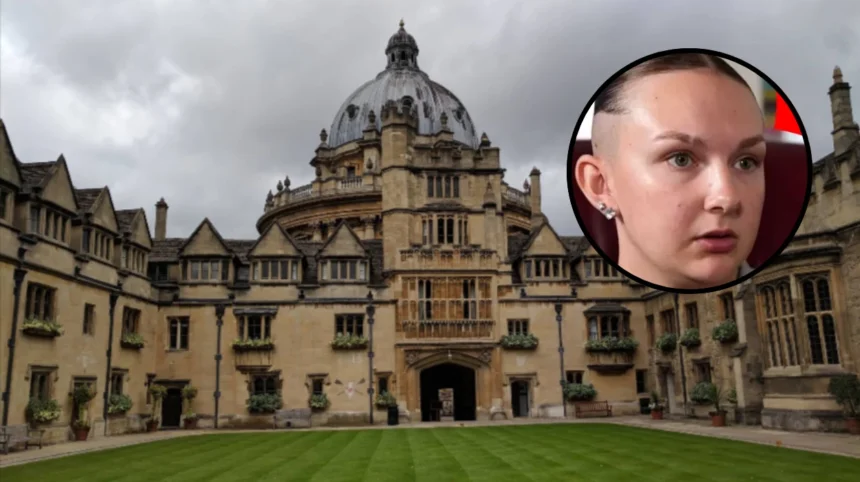
- Distinguished Academic Career: Alongside his judicial responsibilities, Mr Bowers has served as the principal of Brasenose College, Oxford, since 2015 and is widely regarded as a leading employment law expert.
- Imminent Leadership Transition: Mr Bowers is scheduled to stand down from his academic position in October, with Alyson King, the British ambassador to the Democratic Republic of Congo, designated as his successor.
Oxford (Oxford Daily) July 10, 2026 – A distinguished deputy High Court judge and head of an Oxford University college has been issued a formal disciplinary warning after being handed a six-month driving ban for multiple motoring offences. John Bowers KC, who serves as the principal of Brasenose College, Oxford, found himself the subject of an investigation by the Judicial Conduct Investigations Office (JCIO) after accumulating 12 points on his driving licence. The formal sanction was sanctioned by the highest echelons of the British judiciary, specifically issued by the Lady Chief Justice with the explicit concurrence of the Lord Chancellor. The case highlights the stringent standards of personal conduct required of members of the judiciary, even when operating outside their official courtroom capacities.
- Why Was John Bowers KC Given a Formal Disciplinary Warning?
- What Were the Specific Driving Offences Committed by the Judge?
- How Did the Judicial Conduct Investigations Office Respond to the Incident?
- Who Is John Bowers KC and What Is His Professional Background?
- When Is the Brasenose College Leadership Transition Scheduled to Take Place?
- Who Will Replace John Bowers KC as Principal of Brasenose College?
- What Are the Broader Implications for Judicial Conduct in the UK?
The disciplinary action stem from a series of routine traffic camera detections that rapidly compounded into a mandatory statutory disqualification under the UK’s “totting-up” rules. According to official disclosures published by the regulatory body, Mr Bowers informed the JCIO in February regarding his driving status, revealing a pattern of repeated minor traffic infractions that ultimately led to his six-month removal from the roads. The case has drawn widespread attention due to Mr Bowers’ high-profile dual role as an active part-time judge and the administrative head of one of Oxford’s most historic academic institutions.
Why Was John Bowers KC Given a Formal Disciplinary Warning?
To understand the severity of the formal warning, it is essential to examine the specific regulatory frameworks governing the British judiciary. The reprimand was not triggered by a single egregious act of reckless driving, but rather by the systemic accumulation of minor infractions that legally demonstrated a repeated failure to adhere to statutory road laws.
As documented in the official regulatory findings published by the JCIO, Mr Bowers reached the 12-point threshold required for automatic disqualification after committing four separate driving offences over an undisclosed timeframe. The nature of these offences points to a lapse in everyday vehicular compliance rather than criminal intent, yet the sheer volume of infractions necessitated intervention from judicial overseers.
The mechanism of judicial discipline in England and Wales dictates that any criminal conviction or formal civil disqualification must be self-reported by the office-holder. Upon receiving the self-report from Mr Bowers in February, the JCIO initiated a formal review to determine whether the driving ban brought the judiciary into disrepute or breached the stringent Guide to Judicial Conduct.
What Were the Specific Driving Offences Committed by the Judge?
The exact circumstances of the traffic violations paint a picture of minor urban driving errors that carried significant professional consequences due to their frequency. As reported by the BBC News editorial team, Mr Bowers provided a candid breakdown of his driving ledger to investigators, illustrating how quickly minor penalties can aggregate into a comprehensive driving ban.
In his submissions to the JCIO, the Brasenose College principal outlined the four separate incidents captured by traffic enforcement cameras:
- First Speeding Offence: Operating a vehicle “just above” the posted speed limit.
- Second Speeding Offence: A secondary instance of marginal speeding, caught via automated enforcement.
- Third Speeding Offence: A tertiary speed infraction, bringing his licence dangerously close to the statutory limit.
- Traffic Light Violation: Passing “across a red light by 1.5 seconds” on a separate occasion.
While individual instances of marginal speeding or minor signal timing misjudgements are often resolved via speed awareness courses or isolated conditional offers of fixed penalties, the sequence of four consecutive infractions meant that Mr Bowers exhausted his legal allowance of penalty points. Under UK motoring law, accumulating 12 or more points within a three-year window results in an obligatory six-month disqualification, barring exceptional hardship arguments.
Explore More Local Oxford News
UK Staycation 2026: Three Essential Car Tips From Oxford
Oxford Science Lab Approval And Minchery Farmhouse Restoration, Oxford 2026
How Did the Judicial Conduct Investigations Office Respond to the Incident?
The JCIO operates as an independent body supporting the Lord Chief Justice and the Lord Chancellor in handling complaints about judicial misconduct. Following their structured review of the circumstances surrounding the disqualification, the regulatory body determined that formal administrative action was essential to preserve public confidence in the judiciary.
In an official public statement released by the JCIO, the organization confirmed the precise constitutional mechanisms utilized to execute the reprimand. As reported by journalists covering the legal beat at the BBC, the JCIO stated that
“The warning was issued by the Lady Chief Justice, with the Lord Chancellor’s agreement.”
This dual authorization underscores that judicial discipline requires consensus between both the head of the judiciary (the Lady Chief Justice) and the government’s chief legal minister (the Lord Chancellor).
Furthermore, the investigative findings shed light on Mr Bowers’ cooperative demeanor throughout the disciplinary process. As disclosed by the JCIO, Mr Bowers stated during the proceedings that he was
“profoundly sorry for being disqualified and realised that as a judge he should have been more careful.”
This explicit admission of fault and recognition of heightened professional responsibility heavily influenced the decision to issue a formal warning rather than pursuing more severe disciplinary alternatives, such as suspension or removal from judicial office.
Who Is John Bowers KC and What Is His Professional Background?
What Is His Standing in the Legal Community?
John Bowers KC is widely recognized as one of the most prominent legal minds of his generation within the sphere of British employment law. Over a career spanning several decades, he built an enviable reputation as a formidable advocate, author, and legal theorist.
His professional accolades are extensive. As highlighted in his official institutional profile at Brasenose College, Mr Bowers has been historically referred to within legal directories and peer reviews as “an employment law rock star.” This unconventional moniker reflects his high-profile successes in landmark labor disputes and his ability to navigate highly complex statutory frameworks. Furthermore, his institutional biography cites a testimonial from a former client who remarked that Mr Bowers possessed “a brain the size of a planet,” illustrating the immense intellectual respect he commands among his peers and clientele alike.
What Is His Academic Role at Oxford University?
In addition to his ongoing contributions to the English bar and his periodic duties as a deputy High Court judge, Mr Bowers has maintained a major footprint in higher education governance. He has led Brasenose College as its principal since his election to the post in 2015.
During his decade-long tenure at the helm of the college, he has overseen significant academic cycles, institutional fundraising initiatives, and the pastoral care of hundreds of undergraduate and postgraduate students. His leadership of the college has been characterized by active engagement in university affairs and the maintenance of Brasenose’s competitive standing within the wider Oxford collegiate system.
When Is the Brasenose College Leadership Transition Scheduled to Take Place?
The publication of the judicial warning coincides with a period of planned structural transition for Brasenose College. While the timing of the driving ban disclosure has brought renewed public scrutiny to the institution, university records indicate that Mr Bowers’ departure from his academic role had already been formalized prior to the public release of the JCIO sanction.
Mr Bowers is officially scheduled to stand down from his position as principal in October. This departure concludes an eleven-year term as the head of the college. The transition marks the end of a notable chapter for Brasenose, transitioning from a leader embedded deeply within the upper echelons of the British domestic legal sector to an incoming principal with an entirely different international profile.
Who Will Replace John Bowers KC as Principal of Brasenose College?
The college has already completed its rigorous selection process to identify a successor capable of maintaining the institution’s academic prestige. The incoming head represents a significant shift in background, moving away from domestic law toward high-level international diplomacy.
As confirmed by institutional announcements from Oxford University, Mr Bowers is set to be replaced as principal by Alyson King. Ms King brings an extensive portfolio of statecraft and foreign service to the university. She currently serves as the British ambassador to the Democratic Republic of Congo (DRC), a highly complex diplomatic posting within the UK’s Foreign, Commonwealth & Development Office (FCDO). Her appointment highlights a growing trend among Oxford colleges to recruit leaders with global administrative experience, strategic communication skills, and a proven track record of institutional management under challenging global conditions.
What Are the Broader Implications for Judicial Conduct in the UK?
The formal warning issued to John Bowers KC serves as a potent reminder of the unyielding ethical expectations placed upon members of the judiciary, both inside and outside the courtroom. In the United Kingdom, judges are viewed as the living embodiment of the rule of law; consequently, their personal compliance with everyday regulations—including traffic statutes—is subjected to intense scrutiny.
The Guide to Judicial Conduct explicitly dictates that judges must avoid any activity that could undermine public confidence in their integrity or impartiality. While a driving disqualification resulting from speed cameras does not directly impact a judge’s ability to interpret employment law or civil disputes, the perception of a judicial figure repeatedly failing to adhere to statutory limits creates a reputational risk for the wider legal system. By issuing a public formal warning, the Lady Chief Justice and the Lord Chancellor have reinforced the principle that no individual, regardless of their intellectual stature or professional accolades, is immune to the regulatory oversight that binds ordinary citizens.