Key Points
- Trial Period Proposed: The Advanced Research Clusters (ARC) Oxford science and innovation campus has submitted a planning application to trial an on-site padel court for a four-month period.
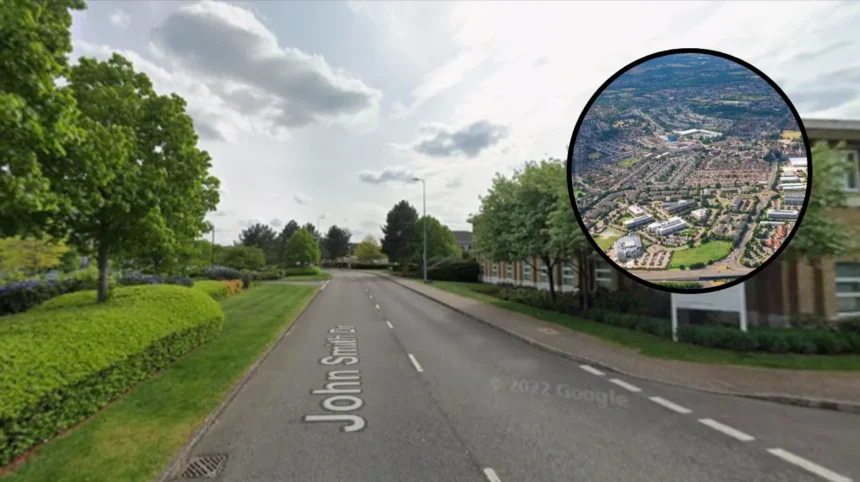
- Strategic Location: The temporary structure is proposed to be built within a car park located to the south of Building 5700, off John Smith Drive in Cowley.
- Direct Tenant Demand: The project has been initiated in response to direct feedback from campus members who expressed a strong interest in expanded recreational and wellness facilities.
- Operational Restrictions: To prevent local disruption, use of the court will be strictly limited to campus employees and will operate between the hours of 8:00 am and 8:00 pm.
- Non-Invasive Installation: The court framework will be securely mounted on top of the existing tarmac using surface pads, ensuring no permanent structural modifications are made to the car park during the test phase.
- Broader Campus Vision: The initiative aligns with ARC’s ongoing transformation of the former Oxford Business Park into a nationally significant, amenity-rich science and technology cluster.
Oxford (Oxford Daily) July 6, 2026 – A major science and innovation campus in Oxfordshire has officially submitted a planning application to install a temporary padel tennis court on its grounds to gauge demand for a permanent sporting installation. The Advanced Research Clusters (ARC) Oxford campus, situated off Garsington Road in Cowley, aims to introduce the short-term recreational facility as a direct response to feedback from its growing community of scientific and technological tenants. If approved by local planning authorities, the court will undergo a strict four-month trial period to evaluate its popularity, operational viability, and sustainability before developers commit to a long-term capital investment.
The proposed sports facility will be positioned in a designated section of the car park situated directly to the south of Building 5700 along John Smith Drive. According to the formal planning submission, the court will be completely temporary in its construction, utilizing surface-mounted pads that sit on top of the existing car park layout without requiring invasive excavation or permanent structural changes. In an effort to maintain a balanced environment on the bustling commercial campus, usage of the padel court will be restricted exclusively to individuals employed by the campus’s tenant firms. Furthermore, strict operational boundaries have been proposed, limiting the hours of play to between 8:00 am and 8:00 pm daily to mitigate potential noise or vehicular disruptions in the immediate vicinity.
Why Is ARC Oxford Planning a Padel Court Trial?
As reported by Madeleine Evans, Reporter for the Oxford Mail, the science and innovation campus has revealed these plans specifically to evaluate whether its community will actively engage with the amenity over a sustained period. The campus is currently navigating a highly publicised transition from a traditional business park into a premium, globally competitive innovation hub. To successfully attract and retain high-growth companies within the life sciences, space tech, and advanced engineering sectors, the developers are focusing heavily on expanding their lifestyle and wellness offerings.
The planning documentation submitted to Oxford City Council explicitly details the underlying strategy behind the temporary installation. As reported by Madeleine Evans of the Oxford Mail, the planning application states:
“As the campus transitions into a nationally important science and technology cluster ARC is developing its amenity offer to support the existing and future tenants.”
The developer’s decision to specifically select padel tennis—a racket sport that combines elements of traditional tennis and squash—comes after comprehensive internal dialogue with the workers who occupy the site daily. As further cited by Madeleine Evans of the Oxford Mail, the planning application explicitly notes:
“Tenants have expressed interest in a recreation offer and padel has emerged as a popular and viable option.”
How Fast Is Padel Growing Across the United Kingdom?
The choice of a padel court reflects a broader macroeconomic trend across the British sports and leisure industry. Padel is widely considered one of the fastest-growing sports in the United Kingdom, praised for its accessibility, low learning curve, and highly social nature. However, because the infrastructure for the sport is still in its infancy across many regional markets outside of major metropolitan areas, commercial developers remain cautious about entering long-term building contracts without localised data.
This cautious approach is directly reflected in ARC’s legal and structural planning strategy. As reported by Madeleine Evans of the Oxford Mail, the official planning application clarifies the rationale for the short timeline, stating:
“With padel still developing in the UK, ARC is proposing to install a temporary padel court in the car park of Building 5700 for a period of four months (until October).”
The document goes on to explain the analytical framework behind the experiment, stating:
“This will enable ARC to test the popularity of the facility before determining whether a more permanent solution is sustainable.”
Explore More Cowley News
Oxford Chargers Face King’s Lynn Young Stars in Critical Cowley Clash 2026
Strike Paralyzes Dora Nginza Ward, Cowley 2026
Where Will the New Padel Court Be Located?
The physical footprint of the trial court has been meticulously selected to avoid disrupting the primary commercial operations of the campus’s laboratory and office structures. The chosen site sits within an existing surface car park off John Smith Drive, localized to the southern boundary of the block known as Building 5700. By utilizing an active car park, the developers can introduce a dynamic wellness space without consuming undeveloped land or interfering with the extensive master planning currently underway across the wider estate.
To minimize the impact on local parking ratios, the structure will occupy only a nominal number of bays. Because the entire court system is designed to be fully reversible, it can be dismantled swiftly at the end of the four-month window if tenant engagement fails to meet expectations, returning the space immediately to its original function as standard vehicular parking.
What Structural Specifications Are Outlined in the Planning Application?
The engineering behind the court relies heavily on modular, non-penetrative building techniques. Rather than pouring concrete foundations—which would permanently alter the car park and generate significant construction noise—the court’s metal frame and glass enclosures will rest on heavy-duty, load-distributing pads. This specialized method ensures that the tarmac surface remains entirely intact throughout the duration of the pilot program.
Who Will Have Access to the ARC Oxford Padel Facility?
According to the operational guidelines outlined in the planning files, the court will not be open to the general public or local sports clubs. Access is strictly reserved as a private, workplace perk for the thousands of professionals working on-site. By restricting usage to internal personnel, ARC Oxford intends to foster an interconnected community atmosphere where scientists, researchers, and entrepreneurs can network casually outside the laboratory environment.
The strict control over access also addresses potential municipal concerns regarding increased traffic flow or external visitors entering the secure research campus. The facility is designed purely to serve the existing baseline population of the park, ensuring zero net increase in traffic along Garsington Road or John Smith Drive during peak hours.
What Are the Proposed Operational Hours for the Court?
To ensure the new sports infrastructure does not conflict with either the demanding professional environments inside the adjacent laboratories or the comfort of nearby residential areas, ARC has proposed a firm daily operational schedule. The court will be open for bookings starting at 8:00 am and will close promptly at 8:00 pm. This window provides ample opportunity for employees to engage in physical activity before the traditional workday begins, during lunch breaks, or immediately following evening shifts, without causing late-night noise pollution.
How Big Is the ARC Network Across the United Kingdom?
The initiative at the Oxford site represents a localized test of a philosophy that ARC applies across its entire national real estate portfolio. The firm specializes in creating managed clusters where world-class research facilities are integrated seamlessly with urban-style social hubs, retail spaces, and wellness amenities.
As reported by Madeleine Evans of the Oxford Mail, ARC currently hosts an expansive network of 3,500 members on its Oxford campus alone. This substantial community forms part of a much larger scientific ecosystem managed by the firm across the south of England. In addition to its prominent Cowley location, ARC’s portfolio includes:
- ARC Uxbridge: A key business and innovation hub situated in West London.
- ARC West London: A dedicated urban science cluster focusing on biotechnology and corporate innovation.
- Harwell Campus: Located in Oxfordshire, this world-renowned 700-acre science and innovation campus is famous for its national laboratories and advanced multi-disciplinary research institutions.
By leveraging the collective data gathered from these diverse, high-density professional environments, ARC aims to refine its “marketplace” concept. The implementation of the temporary padel court in Oxford could serve as a blueprint for similar wellness installations across its other national campuses if the four-month trial proves commercially successful.
What Are the Next Steps for the Planning Application?
The future of the pilot program now rests with the planning department at Oxford City Council. Municipal officers and public stakeholders will review the submitted documents to ensure compliance with local zoning laws, traffic regulations, and environmental impact standards. Given the temporary and non-invasive nature of the construction, supporters are optimistic that the application will progress smoothly through the local government channels.
Should the council grant temporary planning permission, installation of the court is expected to proceed rapidly, allowing the campus to maximize the remaining warmer months of the year for its four-month trial evaluation. Local businesses, tenants, and real estate analysts will be watching the experiment closely to see if sports infrastructure becomes a staple component of modern science park design across the United Kingdom.