Key Points
- A six-month road closure in Upper Heyford near Bicester has prompted a strong complaint from the parish council.
- The closure was originally expected to last five weeks, but it has now been extended to six months.
- The alternative traffic route runs via Camp Road, Station Road and the B4030 before returning towards Camp Road.
- Upper Heyford Parish Council says the plan will severely disrupt rural bus services for elderly residents, schoolchildren and commuters.
- The council argues the diversion relies on narrow rural lanes used by HGVs, creating safety risks for pedestrians and cyclists.
- The parish council says the lack of a dynamic access plan could also affect agricultural businesses and delay emergency vehicles.
- Oxfordshire County Council says the closure is being used to enable essential infrastructure works safely under a Temporary Traffic Regulation Order.
- The county council says it is working with the developer to keep traffic management safe and proportionate where reasonably practicable.
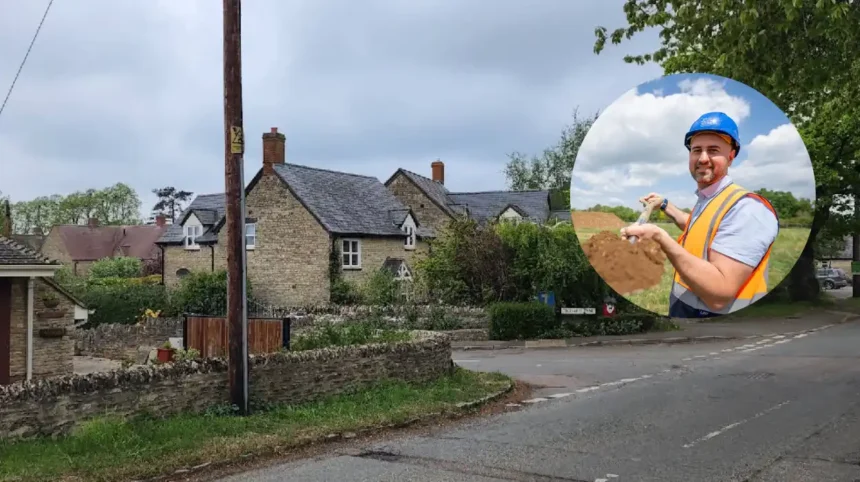
Oxford (Oxford Daily) June 29, 2026 — A planned road closure in the rural Oxfordshire village of Upper Heyford has triggered sharp criticism after residents learned that works first expected to last five weeks will now stretch to six months. As reported by the Oxford Mail, the closure affects Camp Road and has become a flashpoint between local residents, the parish council and the county council.
The dispute centres on what the parish council sees as a major mismatch between the original schedule and the revised traffic plan. Residents expected the closure to run from Monday, July 20 to Sunday, August 23, but the works are now set to last far longer. The parish council says that change is not a minor adjustment but a serious escalation in disruption for a small village with limited transport alternatives.
What does the parish council say?
Upper Heyford Parish Council has made a formal complaint over the closure and sent a letter to Phil Whitfield, head of service at Oxfordshire County Council. In that letter, the council said it was the unanimous view of members that the closure and diversion scheme creates “an unacceptable, disproportionate risk to public safety, residential disruption and rural connectivity,” as quoted by the Oxford Mail.
The parish council also said the current traffic management plan would rely heavily on narrow rural lanes that already carry HGV traffic regularly. It warned that higher volumes of traffic on roads without pavements or lighting would create severe safety risks for pedestrians, cyclists and other road users. The council added that the plan lacks a dynamic protocol for maintaining local access, which it says could paralyse agricultural businesses and delay emergency service vehicles.
What route will traffic use?
The alternative route for traffic is understood to be via Camp Road, Station Road, the B4030 and then back towards Camp Road in the opposite direction. The parish council argues that this diversion is not well suited to a long closure because it pushes more vehicles onto narrow countryside roads. It says that route may be manageable for a short period, but not for a closure lasting several months.
That concern is particularly important in a rural area where roads are not designed for sustained heavy diversion traffic. The parish council says the volume and type of vehicles using the route, including HGVs, increases the likelihood of conflict with walkers, cyclists and other vulnerable road users. It also says the plan does not adequately protect day-to-day access for farms and local services.
What is being built at Heyford Park?
The closure is linked to development work at Heyford Park, where David Wilson Homes is building a 123-home scheme called Heyford Springs. The development began in June 2025 and will include 26 affordable homes and 11 properties under the First Homes scheme.
The site is an open greenfield location to the east of the Upper Heyford Park Central development, with Camp Road along its southern edge and Chilgrove Drive to the east. It lies around six miles north-west of Bicester and about a 30-minute drive north of Oxford. The wider former RAF Upper Heyford airbase is designated as a conservation area, reflecting its Cold War history and the distinctive layout that came from its military use.
How has Oxfordshire County Council responded?
Oxfordshire County Council said it acknowledges the concerns raised by Heyford Park Parish Council and explained that the Temporary Traffic Regulation Order was introduced under its statutory powers. The council said the order is needed so essential infrastructure works can be carried out safely as part of an approved development that requires access to the public highway.
In its statement, the county council said it must balance safety, access, public transport and traffic flow across the network. It also said that while disruption is regrettable, temporary closures are sometimes necessary to allow important works to proceed safely. The council added that it cannot require agreements between private parties relating to land or infrastructure matters, and that valid applications must be assessed under the relevant legal framework.
What are the main safety concerns?
The parish council’s central safety argument is that the diversion shifts too much traffic onto roads that are not built for prolonged heavy use. It says narrow rural lanes without pavements or lighting are already hazardous and become more dangerous when traffic levels rise sharply. The council also fears that the arrangement will put extra pressure on people walking, cycling or trying to cross the roads near the village.
Its complaint also raises wider concerns about service access. According to the parish council, the lack of a clear, flexible access protocol could disrupt farming operations and slow emergency vehicles. Those concerns are significant in a rural setting, where even a small delay in access can have outsized effects on businesses and households.
What happens next?
Oxfordshire County Council said officers are working with the developer to ensure traffic arrangements are safe, proportionate and as low-impact as reasonably practicable. The council also said it remains open to ongoing dialogue with the parish council and other stakeholders to explore improvements where possible.
The parish council, meanwhile, says its objection will remain in place until a revised, fully mitigated traffic management plan is formally approved. It has asked for an urgent on-site meeting between council officers, the lead contractor and parish representatives. The immediate next stage is therefore likely to be further negotiation over how the closure is managed rather than a complete reversal of the works.
Background of the development
Heyford Springs is part of a wider housing and infrastructure programme at Upper Heyford, an area shaped by the redevelopment of the former RAF site. The airbase’s conservation status means development there sits within a sensitive planning context, where new homes, roads and services must be balanced against heritage and rural character.
In this case, the road closure is tied to the installation of the first section of a new pipeline, which is why the temporary traffic restrictions are being enforced. What began as a short-term closure has become a longer disruption because of the scale and timing of the works. That shift has brought planning, safety and community access issues to the forefront.
Prediction for local residents
For residents, the most immediate effect is likely to be a long period of inconvenience, especially for those who depend on local buses or regular road access. Elderly residents, families with school-age children and commuters are likely to feel the greatest pressure if the diversion remains in place for months. Rural businesses, particularly farms and small suppliers, may also face slower deliveries and more complicated access.
If the current traffic management plan is not improved, the dispute could deepen and become a wider test of how major housing projects are managed in rural communities. If the council and developer agree to stronger mitigation, some of the safety and access concerns could ease, but the closure itself is still likely to remain a source of frustration until the works are completed.