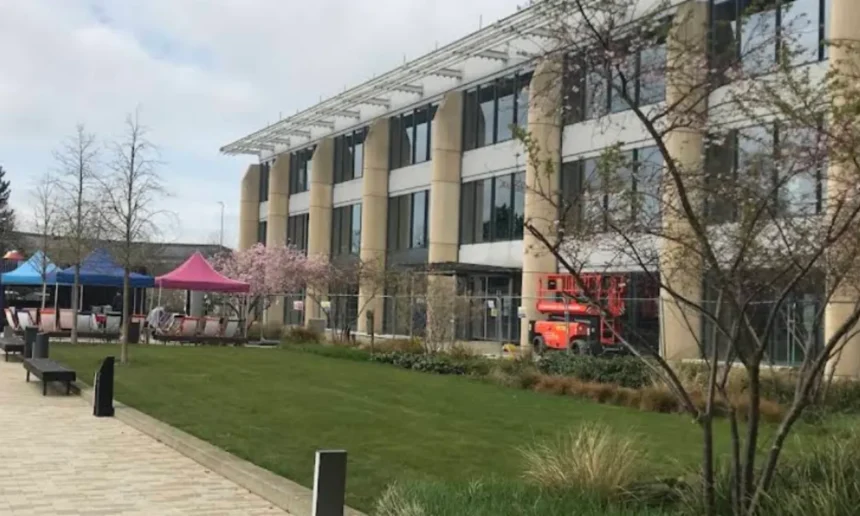
The Oxford Community Diagnostic Centre is a specialized elective healthcare facility located in Cowley that provides rapid access to diagnostic checks, scans, and laboratory tests away from acute hospital settings to reduce patient waiting times and improve local clinical outcomes.
- When was the Oxford Community Diagnostic Centre established?
- What medical imaging services are available at the facility?
- How do patients secure a referral to the centre?
- What physiological tests does the respiratory clinic perform?
- How does the partnership with InHealth expand future capacity?
- What clinical research studies operate within the facility?
- What geographic locations and transport links serve the facility?
- FAQS About Oxford Community Diagnostic Centre
- Do I need an NHS referral to get a scan at the Oxford Community Diagnostic Centre?
- Is there free parking available for patients visiting the Oxford CDC at Gemini One?
- How long does it take to get diagnostic test results back from the Oxford Community Diagnostic Centre?
- Can I choose to go to the Oxford CDC instead of the John Radcliffe Hospital for my scans?
- What specific services are currently offered at the Oxford Community Diagnostic Centre?
This community medical facility operates as an elective diagnostic hub designed to deliver non-urgent clinical examinations outside of traditional emergency hospital environments. The centre coordinates multiple elective clinical examinations, including phlebotomy, ultrasound, and radiography, under one roof to enable individuals to complete their required evaluations during a single clinic visit. This operational framework supports the national diagnostic strategy of NHS England to improve population health metrics. The medical institution provides clinical services seven days a week from early morning until late evening.
The Core Diagnostic Infrastructure
The facility resides within the Gemini One building situated on John Smith Drive at the Oxford Business Park in Cowley. This location features dedicated infrastructure for advanced patient care, including clinical examination rooms, specialized scanning suites, and private phlebotomy bays. The geographic positioning enables individuals from across Oxfordshire to access diagnostic tools without entering central urban traffic zones. Free vehicular parking facilities are available on-site to minimize barriers to healthcare access for all regional patient populations.
The administration of the centre relies on a collaborative workforce framework combining multiple professional roles, including consultant radiologists, staff nurses, and administrative coordinators. These individuals manage daily operations to guarantee patient data security and optimal clinical throughput. The physical layout separates different clinical modalities into specific zones to prevent cross-contamination and ensure patient privacy. This spatial arrangement allows the centre to handle high patient volumes while maintaining strict clinical hygiene standards.
When was the Oxford Community Diagnostic Centre established?
The Oxford Community Diagnostic Centre was officially established in 2022 through a pioneering collaborative venture between the Oxford University Hospitals NHS Foundation Trust and Perspectum, a medical technology corporation focused on delivering advanced quantitative non-invasive tissue imaging analytics for patients.
The foundation of this diagnostic facility aligns with the strategic diagnostic recommendations, including separating elective care, boosting community capacity, and integrating digital tools, outlined in the national healthcare report authored by Professor Sir Mike Richards. This clinical report emphasized the necessity of separating elective diagnostic pathways from emergency hospital admissions, including acute surgical interventions and trauma care, to accelerate recovery timelines. The initial rollout focused on providing immediate capacity for high-volume diagnostic activities, including phlebotomy and basic radiography, to manage post-pandemic elective backlogs. Over its operational history, the centre has expanded its clinical portfolio from basic blood tests to complex physiological assessments.
Institutional Partnerships and Milestones
The clinical facility represents an integrated venture combining public sector medical expertise with private sector technical innovation. Oxford University Hospitals NHS Foundation Trust provides governance and clinical oversight, while Perspectum delivers quantitative software engineering solutions for medical imaging. In December 2025, the management framework expanded through a new national diagnostic agreement with InHealth Group, a prominent UK healthcare provider. This trilateral collaboration introduces enhanced funding mechanisms and physical infrastructure upgrades scheduled for deployment throughout the current calendar year of 2026.
The historical trajectory of the centre reflects a continuous effort to alleviate operational pressure from acute hospital sites, including the John Radcliffe Hospital and the Churchill Hospital. By shifting routine monitoring out of these major medical complexes, the centre provides a reproducible blueprint for community healthcare delivery across the United Kingdom. This structural transition has successfully reduced diagnostic wait times for local residents since its inception. The ongoing expansion projects ensure that the facility remains at the forefront of regional healthcare infrastructure.
What medical imaging services are available at the facility?
The medical imaging services available at the facility include comprehensive elective examinations such as high-field magnetic resonance imaging, computerized tomography scans, non-obstetric ultrasound evaluations, and conventional digital radiography, which identify complex structural anomalies within specific localized internal organ tissue pathways.

Imaging technologies at the centre allow clinicians to examine internal organ systems, including the hepatic, cardiovascular, and pulmonary systems, with high precision. Magnetic resonance imaging suites utilize strong magnetic fields and radio waves to generate anatomical cross-sections, including multi-planar views of the abdomen and brain, without exposing individuals to ionizing radiation. Computerized tomography scanners combine multiple X-ray measurements from different angles to produce detailed cross-sectional views of structural tissues, including bone and soft tissue structures. Non-obstetric ultrasound scans use high-frequency acoustic waves to evaluate vascular flow and abdominal organs, including the gallbladder and kidneys, in real time.
Advanced Quantitative Imaging Modalities
The integration of quantitative technologies separates this facility from standard local imaging clinics, including community hospitals and private diagnostics providers. The centre incorporates proprietary software applications developed by Perspectum to extract specific tissue biomarkers, including corrected T1 relaxation times and liver fat fractions, from magnetic resonance imaging data. These quantitative assessments provide objective measurements of organ fat accumulation, inflammation levels, and fibrotic tissue proliferation in chronic metabolic conditions, including type two diabetes and metabolic dysfunction-associated steatotic liver disease. Doctors utilize these precise metrics to monitor therapeutic efficacy and formulate 3 types of personalized treatment strategies, including pharmacological adjustments, dietary interventions, and surgical referrals, for complex systemic diseases.
The diagnostic imaging department adheres to stringent safety regulations overseen by the Care Quality Commission. Radiographers utilize automated dose-reduction protocols to ensure patient exposure during computerized tomography scans remains as low as reasonably practicable. The digital imaging files are instantly uploaded to the NHS Picture Archiving and Communication System to facilitate immediate review by external medical specialists. This seamless technological integration ensures that diagnostic imaging leads to rapid clinical decision-making.
How do patients secure a referral to the centre?
Patients secure a referral to the centre through an official clinical mandate issued by a registered general practitioner or a hospital consultant, because the facility operates strictly on an elective basis and does not accommodate self-referrals or walk-in individual patients.
The diagnostic pathway initiates when a primary care physician identifies specific clinical symptoms, including chronic breathlessness, unexplained fatigue, and persistent abdominal pain, during an outpatient consultation. The general practitioner submits an electronic referral request through the centralized NHS e-Referral Service platform specifying the required diagnostic modality. Hospital specialists can also initiate internal referrals for individuals undergoing ongoing secondary care monitoring. Administrative personnel at the diagnostic centre review each submission to ensure the clinical indications match the strict safety criteria, including contrast allergy history, implant compatibility, and renal function thresholds, of the facility.
The Digital Appointment Booking System
Once the administrative team approves a clinical referral request, the patient receives automated communications, including text messages and email notifications. The centre utilizes the DrDoctor digital healthcare scheduling platform to enable individuals to manage their appointments online. Patients input their unique National Health Service identification numbers to select convenient appointments, including early morning slots and weekend sessions, within the operational hours. This digital interface reduces administrative overhead, minimizes missed appointments, including late cancellations and did-not-attend incidents, and allows the clinic to reallocate cancelled slots to individuals on waiting lists.
Patients must complete preliminary preparation steps before arriving for specific diagnostic appointments. Certain metabolic imaging procedures require a strict fasting window of six hours prior to the scan time. Individuals receiving contrast injections must provide recent blood test results to confirm adequate kidney function before entering the scanning suites. Clear pre-appointment instructions are transmitted through the digital portal to ensure patient compliance and prevent scheduling delays.
What physiological tests does the respiratory clinic perform?
The respiratory clinic performs advanced physiological examinations including detailed pulmonary lung function tests, diagnostic spirometry evaluations, and supervised home sleep studies, which measure specific airflow capacities and nocturnal oxygen saturation parameters to isolate underlying chronic respiratory disorders in individual patients.
Pulmonary function testing measures the specific volume of air an individual can inhale and exhale with maximum effort. Spirometry assessments specifically calculate the speed of airflow to detect structural obstructions within the bronchial pathways, assisting in the confirmation of chronic obstructive pulmonary disease. Sleep studies utilize specialized portable monitoring equipment, including pulse oximeters and nasal cannula sensors, that patients take home to record oxygen saturation levels, heart rates, and breathing interruptions overnight. These diagnostic procedures help identify nocturnal breathing disorders, including obstructive sleep apnoea and central hypopnoea.
Specialized Multidisciplinary Diagnostic Clinics
The facility operates multiple specialized diagnostic clinics, including the Respiratory Early Diagnostics Clinic, the dedicated Breathlessness Clinic, the Dermatology Biopsy Clinic, and the Thyroid Fine Needle Aspiration Clinic. These multidisciplinary clinics combine diagnostic testing with immediate specialist evaluation to accelerate the identification of complex pulmonary pathologies, including idiopathic pulmonary fibrosis and chronic asthma. Clinical staff gather objective metrics from exercise tolerance tests and gas diffusion analyses during a single appointment window. The consolidated data allows the medical team to formulate 2 forms of management recommendations, including medical letters and digital patient records, back to the referring general practitioner.
The integration of respiratory and cardiac diagnostics allows for a comprehensive evaluation of overlapping symptoms. Because breathlessness can stem from either pulmonary or cardiovascular deficiencies, the clinic frequently co-schedules lung function testing with an echocardiogram. This collaborative diagnostic approach eliminates the need for patients to attend separate hospital appointments weeks apart. The resulting clinical synergy drastically shortens the timeline required to establish a definitive diagnosis and begin targeted therapeutic interventions.
How does the partnership with InHealth expand future capacity?
The partnership with InHealth expands future capacity by incorporating capital investments, extending daily clinic schedules, installing additional high-field scanners, and widening clinical pathways to support over one hundred thousand regional patient visits annually by the designated calendar year 2027 milestone.
The strategic agreement executed between Perspectum and InHealth Group significantly scales the operational baseline of the medical facility. During the recent fiscal year, the centre successfully delivered diagnostic services to more than 60,000 patients across Oxfordshire. The newly expanded operational framework aims to increase this annual volume to more than 100,000 patients by the calendar year 2027. This growth represents an approximate sixty-six percent increase in local diagnostic capacity to address rising healthcare demands, including cancer screening and cardiovascular monitoring.
Enhanced MRI Infrastructure and Timeline
A core component of the expansion project involves the deployment of advanced magnetic resonance imaging infrastructure scheduled for completion in July 2026. This technical upgrade introduces state-of-the-art high-field scanning units that provide specialized imaging assessments, including multi-organ iron quantification and quantitative liver mapping, previously restricted to central London teaching hospitals. The physical expansion includes the construction of additional clinical rooms, including consulting suites and preparation areas, to accommodate increased staffing levels, including specialist radiographers, advanced sonographers, and patient pathway administrators. These enhancements reduce geographic inequalities by providing localized access to advanced tertiary-level medical diagnostics.
The incorporation of InHealth Group’s managed healthcare pathways introduces optimized operational methodologies to the centre. These systems streamline the transit of patients through the facility, reducing the average duration of a diagnostic visit to under forty-five minutes. The partnership also establishes a robust framework for self-pay individuals and private medical insurance holders to access advanced diagnostics. This dual-stream delivery model increases overall facility utilization while preserving dedicated capacity for National Health Service patients.
What clinical research studies operate within the facility?
Clinical research studies operating within the facility utilize quantitative medical imaging technologies and extensive patient tracking data to investigate chronic multi-organ illnesses, metabolic dysfunctions, and automated tissue biomarkers in collaboration with international academic institutions and health technology development partner networks.
The diagnostic hub serves as an active site for clinical research studies, including observational cohorts and therapeutic trials. The integration of advanced quantitative imaging allows researchers to track the natural progression of metabolic dysfunction-associated steatotic liver disease across diverse patient cohorts, including adult populations and diabetic sub-groups. The centre adheres to strict clinical trial protocols, including Good Clinical Practice standards and data protection mandates, governed by the UK Research Ethics Committee to guarantee patient safety and data integrity. Participating individuals provide informed consent prior to contributing their anonymized diagnostic data to active research databases, including national imaging repositories.
The UK Imaging Diabetes Study Integration
A principal research initiative hosted at the facility is the UK Imaging Diabetes Study, which evaluates multi-organ complications, including myocardial fibrosis, hepatic steatosis, and renal impairment, in patients diagnosed with type two diabetes. This large-scale study utilizes quantitative magnetic resonance imaging to detect early structural changes in internal organs, including the liver, pancreas, kidneys, and cardiovascular systems. By identifying subclinical organ damage before symptoms manifest, the research team aims to validate novel diagnostic markers, including iron concentrations and fat volume fractions, for diabetic complications. The findings from this active research project will inform future national clinical guidelines, including National Institute for Health and Care Excellence standards, for metabolic disease management.
The research infrastructure benefits directly from the high-throughput clinical environment of the community diagnostic centre. By embedding clinical trials within a routine diagnostic hub, researchers recruit diverse participant demographics that accurately reflect the regional population. This integration accelerates trial recruitment timelines and enhances the statistical validity of the generated medical datasets. The resulting scientific publications contribute to global medical knowledge regarding early disease intervention strategies.
What geographic locations and transport links serve the facility?
The geographic locations and transport links that serve the facility encompass the primary business park infrastructure in Cowley, local municipal bus networks, adjacent regional dual carriageways, and dedicated cycle lanes, ensuring straightforward accessibility for individuals throughout the entire Oxfordshire region.

The physical address of the facility at Gemini One on John Smith Drive places it directly within the Oxford Business Park South commercial zone in Cowley. Motorists accessing the centre from the external ring road should follow the signage for the B480 dual carriageway heading toward Garsington Road. Upon reaching the primary roundabout marked by the historic Morris Monument, drivers take the first exit onto John Smith Drive. A secondary roundabout featuring artificial waterfalls requires taking the second exit to continue along the main transit road before turning left into the dedicated Perspectum site.
Public Transit and Active Travel Routes
Commuters utilizing municipal public transport can choose between 2 primary bus routes, including the number one and number five services, which depart regularly from St Aldates opposite the Oxford Town Hall. These transit lines travel via Templars Square toward Blackbird Leys and stop on Barns Road adjacent to the local pedestrian park, where an urban alleyway provides direct walking access to the business park. Additionally, the number forty-six bus connects the central city to surrounding regional villages and stops on Garsington Road near the local petrol station situated immediately outside the business park entrance.
Active travel options are supported by a comprehensive network of dedicated cycle paths that pass directly underneath the major ring road. These cycling routes emerge adjacent to the primary patient parking area, where secure bike storage sheds are available around the perimeter of the facility. The provision of diverse transport options ensures that individuals without private motor vehicles can attend their medical appointments without experiencing travel delays. This multi-modal connectivity enhances regional health equity by making advanced diagnostics accessible to all socio-economic groups.
FAQS About Oxford Community Diagnostic Centre
Do I need an NHS referral to get a scan at the Oxford Community Diagnostic Centre?
Yes, you cannot self-refer or walk into the facility without an official clinical mandate issued by a registered healthcare professional. Your general practitioner or hospital consultant must submit an electronic request through the NHS e-Referral Service platform. Once the administrative team reviews and approves the clinical indication, you will receive a digital link to book your appointment slot.
Is there free parking available for patients visiting the Oxford CDC at Gemini One?
Yes, dedicated on-site parking facilities are completely free for all individuals attending diagnostic appointments at the Gemini One building. The parking area is located directly outside the main entrance within the Oxford Business Park South commercial zone in Cowley. This convenient setup eliminates the stress of navigating central urban traffic and avoids the steep parking fees typically associated with major hospital sites.
How long does it take to get diagnostic test results back from the Oxford Community Diagnostic Centre?
The clinical facility does not provide test results directly to patients during their diagnostic appointments. All digital imaging files, blood analysis data, and physiological reports are instantly uploaded to the secure NHS network for specialist review. Your referring general practitioner or hospital consultant will receive the finalized diagnostic report within one to two weeks to discuss the next steps.
Can I choose to go to the Oxford CDC instead of the John Radcliffe Hospital for my scans?
Yes, you can request your general practitioner to direct your referral to this community hub if your required procedure is available there. The centre is specifically designed to handle elective diagnostics outside of emergency hospital environments to reduce regional backlogs. Choosing this facility often results in significantly shorter waiting times compared to attending acute medical complexes like the John Radcliffe Hospital.
What specific services are currently offered at the Oxford Community Diagnostic Centre?
The medical facility provides a wide range of non-urgent diagnostic procedures including magnetic resonance imaging, computerized tomography scans, and non-obstetric ultrasound evaluations. Additionally, patients can attend the site for phlebotomy blood tests, specialized lung function testing, and supervised home sleep studies. These multidisciplinary services are grouped together to allow individuals to complete multiple health checks during a single clinic visit.