Key Points
- The Oxford Community Passion Play 2026 is a free outdoor performance telling the Easter story through the eyes of local residents, staged in Bonn Square, Oxford.
- Performances are scheduled for Saturday 4 April 2026 at 12.00 pm and 2.30 pm, with a gospel choir at 11.30 am and 2.00 pm respectively.
- The production is led by Marion Bloice‑Smith and supported by South Oxford Ministry and the Arts and New Road Baptist Church, drawing volunteers from across the city.
- The drama begins in Bonn Square, moves into New Road Baptist Church, and then returns outdoors for a concluding section, blending public space with a place of worship.
- The script for the play, originally titled And a Sword Shall Pierce Your Soul, was written by actor and playwright Carolyn Lloyd‑Davies during the first lockdown to retell the Easter story from the perspective of Mary, mother of Jesus.
- The Diocese of Oxford helped fund the project through its Development Fund, describing it as a “missional” initiative aimed at drawing people into the church who may rarely or never attend.
- Organisers stress that the performance is designed to be accessible both to those familiar with the Christian narrative and to those encountering it for the first time, emphasising themes of hope, justice, and renewal.
Oxford(Oxford Daily)May 05, 2026The Oxford Community Passion Play 2026 returns to the heart of the city this Holy Week, bringing the story of Easter into Bonn Square with a free, volunteer‑led performance that seeks to meet people where they already are. As reported by Eventbrite’s event listing, the two performances on Saturday, 4 April 2026, will open at 12.00 pm and 2.30 pm, with a gospel choir warming up the audience at 11.30 am and 2.00 pm respectively. Organisers explicitly describe the production as “the Story of Easter through the eyes of those who were there,” using ordinary residents to dramatise a narrative that, in their words, “resonates with today’s audiences.”
- Key Points
- Who is involved in staging the Oxford Community Passion Play 2026?
- How does the script and structure of the play aim to reach new audiences?
- What has been the wider impact of the Community Passion Play in Oxford so far?
- Background of the development
- Predictions for audience impact in Oxford 2026
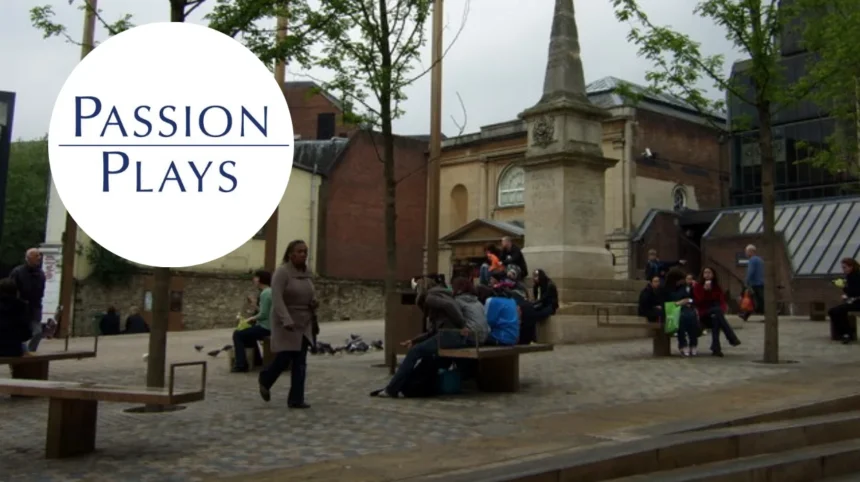
The choice of Bonn Square is intentional: the location is a well‑used public space in central Oxford, easily accessible on foot and by public transport, which allows the church‑linked project to engage passers‑by as well as those who have come specifically for the event. According to the Eventbrite outline for The Oxford Community Passion Play 2026, the drama starts outdoors, moves into New Road Baptist Church, and then returns to the square for the final scenes, thereby weaving together street‑level encounter with the intimacy of a place of worship. This fluid movement between inside and outside is framed as part of the play’s attempt to “re‑imagine” the Easter story in a way that feels grounded in contemporary life.
Who is involved in staging the Oxford Community Passion Play 2026?
The 2026 production is presented under the banner of South Oxford Ministry and the Arts in partnership with New Road Baptist Church, according to the English‑language Eventbrite listing. The event page notes that volunteers “from across the city” will perform, suggesting a consciously local and diverse cast rather than a professional touring company. Direction is credited to Marion Bloice‑Smith, who, as described in the listing, is guiding a community “to reimagine the Easter story, weaving together the Christian themes of hope, justice, and renewal.”
The roots of the play go back to St Matthew’s Church in Oxford, where actor and playwright Carolyn Lloyd‑Davies began writing what would become And a Sword Shall Pierce Your Soul during the first national lockdown in 2020. As reported by the Diocese of Oxford’s news page, the work was intended to tell the Easter story from the perspective of Mary, mother of Jesus, in a way that feels “accessible” both to long‑time churchgoers and to those unfamiliar with the Christian narrative. The Diocese’s Development Fund later awarded a grant to help bring the project to life, underscoring its role as a “missional” initiative rather than simply a devotional exercise.
How does the script and structure of the play aim to reach new audiences?
The script’s centre of gravity is Mary, a figure whose personal grief and hope are used to frame the broader story of Jesus’ final days and resurrection. As the Diocese of Oxford records, the aim is for people to “come into the church, maybe for the first time, and realise that it isn’t just a building, but it is full of life and hope.” The production team notes that even some members of the cast had not heard the Easter story in full before rehearsing, which organisers take as a sign that the project can introduce core Christian themes to newcomers as well as refresh them for believers.
By staging the first and penultimate sections in Bonn Square, the producers follow a more contemporary, “street‑theatre” approach; the interior church scenes then offer a quieter, more reflective space before the narrative arcs out into the public realm once more. This structure is described on Eventbrite as a way of “weaving together” hope, justice, and renewal, suggesting that the organisers are not only recounting a biblical sequence but also inviting reflection on how those themes might land in a modern city context. The timing on Easter Saturday, the day before Easter Sunday, also positions the play as a prelude to the main Christian celebration, aimed at drawing people into the wider church calendar who might otherwise overlook it.
What has been the wider impact of the Community Passion Play in Oxford so far?
Behind the 2026 staging stands a longer history of community engagement shaped by the original lockdown‑era script. As the Diocese of Oxford reports, the earlier versions of the play were seen as a vehicle for improving mental well-being, with cast members forming new friendships, developing a sense of community, and growing in confidence through rehearsals. The news item from the Diocese quotes organisers saying it has been “so exciting to see the positive difference it has made,” highlighting social and emotional benefits alongside the explicitly religious message.
That emphasis on wellbeing and inclusion feeds directly into the 2026 iteration, which is being promoted as open to “all” and explicitly “free,” with no requirement to buy tickets or even to stay for the full performance. The AllEvents.in listing for worship‑related happenings in Oxford also flags the Community Passion Play as a notable church event, reinforcing its visibility beyond the immediate parish network. In practical terms, this means the project is positioned not just as a religious service but as a public‑art event that uses the city’s central square as a stage.
Background of the development
The Oxford Community Passion Play began life as a lockdown‑era creative project by Carolyn Lloyd‑Davies, a member of the congregation at St Matthew’s Church in Oxford. During the first national lockdown, confined at home, Lloyd‑Davies turned to writing an Easter Passion play centred on Mary, intending to make the familiar story feel more immediate and relatable. With support from a Development Fund grant provided by the Diocese of Oxford, the church and local community then brought the text into full production, using volunteers and simple staging to reach both church members and the wider public.
Over subsequent years, the project evolved into a recurring event, shifting location and scale while keeping its core focus on Mary’s perspective and the themes of hope and renewal. The 2026 staging in Bonn Square marks one phase in that evolution, moving the main dramatic frame from earlier venues such as Hinksey Park back into the city centre, thereby increasing its visibility among shoppers, students, and visitors. In this sense, the development can be seen as a progressive “public‑facing” strategy, using the Passion narrative as a way to open conversations about faith, community, and mental health in a secularised urban environment.
Predictions for audience impact in Oxford 2026
For Oxford residents, the 2026 Community Passion Play offers a low‑threshold opportunity to encounter a Christian narrative in a non‑pressured, public setting. Because the event is free, held in a familiar square, and framed as a piece of community theatre rather than a sermon, it may attract people who would not normally step inside a church building, potentially opening space for informal conversations about faith, suffering, and hope. For those already connected to a church, the production may deepen their sense of belonging and give them a visible, shared cultural project to point to as an expression of local Christian life.
Visitors to Oxford, tourists, students, and temporary residents may encounter the Passion Play incidentally while walking through the city centre, and organisers’ emphasis on accessibility and modern language could help them grasp the story without prior theological knowledge. Over time, if the event continues annually, it could become a recognisable part of Oxford’s Holy Week calendar, similar to other city‑based religious arts projects elsewhere in the UK. This would mean that, for the local audience, the Passion Play not only retells an ancient story but also becomes a recurring marker of how contemporary faith communities seek to inhabit and bless public space.