Key Points
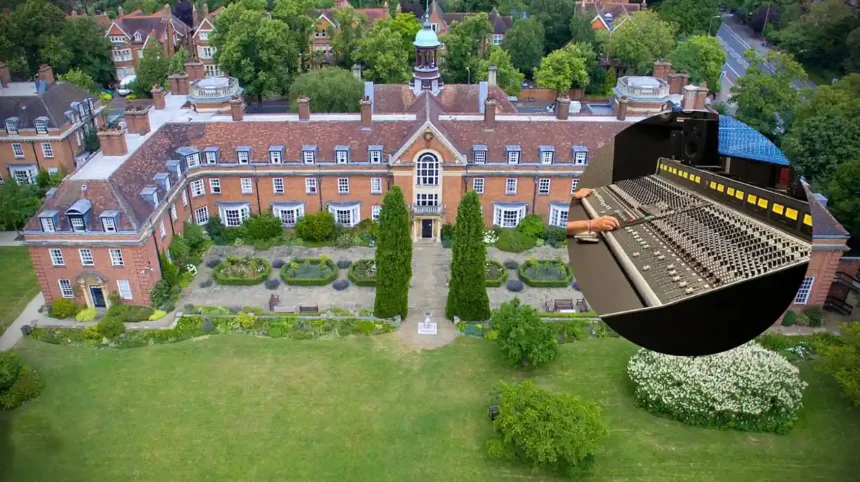
- University of Oxford has installed a Harrison 32Classic 32-channel analog mixing console in Studio Three of its new multi-studio facility at the Stephen A. Schwarzman Centre for the Humanities.
- The facility, home to the Faculty of Music, includes three studios: Studio Three for traditional recording, Studio One for Dolby Atmos 9.1.4, and Studio Two for immersive formats like NHK 22.2 and Sony 360 Reality Audio.
- The Harrison console supports 64 bi-directional Dante AoIP channels with premium A-to-D and D-to-A converters, connecting to an Ensemble Room, four practice spaces, 500-seat Sohmen Concert Hall, and 120-capacity Black Box Performance Lab.
- Daniel Hulme, Studio Manager at the Schwarzman Centre, described Studio Three as a traditional recording space for small- to medium-sized ensembles and experimental work.
- The Schwarzman Centre opened at the start of the current academic year, housing seven faculties, institutes, and research centres.
- Announcement covered by Mixonline Newsroom on April 23,2026.
Oxford(Oxford Daily)April 12026 The University of Oxford has installed a Harrison 32Classic 32-channel analog mixing console within Studio Three of its new multi-studio facility at the Stephen A. Schwarzman Centre for the Humanities. This development equips the Faculty of Music with professional-grade recording capabilities. The centre, which opened at the start of the current academic year, now houses seven faculties, institutes, and research centres alongside the music studios.
- Key Points
- Where is Oxford University’s new multi-studio facility located?
- How does the Dante network enhance Oxford’s music studios?
- What facilities does the Schwarzman Centre offer for music production?
- Why did Oxford choose the Harrison 32Classic console?
- What other studios complement the Harrison installation at Oxford?
- How does this fit into Oxford’s broader music programme?
- Background of the Development
- Predictions for Music Students and Faculty
As reported by the Mixonline Newsroom, the Harrison 32Classic features 64 bi-directional channels of Dante AoIP networking and premium analogue-to-digital and digital-to-analogue converters. These allow seamless integration across the facility’s spaces.
Where is Oxford University’s new multi-studio facility located?
The multi-studio facility sits within the Stephen A. Schwarzman Centre for the Humanities in Oxford, U.K. Studio Three serves as a traditional recording studio, connected to an associated performance space called the Ensemble Room and four smaller practice spaces. All tie into the Harrison console via the Dante network.
Daniel Hulme, the Schwarzman Centre’s Studio Manager, explained the setup. “Studio Three is a traditional recording studio,” Hulme stated. “As well as more experimental and electronic compositional work, we teach students the traditional ways of making music in the recording studio, with small- to medium-sized ensembles performing in a room together”.
How does the Dante network enhance Oxford’s music studios?
The Dante network extends beyond Studio Three to include the 500-seat Sohmen Concert Hall and the 120-capacity Black Box Performance Lab. This enables live performance capture from these venues directly through the Harrison console. Hulme noted the concert hall’s qualities: “The concert hall is pin-drop quiet and has a beautiful, variable acoustic, and there’s a multitude of concealed microphone ties and various other connectivity to connect back to the studios”.
Studio One operates as a Dolby Atmos 9.1.4 room. Studio Two functions as an immersive compositional space configurable for formats such as NHK’s 22.2, Dolby Atmos, Sony 360 Reality Audio, and Ambisonics. Both have been outfitted with Dante interfaces.
What facilities does the Schwarzman Centre offer for music production?
The Schwarzman Centre, home to Oxford’s Faculty of Music, provides three cutting-edge music studios available for hire. These support diverse audio projects, including album recording, podcasts, immersive audio content, sound design, and live performance capture linked to the studio, Concert Hall, Black Box, and Ensemble Room.
A Facebook post from Harrison Audio confirmed the installation: “The University of Oxford Installs a Harrison 32Classic Mixing Console within its New Multi-Studio Facility. With 64 bi-directional channels…”.
Why did Oxford choose the Harrison 32Classic console?
The Harrison 32Classic builds on Harrison Audio’s legacy, originally known for the 32C console used in Grammy-winning recordings from the 1970s. It includes 32 transformer-balanced Harrison mic preamps, the renowned 32C four-band parametric EQ with variable high-pass and low-pass filters, 64 channels of high-end AD/DA conversion, 7.1.4 immersive monitoring, and Dante AoIP interface. Harrison began shipping the 32Classic internationally in 2024, supporting hybrid workflows.
This setup positions Studio Three for both traditional ensemble recording and modern electronic composition, aligning with the Faculty of Music’s teaching goals.
What other studios complement the Harrison installation at Oxford?
Studio One and Studio Two expand the facility’s immersive capabilities. Studio One handles Dolby Atmos 9.1.4 mixes. Studio Two adapts to multiple formats, enhancing creative flexibility for students and professionals.
The centre’s design involved acoustic engineering contributions, as noted in prior coverage of the project. Arup collaborated with Hopkins Architects on the facade and acoustics for the 500-seat concert hall.
How does this fit into Oxford’s broader music programme?
The Faculty of Music at Oxford uses these studios to teach recording techniques alongside performance and composition. The integrated network allows real-time capture from multiple venue sources without disrupting workflows.
Background of the Development
The Stephen A. Schwarzman Centre for the Humanities represents a major expansion for the University of Oxford, integrating music facilities with humanities research. Construction and acoustic design progressed through 2025, with Arup delivering engineering for the facade and the concert hall’s acoustics in collaboration with Hopkins Architects. The Faculty of Music, long renowned at Oxford, gained these professional studios to support its curriculum and external hires. Harrison Audio’s 32Classic draws from its 32C series, first installed at studios like The Village Recorder in 1977, which featured innovative inline channel design and 32 multitrack buses. Shipping of the modern 32Classic started in late 2024, with other installations including composer Andrew Hale’s Owlspace Studio in London. The centre opened for the 2026 academic year, enabling immediate use of the facilities.
Predictions for Music Students and Faculty
This development provides music students and faculty at Oxford with access to industry-standard analogue processing integrated with digital networking. Students can record ensembles in Studio Three, experiment with immersive formats in Studios One and Two, and capture live events from the Concert Hall or Black Box without separate routing. Faculty gain a teaching hub for traditional and modern techniques, potentially increasing hands-on training in Dante workflows and Atmos mixing. External users hiring the spaces benefit from quiet acoustics and versatile connectivity, broadening project scope. The setup may streamline research in performance capture and composition, aiding theses or collaborations. Over time, it could attract visiting professionals, enriching the programme without displacing core academic use.