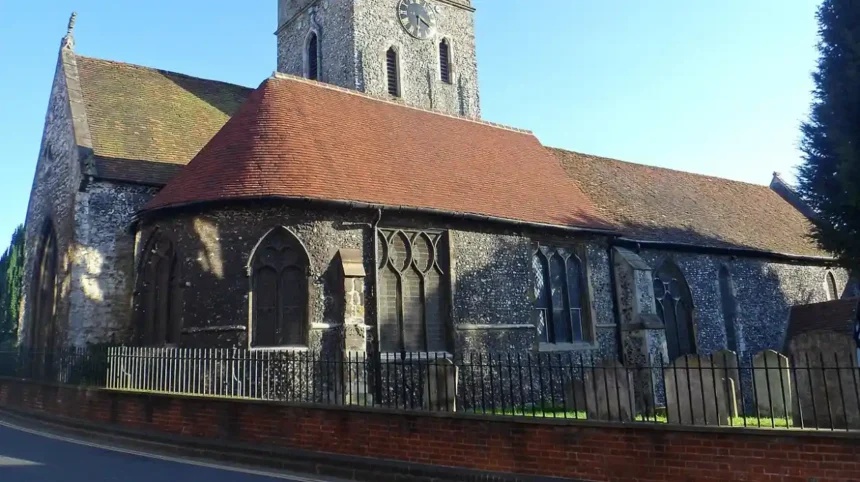
Charles Lutwidge Dodgson’s relationship with Christ Church, Oxford formed the foundation of his academic identity, mathematical career, and literary development. His lifelong residence and work within the college shaped both his scholarly output and his transformation into the author Lewis Carroll, producing one of the most influential intellectual profiles of Victorian Britain.
- Who was Dodgson and what are his Christ Church connections?
- How did Christ Church, Oxford influence Dodgson’s academic career?
- What roles did Dodgson hold at Christ Church?
- How did Christ Church shape Alice in Wonderland?
- What was Dodgson’s mathematical work at Christ Church?
- Who did Dodgson interact with at Christ Church?
- What is the historical significance of Dodgson’s Christ Church residence?
- How are Dodgson’s Christ Church connections preserved today?
Who was Dodgson and what are his Christ Church connections?
Charles Lutwidge Dodgson was a mathematician and writer affiliated with Christ Church, Oxford from 1851, where he served as student, lecturer, and fellow. His Christ Church connections include academic employment, residence in college rooms, teaching duties, and literary creation under the pen name Lewis Carroll.
Charles Lutwidge Dodgson was born in 1832 in England and entered Christ Church as a student in mathematics. Christ Church was one of Oxford University’s most important colleges, combining academic, clerical, and residential functions. Dodgson remained associated with the institution for most of his adult life, forming a continuous academic link spanning more than four decades.
His academic position developed from student to lecturer and then permanent fellow. This progression reflected the Victorian academic system where outstanding graduates often remained within the same college as educators. His work as Lewis Carroll emerged during this same period, with literary activity occurring within Christ Church rooms while he maintained formal academic responsibilities.
Christ Church provided Dodgson with financial stability, accommodation, and intellectual networks. These factors allowed him to balance mathematical work with creative writing. His identity became dual: a respected mathematician within Oxford University and a literary figure whose imaginative works gained global recognition.
How did Christ Church, Oxford influence Dodgson’s academic career?
Christ Church, Oxford shaped Dodgson’s academic career by providing structured teaching roles, stable fellowship employment, and access to Oxford’s mathematical curriculum system. The college environment enabled continuous research output, examination duties, and long-term engagement with undergraduate mathematics education.
Christ Church operated as a self-governing institution within Oxford University, responsible for appointing lecturers and fellows. Dodgson became a mathematical lecturer in 1855, a role requiring instruction in algebra, geometry, and classical mathematics. His teaching followed Oxford’s examination-based academic system, which emphasized formal reasoning and precision.
The tutorial system at Christ Church required close engagement with students. Dodgson provided instruction in small academic groups, ensuring mastery of mathematical principles required for examinations. This system reinforced structured reasoning and logical clarity, which later appeared in his literary construction and narrative design.
His fellowship provided financial independence and institutional security. Unlike many Victorian scholars who depended on external patronage, Dodgson remained fully supported by Christ Church. This stability allowed him to produce mathematical papers on determinants and logic while continuing his teaching responsibilities without interruption.
The academic environment at Christ Church also encouraged intellectual discipline. Regular examinations, administrative duties, and participation in college governance created a structured professional life. Dodgson’s long-term engagement with this system established him as a consistent contributor to Oxford’s mathematical education framework.
What roles did Dodgson hold at Christ Church?
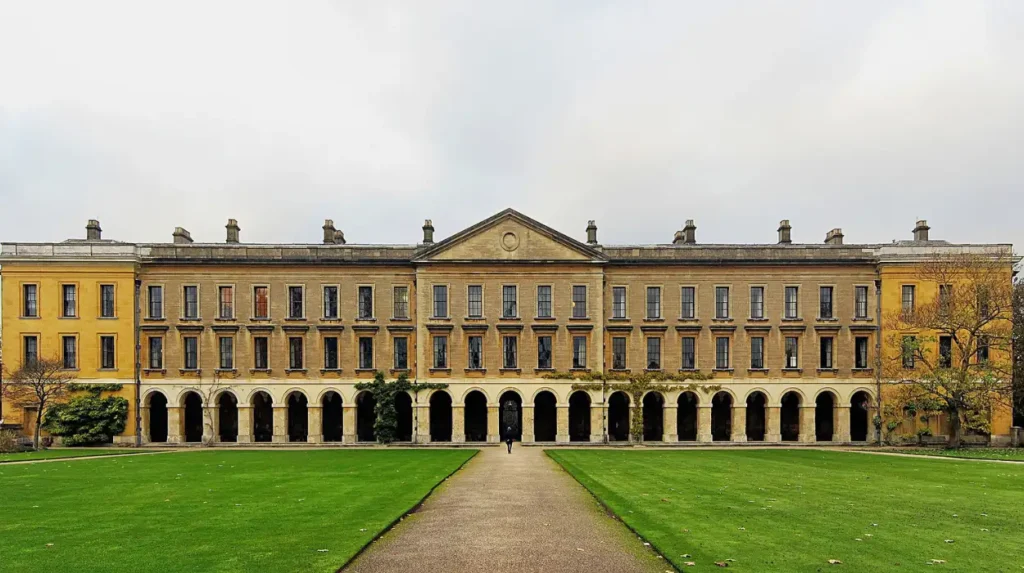
Dodgson held multiple roles at Christ Church including mathematical lecturer, college tutor, and junior dean. These positions involved teaching mathematics, supervising student performance, and managing disciplinary responsibilities within the college’s administrative and academic structure.
As mathematical lecturer, Dodgson delivered formal instruction in algebra and geometry to undergraduate students. His lectures followed the Oxford curriculum, which emphasized Euclidean principles and structured problem-solving. His teaching methods reflected clarity and systematic reasoning required for academic examinations.
As tutor, he provided individualized academic supervision. Tutors at Christ Church were responsible for monitoring student progress, offering academic guidance, and ensuring readiness for university assessments. This role placed Dodgson in direct contact with students, reinforcing his position within the educational structure of Oxford.
His position as junior dean added administrative responsibility. The junior dean enforced college discipline, supervised conduct regulations, and maintained institutional order. This role reflected the integrated nature of Oxford colleges, where academic staff also managed behavioral oversight and institutional governance.
These combined roles created a multidimensional academic identity. Dodgson functioned simultaneously as educator, administrator, and examiner. This structure defined his professional life and reinforced Christ Church as the central institution in his academic development.
How did Christ Church shape Alice in Wonderland?
Christ Church influenced Alice in Wonderland through its social environment, river landscapes, and intellectual culture. The story originated during interactions with the Liddell family connected to Christ Church, where Dodgson developed the narrative during recreational river excursions near Oxford.
The origin of Alice in Wonderland is linked to storytelling sessions conducted during outings with Alice Liddell, daughter of Christ Church Dean Henry Liddell. These excursions took place along the River Thames near Oxford, where Dodgson narrated imaginative stories to entertain the children.
Christ Church provided both social and physical inspiration. The college’s architecture, cloisters, gardens, and river access formed part of Dodgson’s daily environment. Victorian Oxford encouraged intellectual creativity among academics, and storytelling became a natural extension of scholarly leisure activities.
The narrative structure of Alice in Wonderland reflects logical systems combined with imaginative transformation. Mathematical reasoning influenced its organization, including paradoxes, sequences, and rule-based shifts in reality. These features reflect Dodgson’s academic training within Christ Church’s mathematical tradition.
The original manuscript was written within Christ Church rooms under the title Alice’s Adventures Under Ground. The college environment provided stability and intellectual isolation necessary for writing. Publication in 1865 transformed a private academic story into a global literary work.
What was Dodgson’s mathematical work at Christ Church?
Dodgson’s mathematical work at Christ Church focused on determinants, algebraic structures, geometry, and symbolic logic. He published research addressing mathematical elimination methods and logical reasoning systems within Victorian academic mathematics.
Determinants were central to Dodgson’s mathematical research. Determinants are algebraic tools used to solve systems of linear equations. His work aimed to simplify calculation methods and improve clarity in mathematical operations, reflecting the Victorian emphasis on computational efficiency.
He also worked extensively in Euclidean geometry. This branch of mathematics formed a core part of Oxford’s curriculum, requiring students to master formal proofs and geometric reasoning. Dodgson’s teaching reinforced classical geometric structures based on logical progression and deductive reasoning.
His research in symbolic logic examined structured reasoning systems. Symbolic logic studies the formal rules of reasoning using symbols rather than natural language. Dodgson’s work contributed to early developments in logical analysis that influenced later mathematical and philosophical systems.
Christ Church supported his research through academic resources, libraries, and scholarly networks. The institutional environment allowed him to combine teaching and publication, maintaining a consistent mathematical output throughout his academic career.
Who did Dodgson interact with at Christ Church?
Dodgson interacted with Christ Church fellows, undergraduate students, university administrators, and the Liddell family. These relationships formed his academic, social, and intellectual network within Oxford University during the nineteenth century.
Christ Church fellows were his primary academic colleagues. These individuals specialized in theology, mathematics, and classical studies, contributing to shared teaching responsibilities and institutional governance. Their collaboration defined the intellectual environment of the college.
Students formed a central part of Dodgson’s daily academic life. As lecturer and tutor, he instructed undergraduates in mathematics and monitored their academic progress. These structured interactions reflected the formal educational system of Victorian Oxford.
The Liddell family held significant social importance within Christ Church. Henry Liddell served as Dean of Christ Church, and his children were part of Dodgson’s social environment. These connections influenced his storytelling activities and contributed to the development of Alice in Wonderland.
University administrators regulated examinations and academic standards. Dodgson’s interaction with them ensured compliance with Oxford’s institutional requirements. His professional network integrated teaching, governance, and academic evaluation within a unified system.
What is the historical significance of Dodgson’s Christ Church residence?
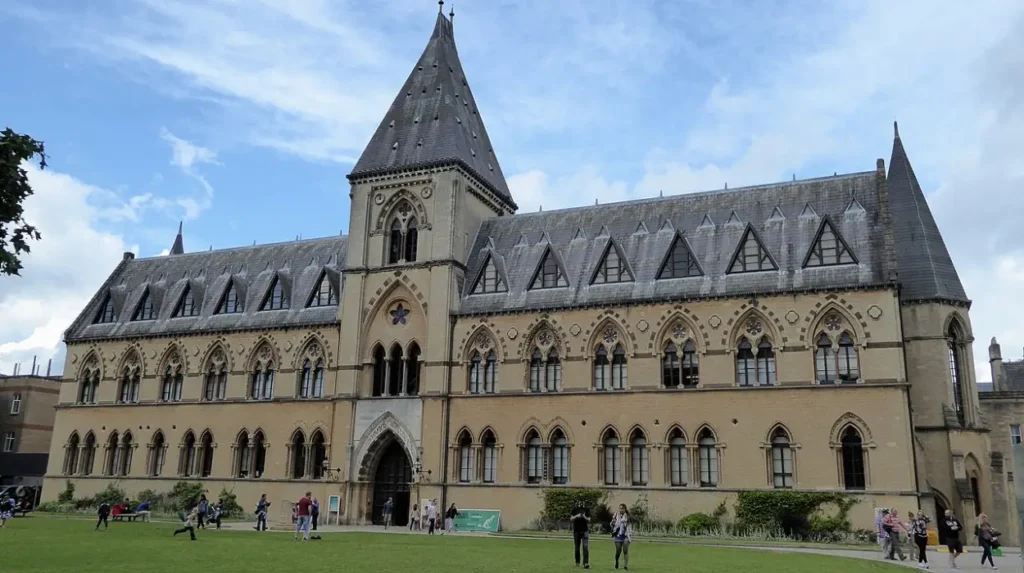
Dodgson’s residence at Christ Church is historically significant because it enabled continuous academic work and literary production within a single institutional environment. His long-term residence reflects the integration of scholarship and college life in Victorian Oxford.
Dodgson lived in Christ Church rooms from 1851 until his death in 1898. This extended residence provided uninterrupted access to academic facilities, libraries, and college networks. His rooms functioned as both workplace and living space.
The residential system at Christ Church allowed fellows to remain within college grounds. This arrangement created a self-contained intellectual environment where academic and personal life were closely connected. Dodgson’s residence exemplified this integrated model.
His long-term occupancy supported sustained productivity. He published mathematical works while also developing literary projects. The stability of residence enabled consistent intellectual output over several decades without institutional relocation.
Christ Church’s architectural and institutional structure preserved continuity of academic tradition. Dodgson’s residence represents a historical example of Victorian scholarly life within Oxford’s collegiate system, where residence and profession were inseparably linked.
How are Dodgson’s Christ Church connections preserved today?
Dodgson’s Christ Church connections are preserved through archival records, preserved college rooms, and academic collections at Oxford University. These materials document his teaching, mathematical work, and literary history within Christ Church.
Christ Church maintains archival records detailing Dodgson’s appointments, teaching duties, and fellowship status. These documents provide primary historical evidence of his academic role within Oxford University during the nineteenth century.
His former rooms are preserved as part of the college’s historical environment. The architectural conservation of these spaces reflects Victorian academic living conditions and supports historical interpretation of his daily working environment.
Oxford University libraries preserve manuscripts, letters, and mathematical papers associated with Dodgson. These materials are essential for scholarly research into both his mathematical contributions and his literary work under the name Lewis Carroll.
Modern academic studies continue to analyze his dual identity as mathematician and author. His Christ Church connections remain central to understanding how institutional environments influence intellectual production and cultural legacy.
Was Harry Potter filmed at Christ Church Oxford?
Harry Potter scenes were not directly filmed at Christ Church Oxford. However, its Great Hall inspired Hogwarts dining hall design. Christ Church’s architecture influenced filming locations across Oxford, especially Bodleian Library and New College, used for interior and cloister scenes.
How does Oxford University relate to Harry Potter?
Oxford University relates to Harry Potter through architectural inspiration. Buildings like Bodleian Library, Divinity School, and Christ Church shaped Hogwarts visuals. Although not the filming core, Oxford’s medieval halls and cloisters influenced set design and atmospheric world-building in the films.
Did JK Rowling attend Oxford?
J.K. Rowling did not attend Oxford University. She studied French and Classics at the University of Exeter. Oxford influenced her creatively through architecture and academic culture, but she had no formal educational or residential connection to Christ Church or Oxford University.
What did Emma Watson study at Oxford?
Emma Watson studied English Literature at Brown University in the United States and later attended Worcester College, Oxford University as a visiting student. Her Oxford study was part of a short exchange program, not a full degree course.
Who moans in Harry Potter?
Moaning Myrtle is the ghost who moans in Harry Potter. She is a student spirit haunting the Hogwarts bathroom. Her character appears frequently in the series, especially in Harry Potter and the Chamber of Secrets, expressing sadness and loneliness.