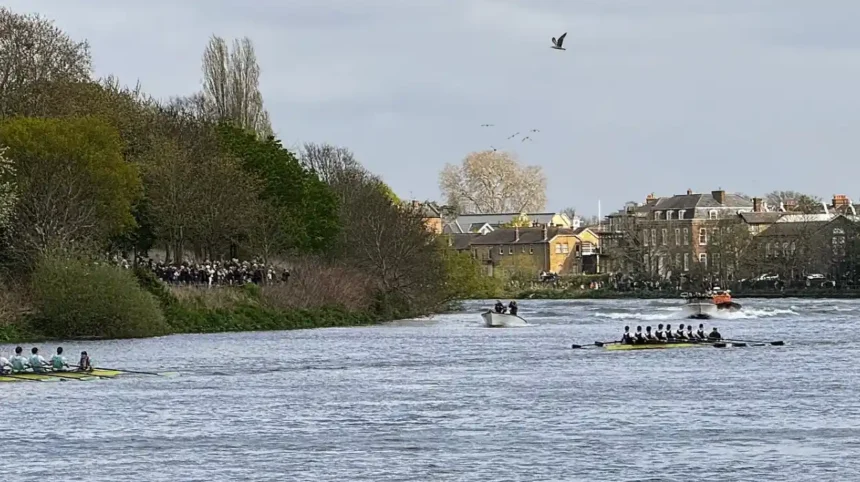
Oxford Cambridge Boat Race 2026 took place on Saturday, April 4, 2026, on the 4.25-mile Championship Course from Putney to Mortlake along the River Thames in southwest London. Cambridge won the men’s race by three and a half lengths in 16 minutes 56 seconds, while Oxford won the women’s race by three lengths in 19 minutes 15 seconds, ending Cambridge’s eight-year streak.
- What Is the Oxford Cambridge Boat Race?
- When and Where Did the 2026 Boat Race Occur?
- What Was the History of the Boat Race?
- Who Won the 2026 Oxford Cambridge Boat Race?
- What Is the Course and How Does It Work?
- Who Are the Key Crew Members in 2026?
- Why Is the Boat Race Significant?
- How Do Teams Prepare for the Boat Race?
- What Are the Records and Statistics?
- How Can Spectators Watch the Boat Race?
- What Is the Role of the Coxswain in the Boat Race?
- How Does Weather Affect the Boat Race?
What Is the Oxford Cambridge Boat Race?
The Oxford Cambridge Boat Race is an annual head-to-head rowing competition between the University of Oxford and the University of Cambridge held on the River Thames in London. It features men’s and women’s crews racing 4.25 miles along the Championship Course from Putney to Mortlake. First raced in 1829 for men and 1927 for women, it draws over 200,000 spectators and millions of TV viewers worldwide.
The event pits elite rowers from Oxford University, known as the Dark Blues, against those from the University of Cambridge, the Light Blues. Each crew consists of eight rowers and a coxswain who steers and calls commands. The Championship Course covers 4.25 miles or 6.8 kilometers of tidal water with bends, bridges, and variable currents.
Organizers schedule both races on the same day. The women’s race precedes the men’s. Reserve crews also compete: Osiris for Oxford men and Blondie for Cambridge women. Cambridge’s Goldie crew races Oxford’s Isis crew in the men’s reserves.
This format tests endurance, power, and strategy over 17 to 20 minutes. Wind and tide influence outcomes. The 2026 edition faced blustery, overcast conditions with choppy water, heightening challenges.
The race holds status as rowing’s most prestigious university event. It attracts global attention through live broadcasts. Sponsorship from Chanel J12 marked the 2026 iteration as the 171st men’s and 80th women’s race.
When and Where Did the 2026 Boat Race Occur?
The Oxford Cambridge Boat Race 2026 occurred on Saturday, April 4, 2026, starting at Putney Bridge on the River Thames in southwest London. The women’s race began at 14:21, followed by reserves at 14:31 and 14:51, with the men’s race at 15:21. The course ran 4.25 miles east to Mortlake.
The Championship Course starts in the shadow of Putney Bridge. It passes landmarks like Fulham Football Club, Bishops Park, and Hammersmith Bridge. Crews navigate the Surrey bend favoring the inside line, then the Middlesex station through Chiswick.
Finish lies near Mortlake, by the University of London Boathouse. Tideway conditions include outgoing ebb tides aiding speed. Spectator zones opened at Fulham and Hammersmith for 200,000 fans.
Precise timing ensured separation between events. Umpires enforce starts via flag signals. Conditions in 2026 featured wind creating sea-like chop, testing crews’ stability.
Fan zones provided big screens and hospitality. Putney and Chiswick pubs overflowed with supporters. TV coverage reached millions via BBC and international feeds.
What Was the History of the Boat Race?
The Boat Race began in 1829 between Oxford and Cambridge on the Thames, with Cambridge leading overall at 86 men’s wins to Oxford’s 81 entering 2026. The women’s event started in 1927, with Cambridge holding 46 victories to Oxford’s 30 before 2026. Races alternate annually on the Putney-Mortlake course.
Early races used Henley-on-Thames or the Thames estuary before settling on the Championship Course in 1845. Organizers formalized rules post-1839 disputes over fouls. Cambridge dominated post-1960s with superior training.
Men’s records show Cambridge’s 16:56 in 2026 as the seventh-fastest time. Oxford’s longest streak ended in 2017. Women’s race grew parity since 2015 Tideway shift from Henley.
Notable rivalries include 2003’s sinking Oxford boat and 2012 clash halting both crews. Reserves mirror blues: Goldie won 27 men’s reserves to Osiris’s 20.
By 2026, 170 men’s and 79 women’s races preceded. Cambridge entered men’s as seven-time winners in eight years; women held eight straight victories until Oxford’s 2026 upset.
Who Won the 2026 Oxford Cambridge Boat Race?
Cambridge won the 2026 men’s Boat Race by three and a half lengths over Oxford in 16:56, their fourth straight and seventh in eight years. Oxford won the women’s race by three lengths in 19:15, ending Cambridge’s eight-year dominance since 2018. Reserves saw Cambridge’s Goldie beat Oxford’s Isis by 19 lengths.
In the men’s event, Cambridge chose Middlesex station after winning the toss. They surged mid-race from Hammersmith, pulling clear despite Oxford’s start. Light Blues finished dominant.
Oxford women led from Putney, holding six seconds at Hammersmith. Olympic medallist Heidi Long powered their crew to victory, first since 2016 and 31st overall.
Goldie crew underlined Cambridge men’s strength with a 19-length reserves win. Blondie and Osiris results followed main events.
Post-race celebrations marked Oxford women’s emotion. Cambridge men extended record. Aggregate 2026 score: Cambridge 3, Oxford 1 across four races.
What Is the Course and How Does It Work?
The Championship Course spans 4.25 miles from Putney Bridge to Mortlake on the River Thames Tideway. Crews race downstream on ebb tide, navigating bends at Hammersmith and Chiswick. Umpires enforce rules via patrol boats; first past Mortlake post wins.
Start aligns crews bow-to-bow under Putney Bridge. Coxswains steer: Surrey station inside first bend, Middlesex later. Mile 1 reaches Beverley Brook; mile 2 Hammersmith Bridge. Choppy water demands synchronized strokes at 32-38 per minute. Power strokes hit 500 watts per rower. Bends gain 10-15 seconds advantage inside.
Finish post marks victory. Timekeepers record to seconds. 2026 winds slowed times versus records like Cambridge’s 18:22 in 2022. Course hosts 200,000 spectators yearly. Barriers prevent interference. Tide tables dictate date windows March-April.
Who Are the Key Crew Members in 2026?
Oxford women’s crew featured coxswain Phoebe Feinn and Olympic bronze medallist Heidi Long at stroke. Cambridge men’s included cox Oliver Whearity and stroke Henry Richardson. Full eights comprised international rowers; reserves mirrored blues structure.
Oxford women rowed with Long setting rhythm. Feinn called tactics for early lead. Cambridge men relied on Richardson’s power and Whearity’s steering through chop. Each crew trained 20,000 kilometers yearly. Selection from university clubs peaks March. International experience defined 2026: Long’s Olympics, others’ World Rowing Cups.
Reserves: Goldie stroke led Cambridge rout. Isis trailed heavily. Crews don university kit: Dark Blues versus Light Blues. Post-win, Oxford celebrated Long’s influence. Cambridge credited depth.
Why Is the Boat Race Significant?
The Boat Race symbolizes Oxford-Cambridge rivalry since 1829, drawing 200,000 live spectators and 7 million UK TV viewers annually. It scouts Olympic talent; 2026 winners included medallists. Economic boost hits £50 million via tourism and broadcasts.
Cultural impact spans centuries. Royalty attends; alumni donate boats costing £250,000 each. Women’s parity since 2018 equalized purses at £20,000 winner funds.
Rowing development feeds GB teams: 40% Boat Race alumni row Olympics. 2026 upheld Cambridge men’s streak, Oxford women’s resurgence. Global reach via YouTube hits 10 million streams. Sponsorships like Chanel elevate profile. Future sees sustainability: electric safety boats by 2030. Legacy endures as rowing benchmark.
How Do Teams Prepare for the Boat Race?
Teams select 60 freshmen yearly, trialing to eights by December. Training totals 3,000 kilometers monthly on ergometers and water, peaking 250 kilometers weekly pre-race. Coaches analyze video; nutrition hits 6,000 calories daily per rower. Oxford University Boat Club bases at Wallingford. Cambridge at Ely. Winter ergs simulate race; springs seat races finalize boats.
Medical screens prevent injuries. Psychologists aid pressure handling. 2026 prep faced Tideway currents from October camps. Tactics drill bends: power 10s surge rivals. Boats weigh 96 kilograms; oars 100 grams lighter yearly. Victors gain confidence boost. Losers analyze for next.
What Are the Records and Statistics?
Cambridge holds 86 men’s wins to Oxford’s 81, plus 5 dead heats. Women: Cambridge 46, Oxford 31 post-2026. Fastest men’s time: 16:19 (2003); women’s 18:22 (2022). Cambridge won 7 of last 8 men’s, 8 straight women’s pre-2026. Streak records: Cambridge men 7 (1922-1928). Oxford women longest 3 (2012-2014). Reserves: Goldie 27, Osiris 20; Blondie 27, Osiris reserves 20.
Margins: largest men’s 35 lengths (1839); women’s 12 (2017). 2026 men: 3.5 lengths; women 3 lengths. Viewership peaks 3.5 million UK (2019). Attendance 250,000 max. Stats track via Boat Race Society since 1929.
How Can Spectators Watch the Boat Race?
Spectators watch the Oxford Cambridge Boat Race 2026 live from Putney to Mortlake along the Thames, with prime viewing at Hammersmith Bridge and Chiswick. BBC broadcast free on TV and iPlayer to 7 million UK viewers, plus YouTube globally for 10 million streams. Tickets for enclosures cost £25-£100.
The course divides into free public banks and ticketed enclosures. Putney start hosts 50,000 early arrivals lining the Surrey shore. Hammersmith Bridge midway draws crowds for mid-race surges, with capacity 30,000.
Chiswick steps near finish accommodate 40,000 standing fans. Enclosures at Furnivall Gardens and Bishop’s Park offer seats, bars, and screens. 2026 attendance hit 200,000 despite wind, boosted by clear BBC commentary from Andrew Cotter.
Global feeds via Eurosport reached Europe, Asia, and Americas. Pubs in Putney and Barnes screened for overflow. Drone cams captured overhead bends in 4K. Safety barriers and police managed flows. Post-race, boats parade past cheering banks to boathouses.
What Is the Role of the Coxswain in the Boat Race?
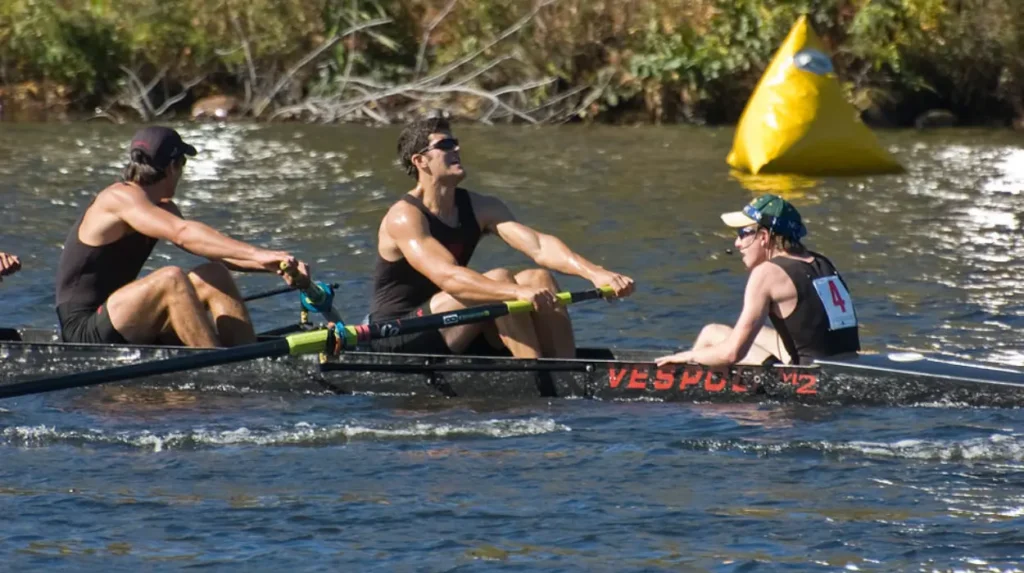
The coxswain steers the eight-oar shell, calls race tactics, and motivates rowers during the 4.25-mile course. Weighing under 55kg for women and 60kg for men, coxes use microphones for commands like power 10s. They won the toss for station in 2026, impacting outcomes. Positioned at the stern, coxswains read currents via GPS and buoys. They adjust rudder 5-10 degrees on bends, gaining seconds inside lines. Verbal calls sync strokes at 34 per minute average.
Training includes simulator sessions mimicking Tideway chops. 2026 featured Phoebe Feinn for Oxford women, steering steady early lead, and Oliver Whearity for Cambridge men, navigating Middlesex chop. Coxes enforce no-touching rules; umpires penalize fouls via blasts. Historic coxes like Sue Smith won 1980s acclaim. Modern tech adds heart monitors feeding real-time data.
How Does Weather Affect the Boat Race?
Ebb tide and wind dictate speed; outgoing flow adds 2 knots. Headwinds slow 10-20 seconds per mile; crosswinds capsize risks. 2026 blustery chop favored stable Cambridge men, challenged Oxford women early.
Forecasts from Putney gauge 10 days prior. Races postpone rarely: twice since 1845. Umpires halt crabbing or sinking. Rain slicks blades; fog cancels training. Climate shifts lengthen windy days 15% since 2000. 2026 overcast held temperatures 12°C, aiding endurance.
Who is favourite to win the boat race in 2026
For the 2026 Boat Race, Cambridge are the strong favourites in both the men’s and women’s races, based on recent wins and bookmakers’ odds.
Which is the oldest Boat Race in the world?
The oldest continuous boat race in the world is Doggett’s Coat and Badge, first raced on the River Thames in 1715.
Who has more wins, Oxford or Cambridge?
Across the long history of the Oxford–Cambridge Boat Race, Cambridge hold a slight edge in overall victories, though the gap has varied over the years.
Who built the very first boat?
The earliest boats were likely made by ancient humans (or their predecessors) tens of thousands of years ago; the oldest known surviving boat is the Pesse canoe, a dugout from around 8200–7600 BC found in the Netherlands.
What do Americans call rowing?
In the United States, the sport is usually called “crew” rather than “rowing,” especially when referring to school or college teams.