Key Points
- Met Police to expand live facial recognition deployment.
- Oxford Street targeted after surge in mobile theft.
- Phone networks urged to block stolen handsets promptly.
- Civil liberties groups warn of mass surveillance risks.
- Retailers welcome tougher action to protect shoppers.
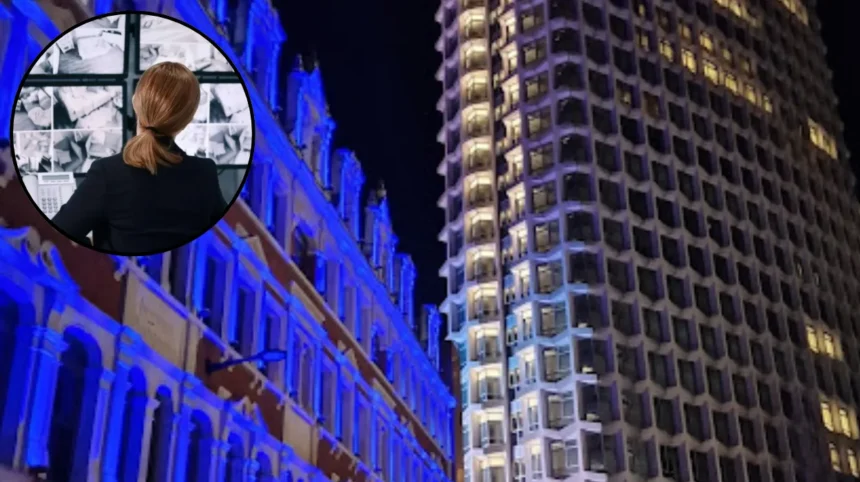
Oxford (Oxford Daily News) 11 March 2026 – Live facial recognition cameras are to be deployed on and around Oxford Street as the Metropolitan Police intensifies efforts to tackle soaring mobile phone thefts, while urging mobile network operators to do far more to render stolen devices worthless within minutes of being snatched. The force says the move, announced amid mounting concern from central London businesses and local politicians, is aimed at identifying prolific offenders and serious organised crime networks suspected of using street robberies to fund wider criminality, but civil liberties groups have condemned the expansion as an unnecessary step towards “routine mass surveillance” of shoppers and tourists.
Senior officers insist the technology will be used in a “targeted and proportionate” way, with watchlists limited to wanted suspects and strict rules on data deletion, yet campaigners remain unconvinced and are demanding full transparency, independent oversight and a public consultation before any system is made permanent. At the same time, the Met is placing fresh pressure on the UK’s biggest mobile phone companies to accelerate how quickly they block stolen devices, warning that current delays are helping fuel a lucrative black market that makes Oxford Street and other busy commercial districts a magnet for thieves.
Why is live facial recognition coming to Oxford Street now?
The Metropolitan Police has linked a sharp rise in mobile phone thefts and robberies in the West End to organised criminal groups who move quickly along Oxford Street, Regent Street and surrounding areas to target crowded pavements, queues and public transport interchanges. In recent months, retailers and business improvement districts have reported a pattern of offenders operating in small teams, using distraction techniques or snatch‑and‑run tactics to seize high‑value smartphones before disappearing into the crowds or onto the Underground, making traditional policing methods more difficult.
In public statements, the Met has argued that previous deployments of live facial recognition in parts of central and east London have led to arrests of individuals wanted for serious offences, including robbery, firearms and sexual offences, when they were flagged on camera and stopped by officers nearby. The force contends that placing cameras at key Oxford Street junctions and transport gateways can have a similar effect, allowing officers on the ground to intercept suspects already on wanted lists, rather than relying solely on descriptions and retrospective CCTV checks.
How does the Metropolitan Police say Oxford Street facial recognition will work?
The Metropolitan Police has explained that its live facial recognition system uses high‑resolution cameras mounted at fixed locations, such as on police vehicles or on temporary structures, to scan the faces of people passing through a defined area in real time. Images from those cameras are compared against a watchlist of individuals uploaded for that particular deployment, typically consisting of people wanted on warrants, suspects in serious investigations or individuals subject to court orders. When the software generates a potential match, officers monitoring the feed receive an alert, and specially trained officers on the ground then decide whether to stop the person, verify their identity and, if appropriate, arrest them.
Senior officers have stressed that those not on the watchlist are automatically ignored by the system, with their images deleted almost immediately and not retained for future analysis. They insist that each deployment is authorised in advance, with a documented purpose, location and the categories of individuals who may appear on the watchlist, and that these details are subject to internal governance and external scrutiny. The Met says it does not create a permanent database of the general public’s faces from live facial recognition deployments and that it is not using the technology to track law‑abiding people across multiple locations.
In statements about previous trials, the force has pointed to what it describes as “high levels of accuracy” when watchlists are properly constructed and the technology is used in good lighting conditions with officers verifying each match before taking action. However, critics argue that official error statistics often underplay the risk of false positives and the different impact mistakes can have on various demographic groups. The Met has said that before each Oxford Street deployment, it will conduct an equality impact assessment, brief all officers on the legal thresholds for stops and searches, and provide officers with guidance about how to explain the technology to members of the public who raise concerns.
What concerns are civil liberties groups raising about Oxford Street surveillance?
Civil liberties organisations and privacy campaigners have reacted with alarm to the prospect of regular live facial recognition deployments on Oxford Street, warning that what begins as a targeted response to mobile phone theft could normalise “perpetual identification” in Britain’s most visited public spaces. They argue that even if watchlists are restricted to wanted suspects, the technology inevitably requires scanning and processing the faces of thousands of innocent people in real time, raising fundamental questions about consent and proportionality.
Campaigners have also highlighted longstanding concerns about the accuracy of commercial facial recognition algorithms, particularly for people of colour, women, younger people and those with certain disabilities, warning that misidentifications could lead to innocent shoppers being stopped, embarrassed or even wrongly arrested. Critics say that the social cost of these errors falls disproportionately on communities already more likely to experience over‑policing, and that widespread deployment in central London could erode trust between police and the public.
Beyond technical concerns, rights groups point to what they see as a “function creep” risk, in which a system introduced to combat one type of crime gradually expands to cover new offences, larger watchlists and more locations, without fresh public debate or parliamentary approval. They note that Oxford Street is not just a shopping destination but also a site of protests, cultural events and political campaigning, and they warn that live facial recognition could be used to identify demonstrators or union organisers in ways that chill lawful democratic activity.
How might Oxford Street visitors be affected in practice?
For most people visiting Oxford Street while live facial recognition cameras are in operation, the most immediate impact is likely to be the presence of visible signage and a stronger police footprint, including officers stationed near camera vans or fixed installations. Shoppers may notice officers stopping and speaking to individuals who have been flagged by the system, though these interactions will look similar to other intelligence‑led stops that already take place in busy public areas.
Those not on any watchlist, according to the Met’s description of the technology, should be able to pass through the area without being aware their face has been scanned and discarded. However, some visitors may feel uneasy about walking through a space where their biometric information is being processed automatically, even if they are confident they have done nothing wrong.
People who have had negative experiences with police stops in the past, or who come from countries with a history of intrusive surveillance, may find the presence of live facial recognition particularly unsettling. Community groups have therefore encouraged the Met to ensure that officers are prepared to explain the technology calmly, provide leaflets or online resources, and direct people to channels where they can lodge complaints or ask for more detailed information.