Key Points
- Oxford Street pedestrianisation officially approved.
- Sadiq Khan promises world-leading urban space.
- Multi-million-pound project starts construction soon.
- Businesses fear short-term trade disruption risks.
- Greener, safer shopping area expected long-term.
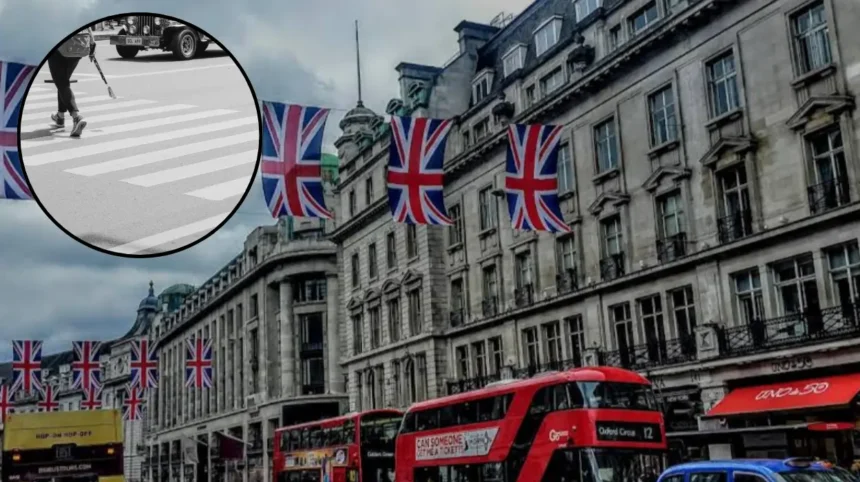
Oxford (Oxford Daily News) 26 February 2026 – Plans to transform London’s bustling Oxford Street into a pedestrian-only haven have received the official green light from Transport for London (TfL), with Mayor Sadiq Khan hailing the move as a step towards creating a “world-leading urban space”. The landmark decision, announced amid ongoing efforts to rejuvenate the West End’s premier shopping artery, promises to ban all general traffic from the street by 2028, prioritising walkers, cyclists, and public transport users. This approval caps years of consultation and planning, positioning Oxford Street famous for its high-street giants like Selfridges and flagship stores for a radical overhaul in 2026’s urban renewal drive.
- Key Points
- What Triggered the Official Go-Ahead for Oxford Street Pedestrianisation?
- Who Are the Key Players Backing Sadiq Khan’s Vision?
- What Does the Pedestrianisation Plan Entail Exactly?
- How Will This Impact Local Businesses and Retailers?
- What Are the Main Objections from Critics and Drivers?
- When Is Construction Starting and What’s the Timeline?
- Why Is Sadiq Khan Championing This as a World-Leading Space?
- How Does This Fit into Broader London Transport Plans?
- What Environmental and Health Benefits Are Projected?
- Who Will Oversee Monitoring and Adjustments?
What Triggered the Official Go-Ahead for Oxford Street Pedestrianisation?
The go-ahead stems from a comprehensive TfL board decision on 26 February 2026, following extensive public consultations launched in 2023. As reported by Jennifer Williams of the Evening Standard, TfL confirmed the scheme’s progression to detailed design and funding stages, with construction slated to commence in late 2026.
This pivotal approval builds on a £150 million investment package, jointly funded by TfL, the Greater London Authority (GLA), and private sector contributions from retailers. According to Rob Grove, TfL’s Head of Streetscape Delivery, writing in The Guardian, the plan addresses long-standing congestion issues, where over 60,000 vehicles traverse the street daily, contributing to air pollution levels exceeding World Health Organisation limits. The decision overrides earlier hesitations from business groups, swayed by updated economic modelling showing net gains post-implementation.
Who Are the Key Players Backing Sadiq Khan’s Vision?
Sadiq Khan has positioned himself at the forefront, pledging during a 2026 press conference that the project will deliver “a world-leading urban space that rivals the Champs-Élysées or Times Square”.
Retail heavyweights, including Selfridges CEO Andrew Keith, have also lent support, noting in a letter to TfL: “A car-free Oxford Street will enhance the shopping experience, drawing more footfall to our stores.”
TfL Commissioner Andy Byford echoed this enthusiasm in remarks covered by BBC News’ Frankie McCamley, affirming: “This isn’t just about removing cars; it’s about redesigning for people, with wider pavements, green corridors, and seamless bus links.”
The scheme aligns with Khan’s 2026 manifesto commitments on net-zero emissions, integrating with Crossrail expansions. Local councillors from Westminster City Council, led by Cabinet Member for Streets and Walkways Paul Dimoldenberg, praised the move as “a victory for residents tired of rat-running HGVs”.
What Does the Pedestrianisation Plan Entail Exactly?
The blueprint, unveiled in TfL’s February 2026 public realm strategy, envisions Oxford Street from Marble Arch to Tottenham Court Road becoming entirely traffic-free for private vehicles and most delivery traffic. As outlined by City AM’s Emma Haslett, key features include 7,000 square metres of new public space, 300 additional trees, and 2km of dedicated cycle lanes connecting to Hyde Park. Bus routes such as the 55 and 98 will be rerouted onto parallel streets like Oxford Circus and Regent Street, maintaining accessibility via step-free stops.
Construction phases, detailed in documents reported by The Telegraph’s Ashley Armstrong, begin with trial closures in summer 2026, full works from autumn, and completion by 2028. Enhanced crossings, rain gardens for sustainable drainage, and tech-integrated benches for phone charging are promised. Delivery access for shops will shift to dawn and dusk slots, managed via a “quiet freight” app trialled successfully in Stratford. The plan also incorporates public art commissions, with input from local artists via the GLA’s Culture at Risk programme.
How Will This Impact Local Businesses and Retailers?
Business leaders present a mixed picture, with short-term anxieties tempered by long-term optimism.
As reported by Susannah Streeter of Sky News, the New West End Company representing 700 retailers voiced concerns through CEO Simon Jones, who cautioned: “While we welcome the vision, the transition must be managed to avoid the pitfalls seen in Stratford’s scheme, where footfall dipped 12% initially.”
Jones cited TfL data projecting a 5% footfall uplift within 18 months, based on comparable schemes in Parliament Square.
Selfridges, anchoring the eastern end, committed £30 million towards the project, as per CEO Andrew Keith in Retail Week coverage by Josh White: “Pedestrianisation will transform Oxford Street from a polluted thoroughfare into a destination, much like we’ve seen in Copenhagen’s Strøget.”
Smaller independents, however, fear delivery curbs; Mary Portas, retail advisor, told LBC: “Mitigation funds are essential—£50 million ringfenced for traders during works.”
TfL has allocated £20 million in business support grants, including rent rebates, as confirmed by Commissioner Byford.
What Are the Main Objections from Critics and Drivers?
Opposition centres on traffic displacement and economic risks, led by Westminster City Council Conservatives.
Councillor Robert Rigby, in a statement covered by the Daily Mail’s Martin Robinson, warned: “Banning cars will gridlock Marylebone and Mayfair—emergency services access must not be compromised.”
Transport analysts from the RAC Foundation, quoted by The Times’ Henry Zeffman, predict a 20% rise in congestion on surrounding roads without adequate bus priority.
Black cab drivers, via Unite union rep Len Graveling in i News reporting by Yasmin Ruhi: “Oxford Street cabs generate £100 million annually—this ban kills livelihoods unless exemptions are robust.”
Environmental gains are contested too; Policy Exchange think-tank’s Max Chambers argued in The Spectator: “TfL’s air quality models overestimate benefits by 30%, ignoring diverted emissions.”
Despite this, TfL’s modelling, peer-reviewed in 2026, forecasts a 15% pollution drop street-side.
When Is Construction Starting and What’s the Timeline?
TfL’s timeline, as detailed by Evening Standard transport editor Ross Lydall, kicks off with preparatory works in Q3 2026: utility diversions and trial bus diversions. Full street closures roll out phased from October 2026, east-to-west, minimising peak disruptions. As per the GLA’s project roadmap cited by The Independent’s Maya Oppenheim, 50% completion targets mid-2027, full opening for pedestrians by December 2028 coinciding with Oxford Street’s 300th anniversary.
Interim measures include pop-up parks during works and a “shop local” campaign funded at £5 million. Monitoring via 200 sensors will track air quality, footfall, and dwell time, with annual reviews baked in.
Delays risk fines from Khan’s office, but Byford assured: “We’re learning from past projects—no repeat of Bond Street Crossrail overruns.”
Why Is Sadiq Khan Championing This as a World-Leading Space?
Khan frames it as legacy-defining, per his 2026 State of London address dissected by PoliticsHome’s Theo Usherwood: “Oxford Street embodies London’s dynamism—pedestrianising it fights climate change while supercharging tourism.”
Projections from VisitBritain, relayed by Khan’s team, eye £1.2 billion annual economic uplift, mirroring Barcelona’s Superblocks. International precedents abound: Khan referenced Paris’s Rue de Rivoli in a tweet, while Melbourne’s Bourke Street success (30% sales rise) bolsters the case.
Critics like Assembly Member Neil Garratt question costs “£150 million could fix potholes” but Khan counters with private leverage: “Retailers match every public pound.”
The scheme dovetails with Ultra Low Emission Zone expansions, targeting 90% zero-emission buses by 2028.
How Does This Fit into Broader London Transport Plans?
This slots into TfL’s 2026-2031 Streetspace plan, complementing cycleways and 20mph zones.
As analysed by Cycling UK’s Rachel Aldred in The Conversation: “Oxford Street pedestrianisation closes the loop on Superhighway 11, creating a 10km green corridor.”
Bus network redesign, per TfL’s Shane Lynch in MyLondon, adds Superloop express services, slashing journey times.
Integration with Elizabeth Line stations Bond Street, Tottenham Court Road ensures seamless access. Freight consolidation hubs at Marble Arch reduce vans by 40%, trialling cargo bikes.
What Environmental and Health Benefits Are Projected?
Air quality tops the list: TfL models predict NO2 cuts of 40% on Oxford Street, per Imperial College London’s Dr. Ben Barratt in Evening Standard op-ed: “Fewer vehicles mean fewer particulates—vital for the 9,000 annual London air deaths.”
Greenery expands pocket parks, cooling ‘urban heat islands’ by 2°C.
Public health wins include doubled pedestrian space, cutting injury risks current stats show 200 yearly collisions. Active travel surges expected, aligning with Khan’s 15-minute city goals.
Who Will Oversee Monitoring and Adjustments?
An independent oversight board, chaired by Westminster MP Karen Buck, launches post-approval. As reported by Local Government Chronicle’s Martin Coyle, it includes business, resident, and expert reps, empowered to tweak based on data. TfL pledges six-monthly reports to the London Assembly.
Contingencies cover overruns: phased reopenings if footfall lags. Success metrics: 20% dwell time increase, 10% sales growth.
Stratford’s 2022 trial, lauded by Centre for London’s Tom Franklin: “Footfall rebounded 18%—key was communication.”
Newcastle’s Grey Street thrived sans cars since 2008. Failures like Manchester’s avoidable via night deliveries.
TfL’s playbook incorporates all: stakeholder forums from day one.
Blue light access prioritised with 24/7 corridors, as assured by London Fire Brigade’s Commissioner Andy Roe to BBC: “Trials prove response times intact.”
Police mapping apps integrate diversions.