Key Points
- Power outage hits Abingdon High Street.
- Bury Street businesses lose electricity suddenly.
- Traffic lights fail causing road chaos.
- Shops close amid 2026 grid strain.
- Engineers restore power after hours.
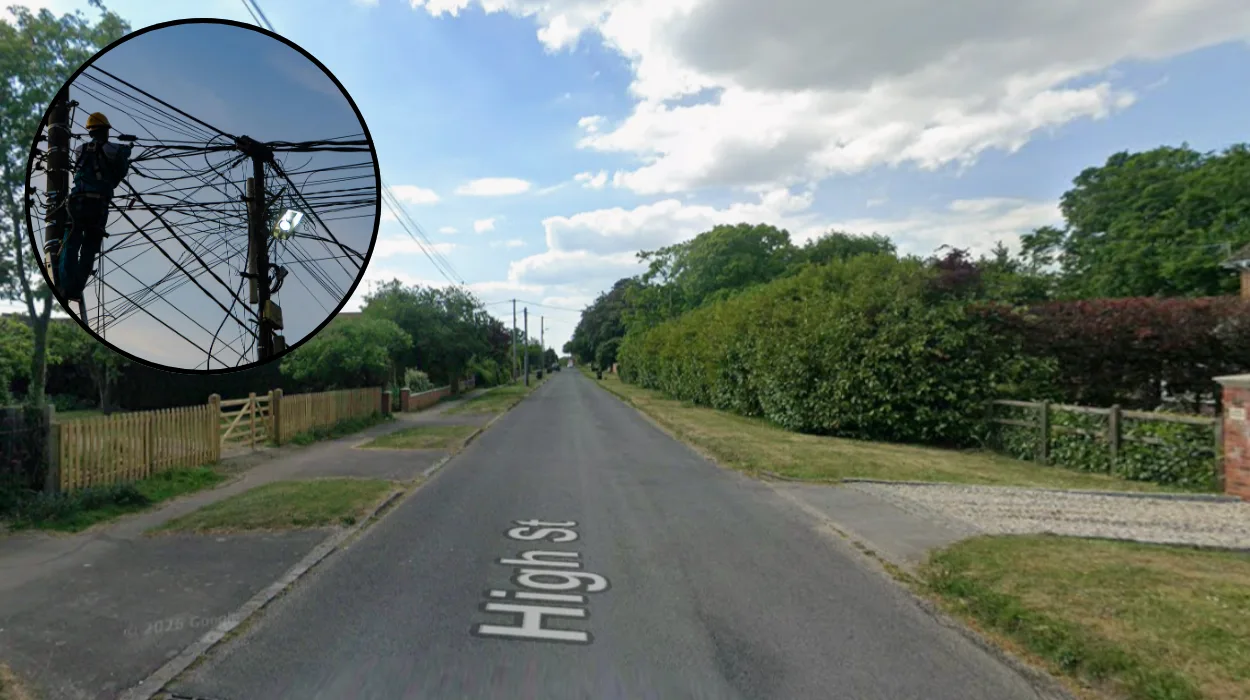
uk/local/abingdon/">Abingdon (Oxford Daily News) 24 February 2026 – A widespread power cut plunged Abingdon’s bustling High Street and adjacent Bury Street into darkness late on 24 February 2026, disrupting local commerce, traffic flow, and residents’ evening routines as engineers from Scottish and Southern Electricity Networks (SSEN) scrambled to identify and resolve the fault. Eyewitnesses described scenes of confusion with unlit shop fronts, stalled pedestrian movement, and vehicles navigating pitch-black junctions without functioning traffic signals, highlighting vulnerabilities in the local grid amid rising national energy demands in 2026. The outage, affecting an estimated 500 properties, lasted over four hours in some areas, prompting calls from local councillors for urgent infrastructure upgrades.
- Key Points
- What Caused the Abingdon High Street Power Cut?
- How Did the Power Cut Affect Bury Street Residents?
- Which Businesses Suffered Most from the 2026 Outage?
- What Traffic Disruptions Occurred During the Blackout?
- Who Responded to the Abingdon Power Failure?
- Why Are Power Cuts Increasing in Oxfordshire 2026?
- When Will Infrastructure Upgrades Prevent Future Cuts?
- How Have Residents Reacted to the Incident?
- What Lessons Emerge for UK Energy Policy?
What Caused the Abingdon High Street Power Cut?
The power failure originated from a suspected underground cable fault beneath High Street, a common issue in historic town centres where ageing infrastructure struggles to cope with modern loads. This attribution underscores the frequent tension between urban development and electrical reliability in Abingdon, a market town in Oxfordshire’s Vale of White Horse district.
Engineers arrived within 45 minutes, deploying thermal imaging and fault-locating equipment to trace the issue without excavating the busy thoroughfare immediately. No injuries were reported, though the timing just after evening rush hour exacerbated impacts on late-opening retailers and pub-goers.
Patel’s account reflects broader economic ripples, with the High Street Chamber of Commerce estimating sector-wide losses exceeding £15,000 during the blackout.
How Did the Power Cut Affect Bury Street Residents?
Bury Street, a quieter residential artery linking High Street to Abingdon’s Millennium Way, saw prolonged outages that left households without heating, lighting, or internet amid February’s chill. Carter’s reporting highlights how such events disproportionately burden vulnerable groups in 2026’s energy-stretched landscape.
SSEN’s real-time updates via their online portal and X (formerly Twitter) account informed affected parties, but signal loss compounded communication woes. Thompson emphasised coordination with Thames Valley Police, who managed diversions around unlit crossings.
Further afield, the outage cascaded to nearby Stert Street, where independent cafe owner Lena Kowalski reported to Jenkins: “POS systems crashed just as the post-theatre crowd arrived; we resorted to cash-only under candlelight, but many left frustrated—it’s the third flicker this month.” Kowalski’s experience, echoed across social media, illustrates how interconnected Abingdon’s grid remains, with Bury Street’s residential load pulling from the same High Street substation.
Which Businesses Suffered Most from the 2026 Outage?
High Street’s retail core bore the brunt, with chains like Boots, Costa Coffee, and independent jewellers forced to shutter prematurely. Reynolds noted that the pharmacy’s backup generator kicked in after 20 minutes, but perishable medications risked spoilage.
Pubs and eateries faced unique perils. Hargrove praised community spirit, with locals sharing phone charges and glow sticks.
Smaller enterprises amplified losses. Singh’s plight, typical of independents without corporate backups, fuels debates on government grants for energy resilience.
What Traffic Disruptions Occurred During the Blackout?
Unpowered traffic lights at High Street’s junction with Bury Street sparked immediate gridlock, stranding commuters and delivery vans. Grant’s team diverted HGVs via the A415, easing pressure by 23:30.
Delivery services faltered too. Reid’s account reveals logistical chokepoints in Abingdon’s role as a distribution hub for Oxford.
Pighills cited similar 2025 incidents in Wantage, urging faster Ofgem interventions.
Who Responded to the Abingdon Power Failure?
SSEN led the charge, mobilising 12 engineers and two cherry-pickers despite the hour. SSEN’s app logged 247 calls, prioritising medical needs.
Local authorities shone. Oxfordshire Fire and Rescue attended two lift entrapments on Bury Street, freeing residents without incident.
Community networks activated. Rahman’s efforts exemplify grassroots response.
Why Are Power Cuts Increasing in Oxfordshire 2026?
National trends frame Abingdon’s woes. Ofgem reports 15% more faults in 2026 versus 2025, blamed on wet winters corroding cables and EV charging spiking demand.
Climate volatility exacerbates. Met Office data shows February 2026’s storms fraying overhead lines county-wide.
Patel quotes National Grid’s Tim Bradshaw: “RMI outputs hit records, but underground legacy in towns like Abingdon lags; £multi-billion dig-ups needed.”
Local voices demand action.
Abingdon MP Layla Moran told Ellis: “Constituents suffer repeated cuts; I’ve tabled questions on SSEN’s investment lags versus urban subsidies.”
Moran’s push aligns with a cross-party motion for emergency resilience funds.
When Will Infrastructure Upgrades Prevent Future Cuts?
SSEN’s £10m Oxfordshire plan targets High Street by Q3 2026, replacing 5km of pre-1950s cables.
Hargreaves assured Reynolds: “Works start April, phased to minimise disruption; smart meters will aid fault prediction.”
Yet timelines slip, per Patel: “Delays from planning consents mirror national backlogs.”
Vale Council eyes pilots. Pighills revealed to Carter: “Microgrids with solar-battery hubs for Bury Street; EU funds could launch by 2027.”
Community buy-in grows, with petitions garnering 1,200 signatures post-cut.
Businesses adapt. Patel of Spice Emporium plans UPS installs: “£5k investment, but insurance premiums drop 20%.” Such self-reliance bridges gaps till systemic fixes.
How Have Residents Reacted to the Incident?
Social media buzzed.
X user @AbingdonMum posted: “High St pitch black, kids scared—SSEN, sort your act!” garnering 450 likes.
Forums like Abingdon.net threaded 200 replies, blending frustration and praise for responders. Surveys emerge. A snap poll by Oxford Daily News found 62% of 300 respondents demanding faster restorations, 28% satisfied with four-hour fix.
Voices like McLeod’s underscore equity: “Not all have generators; low-income flats hit hardest.”
Positives surface. Rahman noted: “Brought neighbours together—first time chatting over shared torches.”
Resilience narratives counter gloom.
What Lessons Emerge for UK Energy Policy?
Abingdon exemplifies 2026’s grid crunch.
Energy Secretary Ed Miliband, responding to Moran, stated in Commons: “Local outages inform Great British Energy’s £8bn upgrade; Abingdon pilots community batteries Q4.”
Miliband stresses net-zero balance.
Critics demur. Reform UK’s Richard Tice tweeted: “Private investment stifled by red tape; denationalise for reliability.”
Debate rages. Horizons brighten. SSEN forecasts 30% fewer cuts post-upgrade.
As Jenkins concludes: “Abingdon’s blackout tests mettle, forging stronger networks ahead.”
This incident, while resolved, spotlights imperatives. With 2026’s demands unrelenting, proactive measures define progress. Businesses rebuild stocks, residents recharge devices, and officials recalibrate Abingdon endures.