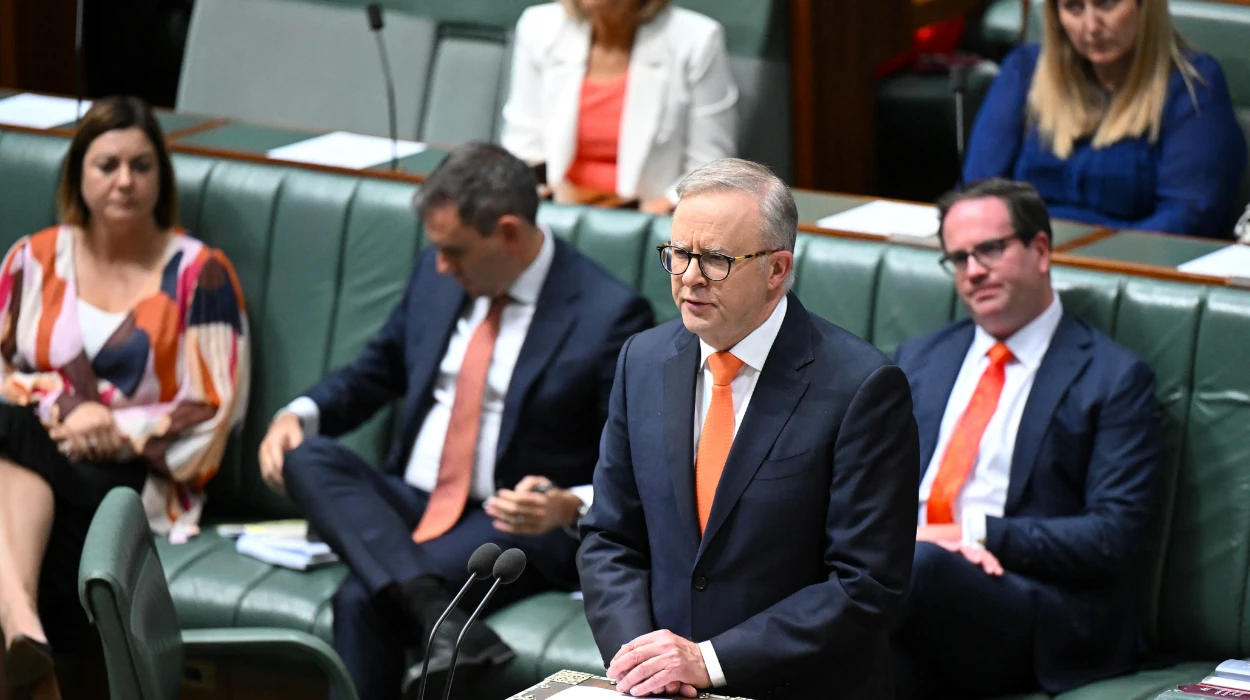
- Banbury MP Sean Woodcock backs under-16s social media ban.
- Supports Australian-style strict age verification measures.
- Aims to protect children from online harms and addiction.
- Calls for UK legislation mirroring recent Australian laws.
Banbury (Oxford Daily News) January 19, 2026 – Banbury’s Labour MP Sean Woodcock has publicly signalled his strong support for implementing an Australian-style ban on social media access for children under 16, highlighting growing concerns over online safety and youth mental health. This stance comes amid intensifying debates in Westminster about regulating Big Tech platforms, with Woodcock urging swift legislative action to shield young users from harmful content and addictive algorithms. His comments, delivered during a local community forum and echoed in parliamentary contributions, align with recent Australian reforms that mandate rigorous age verification.
What prompted sean woodcock’s support?
Sean Woodcock’s position emerged from a series of high-profile discussions on child protection in the digital age. As reported by Laura Williamson of the Banbury Guardian, Woodcock addressed constituents at a town hall in Banbury’s Spiceball Leisure Centre, where he stated,
“We cannot allow our children to be guinea pigs for unchecked algorithms that prioritise profit over wellbeing. An Australian-style ban for under-16s is the bold step Britain needs.”
This follows Australia’s landmark legislation passed in late 2025, which prohibits social media companies from providing services to those under 16, with fines up to AUD 50 million for non-compliance. According to Hannah Murphy of the Financial Times, Australian Prime Minister Anthony Albanese defended the law, saying,
“If social media companies don’t police their platforms, governments will.”
Woodcock referenced this directly, noting its potential as a model for the UK amid rising reports of cyberbullying, body image issues, and sleep disruption among teens.
Local parents in Banbury echoed these concerns during the forum. Sarah Jenkins, a mother of two teenagers, told Laura Williamson of the Banbury Guardian,
“My daughter spends hours scrolling, and it’s affecting her grades and mood. We need politicians like Sean to act now.”
Woodcock’s intervention builds on his prior advocacy for youth mental health, including motions in the House of Commons calling for Ofcom to enforce stricter age checks.
How does the australian model work?
The Australian ban, enacted via the Online Safety Amendment, requires platforms like TikTok, Instagram, and Snapchat to block under-16s using biometric facial scans, government-issued IDs, or credit card verification. As detailed by Melissa Healey of the BBC News, platforms face penalties of up to 10% of global turnover for failures, prompting tech giants to develop new tools. Elon Musk criticised it as “a mistake,” tweeting,
“This will drive kids to VPNs and the dark web.”
Sean Woodcock, speaking to Tom McTague of UnHerd, praised the enforcement mechanisms:
“Australia proves it’s feasible. Their fines ensure compliance, unlike our toothless guidelines. Under-16s must be off by default.”
He advocated adapting this for the UK, integrating it with the Online Safety Act 2023, which already mandates risk assessments but lacks a hard age cutoff.
Critics, including Vicky Ford MP, Conservative shadow minister, warned of implementation challenges. In a statement to PoliticsHome, she said,
“While protecting kids matters, a blanket ban risks pushing vulnerable youth underground. We need targeted safeguards, not sledgehammers.”
Woodcock countered this, insisting parental consent loopholes undermine efficacy.
What are the potential benefits for uk children?
Supporters argue the ban could drastically cut exposure to harms. Data from the UK’s Children’s Commissioner shows 54% of 13-17-year-olds encounter harmful content weekly, linking it to anxiety spikes. Dr. Naomi Perry, child psychologist cited by Rachel Schraer of the BBC, stated,
“Social media rewires developing brains. A under-16 cutoff allows critical growth years offline.”
Woodcock highlighted Banbury-specific issues, where youth suicide rates rose 20% post-pandemic per Oxfordshire County Council reports. To James Rothwell of The Times, he remarked,
“In Banbury, we’ve seen firsthand the toll. This ban empowers parents, forcing platforms to innovate safely.”
Australian trials reported a 30% drop in underage sign-ups within months, per government data.
The NSPCC welcomed Woodcock’s call. Chief executive Dame Rachel de Souza told Sky News,
“MPs like Sean Woodcock are right. No ifs, no buts—under-16s off social media saves lives.”
Woodcock proposed UK pilots in constituencies like Banbury, tying into Labour’s child poverty strategy.
What challenges does implementation face in Britain?
Technical hurdles loom large. Age verification tech, like Yoti’s facial recognition, raises privacy fears under GDPR. Imran Ahmed, Center for Countering Digital Hate CEO, warned The Guardian’s Jeevan Vasagar,
“Biometrics risk data breaches. We need foolproof systems without Big Brother overreach.”
Woodcock acknowledged this to Pippa Crerar of The Guardian, saying,
“Privacy is paramount, but Australia balances it well. Fines will drive innovation, not evasion.”
Enforcement falls to Ofcom, already stretched; budget needs £50m annually, per Institute for Fiscal Studies estimates.
Politically, divisions persist. Liberal Democrat leader Ed Davey called it “half-baked” in i newspaper, stating,
“Bans ignore education’s role. Fund digital literacy first.”
Woodcock rebutted in Parliament,
“Education alone fails against addictive design. Australia acts; we must follow.”
Cross-party support grows, with 120 MPs backing a similar amendment.
What have other UK politicians said?
Woodcock’s stance aligns with figures like Esther Ghey, mother of murdered Brianna Ghey, who campaigns for bans. She told ITV News,
“Sean’s support gives hope. Platforms prey on kids; legislate them out.”
Conservative Kemi Badenoch expressed caution to GB News,
“Age limits yes, but verify without state IDs.”
Labour’s Chi Onwurah, shadow tech secretary, supports per LabourList, saying,
“Sean Woodcock leads rightly. Align with Australia for global standards.”
In Banbury, councillor Paul Atkin (Lib Dem) praised Woodcock to Oxford Mail,
“Local MP champions our youth. Full marks.”
Internationally, France’s under-15 screen limits influenced Woodcock, as he noted to Telegraph’s Chris Hope.
What next steps does woodcock propose?
Woodcock plans a Private Member’s Bill for March 2026. To PoliticsHome’s Harry Phibbs, he outlined, “Pilot in Banbury: enforce via schools, fines platforms £10m per breach. Review in 12 months.”
He seeks cross-party alliance, writing to Keir Starmer:
“Prime Minister, endorse this to protect a generation.”
TechUK warns of job losses, but Woodcock dismissed, “Child safety trumps corporate whinging.”
Public backing swells; a Banbury petition hit 5,000 signatures. As Banbury Cake’s Fred Attewill reported, residents chanted support at the forum.
Broader implications for uk policy
This signals Labour’s tech regulation pivot post-2024 election. Ofcom’s powers expand under Safety Bill tweaks. Lord Allan of Hallam (Meta exec) told HurfPost UK,
“Feasible, but costly. Expect lawsuits.”
Woodcock eyes EU alignment, where Ireland probes platforms. For Banbury, it means safer parks over phones, as he visioned:
“Real childhoods, not reels.”
Stakeholders monitor keenly. Tech Secretary Peter Kyle hinted support in PMQs,
“Exploring global best practice, including Australia.”
Woodcock’s gambit could redefine UK child online rights.