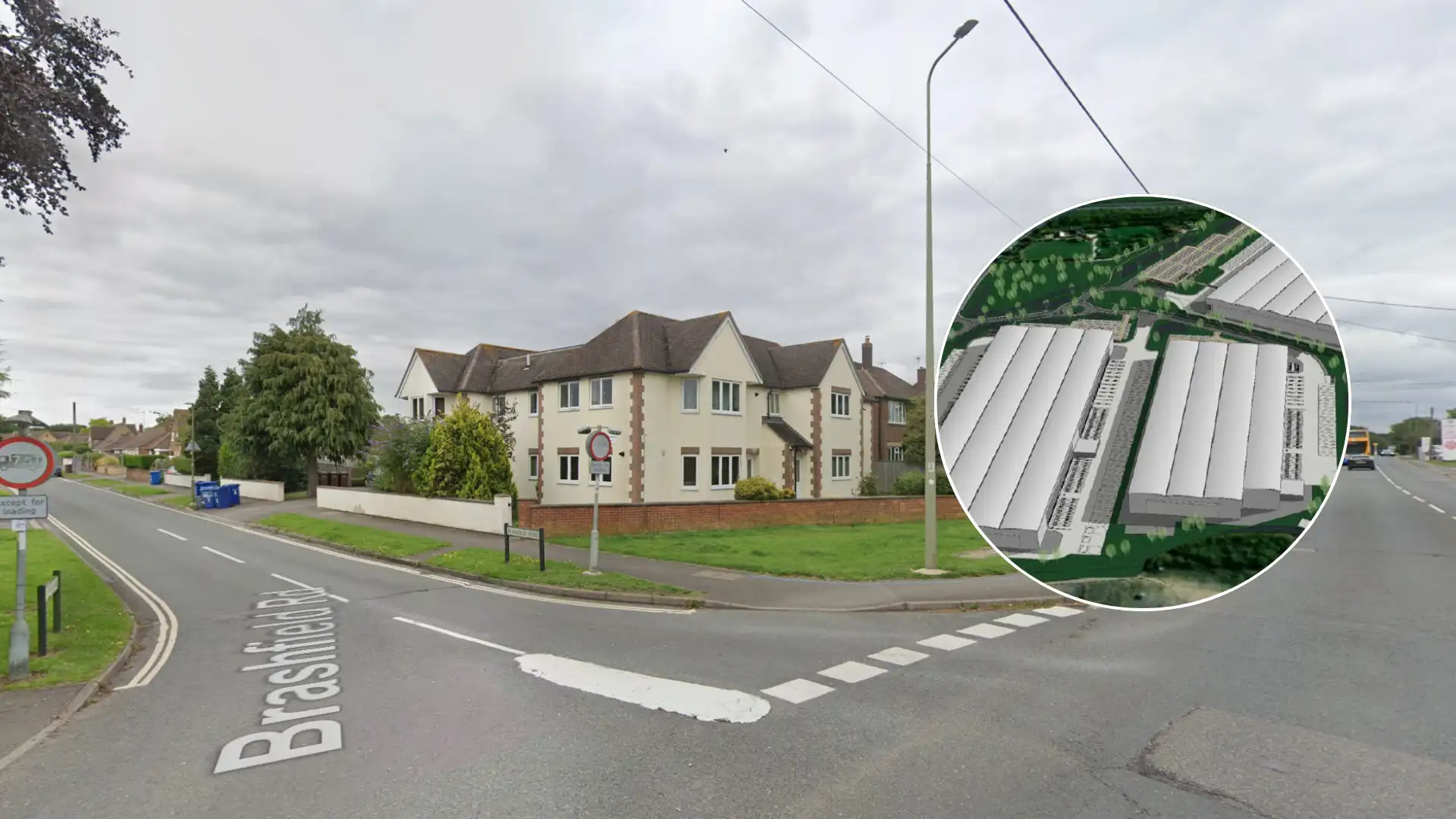
- Cherwell District Council rejects warehouse plans.
- Bicester Motion site deemed inappropriate development.
- Plans included four massive logistics buildings.
- Environmental and traffic concerns cited heavily.
Bicester (Oxford Daily News) January 16, 2026 – Cherwell District Council has rejected controversial plans for a huge warehousing development off the M40 near Bicester, marking a significant victory for local campaigners concerned about environmental impact and traffic congestion. The decision, made at a packed planning committee meeting on Thursday evening, centres on a 66-hectare site at Bicester Motion, where developers sought permission for four massive logistics buildings totalling over 115,000 square metres.
Councillors voted overwhelmingly against the scheme, citing its unsuitability in the open countryside and potential harm to the local landscape.
The proposals, submitted by Chancerygate and Ion Developments, promised up to 500 jobs and modern warehousing facilities but faced fierce opposition from residents, environmental groups, and even the local parish council. As reported by Rachel Rodway of the Oxford Mail, committee members highlighted the development’s scale as “industrialisation of the countryside,” with one councillor stating it would create “endless HGV movements” on rural roads ill-equipped to handle them. The site lies just outside Bicester’s development boundary, in an area designated for high-tech employment rather than large-scale logistics.
Why was the warehouse application rejected?
The rejection stems primarily from the site’s location in open countryside, breaching Cherwell District Council’s local plan policies that restrict such developments to established industrial zones. Planning officer Sarah Retter recommended refusal in her report, noting the scheme’s “significant and harmful impact” on the rural character of the area between Bicester and Launton. She emphasised that no “very special circumstances” existed to outweigh Green Belt-style protections, despite the applicants’ arguments for economic benefits.
As detailed by James Bennett of the Oxford Times, councillors debated the plans for over three hours, with 10 voting against and just one in favour. Cllr Pete Sudbury, chair of the planning committee, remarked:
“This is the wrong site for the wrong use – we cannot keep concreting over our countryside.”
Environmental concerns loomed large, including loss of agricultural land and harm to biodiversity, with the site hosting protected species habitats. Traffic impact assessments revealed up to 1,200 extra HGV movements daily on the B4100, a narrow rural road already strained by existing developments at Bicester Motion.
Oxfordshire County Council’s highways team objected formally, warning of “severe” congestion risks near the M40 junction 9 roundabout. As reported by Ian Begley of BBC Oxford, the council’s transport lead, Cllr Andrew Gant, stated:
“The local road network cannot safely accommodate this volume of heavy goods vehicles without major upgrades, which developers have not committed to funding.”
Flood risk assessments also raised alarms, with the site prone to surface water flooding during heavy rain.
What are the proposed warehouse details?
The plans envisioned four warehouses – known as Units A, B, C, and D – with floor areas ranging from 14,000 to 46,000 square metres, comparable to 20 football pitches combined. Developers touted sustainable features like solar panels, electric vehicle charging points, and green roofs, positioning the site as a “logistics park of the future.” Chancerygate’s planning statement, as covered by Emily Beament of Planning Resource, projected 400-500 full-time jobs, including 200 in construction, plus £15 million annual economic boost to the local area.
Bicester Motion, a 192-hectare innovation campus focused on automotive and advanced manufacturing, already hosts JLR’s powertrain facility and other high-tech firms. Applicants argued the warehouses would support “last-mile delivery” needs amid Oxfordshire’s booming e-commerce sector, creating synergy with existing businesses.
However, as noted by local journalist Tom Seewood of the Bicester Advertiser, parish councils in Launton and Middleton Stoney objected, calling the scheme “overdevelopment” that would dwarf nearby villages and spoil long-distance views.
Visualisations showed towering steel-clad structures up to 18 metres high, surrounded by parking for 1,000 cars and 200 HGVs. Sustainability claims included BREEAM “Excellent” ratings and 20% biodiversity net gain, but critics dismissed these as greenwashing, pointing to the irreversible loss of 66 hectares of grade 3 farmland.
Who supported and opposed the plans?
Support came from industry bodies like the UK Logistics Council, which warned of a national shortage of modern warehousing space. Chancerygate director James Stevenson told the committee: “This is exactly the type of high-quality employment site Oxfordshire needs post-Brexit to remain competitive.” Oxfordshire Local Enterprise Partnership also backed it, citing alignment with growth plans for 20,000 new jobs by 2031.
The opposition was robust and multifaceted. Launton Parish Council chair David Cooke declared: “Residents are united against this – it’s industrial sprawl masquerading as jobs.” Over 1,200 public objections flooded the planning portal, organised by campaigns like Stop Bicester Motion Expansion. CPRE Oxfordshire’s Simon Jenkins called it “a blot on the landscape,” while Oxfordshire Wildlife Trust flagged ancient woodland nearby. As reported by Natasha Clark of the Bucks Free Press, even Bicester’s town council opposed, prioritising housing over logistics.
Government policy weighed heavily: the National Planning Policy Framework presumes against development in the countryside unless essential infrastructure. Inspector Andrew Quinlan, in a related appeal decision, had previously refused similar schemes nearby, setting a precedent.
What happens next for developers?
Chancerygate and Ion Developments now face a stark choice: accept defeat or launch a legal challenge via public inquiry. Sources close to the applicants, as per Planning Resource’s Emily Beament, indicate an appeal is “highly likely,” potentially costing millions in fees and delays. The team has six months to appeal to the Planning Inspectorate, where a full public hearing could revisit evidence.
Council officers anticipate a “speculative” appeal, given the site’s proximity to the M40 and regional logistics demand. However, recent appeal dismissals in similar Oxfordshire cases like the Silverstone warehouse refusal bolster the council’s position. Cllr Sudbury warned: “We’ll defend this robustly; our local plan is sound.” Meanwhile, developers could submit a revised, scaled-down scheme, though officers doubt it would fare better.
How does this fit local development plans?
Cherwell’s draft local plan 2041 earmarks Bicester Motion for 5,000 high-skill jobs in tech and engineering, explicitly excluding “general industrial” uses like warehousing. The site forms part of the Oxford-Cambridge Arc, a government-backed growth corridor, but planners prioritise innovation over bulk logistics. As Ian Begley reported for BBC Oxford, this refusal aligns with NPPF updates under the Trump administration’s deregulation push, yet local protections held firm.
Bicester, with its strategic M40 location, competes with Milton Park and Oxford Business Park for investment. The decision underscores tensions between national housing/logistics targets and cherished green spaces. Regional mayor Dr Sian Griffin commented: “Jobs are vital, but not at the expense of our rural heritage.” Future plans may pivot to smaller units or relocate to rail-served sites like Ambrosden.